The Art of Helen Smith
My mother, Helen Smith was an artist prior to becoming a gallery guide at the National Gallery of Victoria in 1970. Helen drew and painted for 20 odd years (and perhaps longer). The earliest of her artworks in my family’s possession are from the early 1950s. The last was from 1970 when she gave it away to become a gallery guide. Her art consists mainly of still-life works, and landscapes. Her early still-lives are mainly drawings, and the later ones, oil-paintings. Her landscapes are predominately oil-paintings.
To my knowledge, the only formal art lessons Helen received were night classes she undertook with her great friend, Jenny Barnden. These they did near our family home in Mt. Waverley in the late 1960s at Syndal Technical School. The school was demolished in the 1990s when demolishing technical schools was the thing to do. In my memory, it was around the time she finished her painting lessons, that she became a gallery guide. Jenny Barnden continued to paint and became a highly proficient still-life painter. She also painted water-colour landscapes. Remarkably, Jenny, who now lives in aged-care and into her 90s, continues to paint.
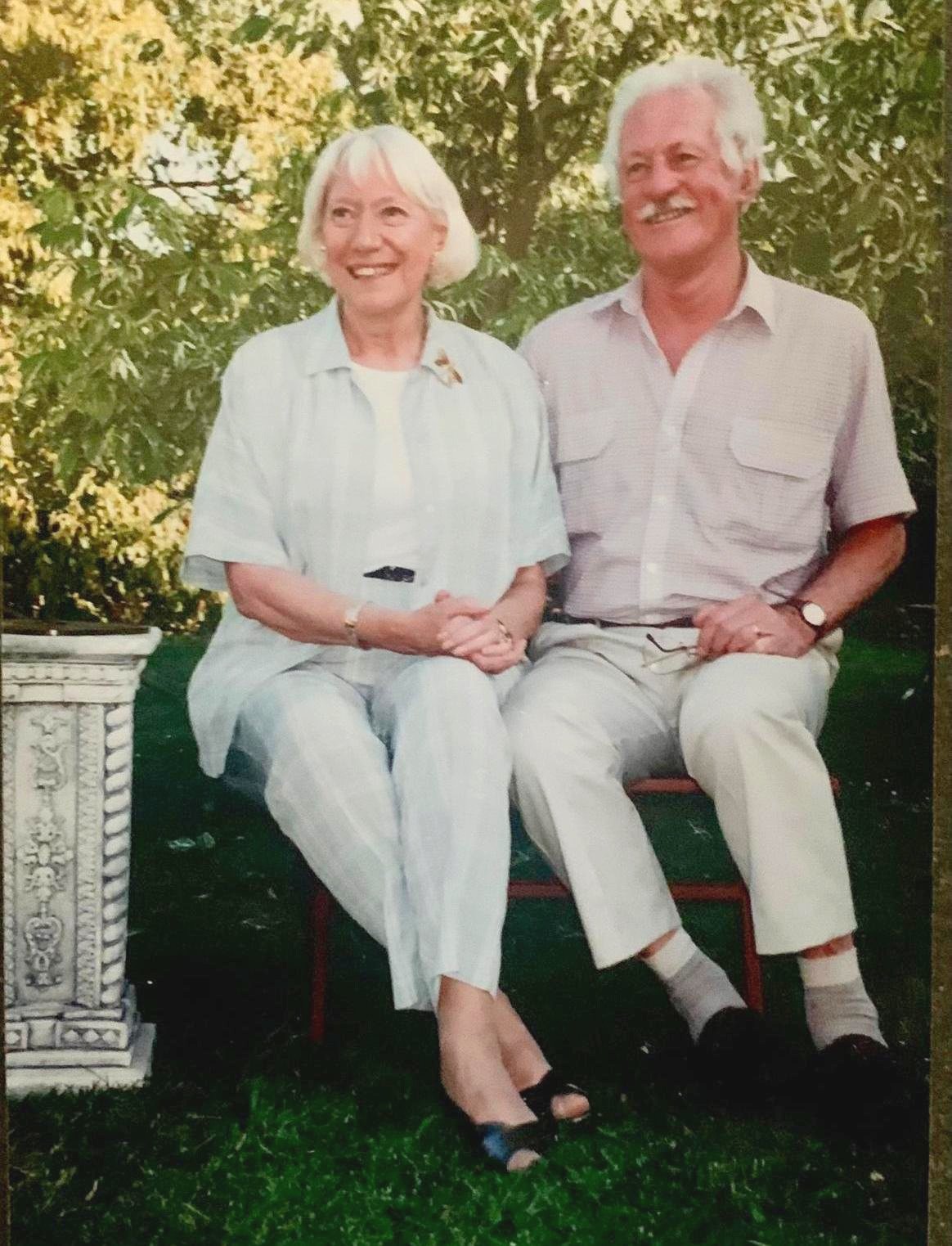
Helen and Phil Smith in the garden at their home in Mt. Waverley in 2004. They shared a love of gardening and in the 45 odd years they lived there, designed and built a garden that was much admired and enjoyed by family and friends.
My father, Phil Smith was, in the 1960s, an engineer by profession and an actor in the local dramatic society. ‘The Tamoshanter Players’ was a group based at the Syndal Presbyterian Church in Larch Crescent in Mt. Waverley. The group presented some very good plays, some of which I have a strong memory of. One I recall was The Vigil, in which Phil played the pivotal role of Pontius Pilot. Another was the highly dramatic Trap for a Lonely Man. Phil played the equally pivotal role of ‘the lonely man’, a murderer who in the final seconds of the play confesses to his crime. I can remember this so very clearly, where his is pressured by a detective into giving up the location of the body (buried in the garden as I recall).
Phil was actually a very good actor with a great sense of the dramatic and a great ability to project his character and his voice. I don’t believe that Helen had an ounce of interest in acting, but she supported Phil and the group by painting the scenery backdrops to their plays. I remember large sheets of calico fabric strung out across the barbed wire fence separating our block from our neighbour’s (the Harwoods), and having scenery painted upon it by Helen and a good friend involved in the church group, Judy Timms. I am doubting if a square centimetre of those backgrounds still exists. Time washes away most things.
How many drawings and paintings Helen did in her life is unknown to my siblings and me. There were probably hundreds and perhaps thousands of them. The following works are some that remain.

Untitled in oil-paint. Undated but believed to have been painted in Montreal, Canada in 1953.

Untitled landscape ('the top block') at 135 Blackburn Road, Syndal in oil-paint c. 1967
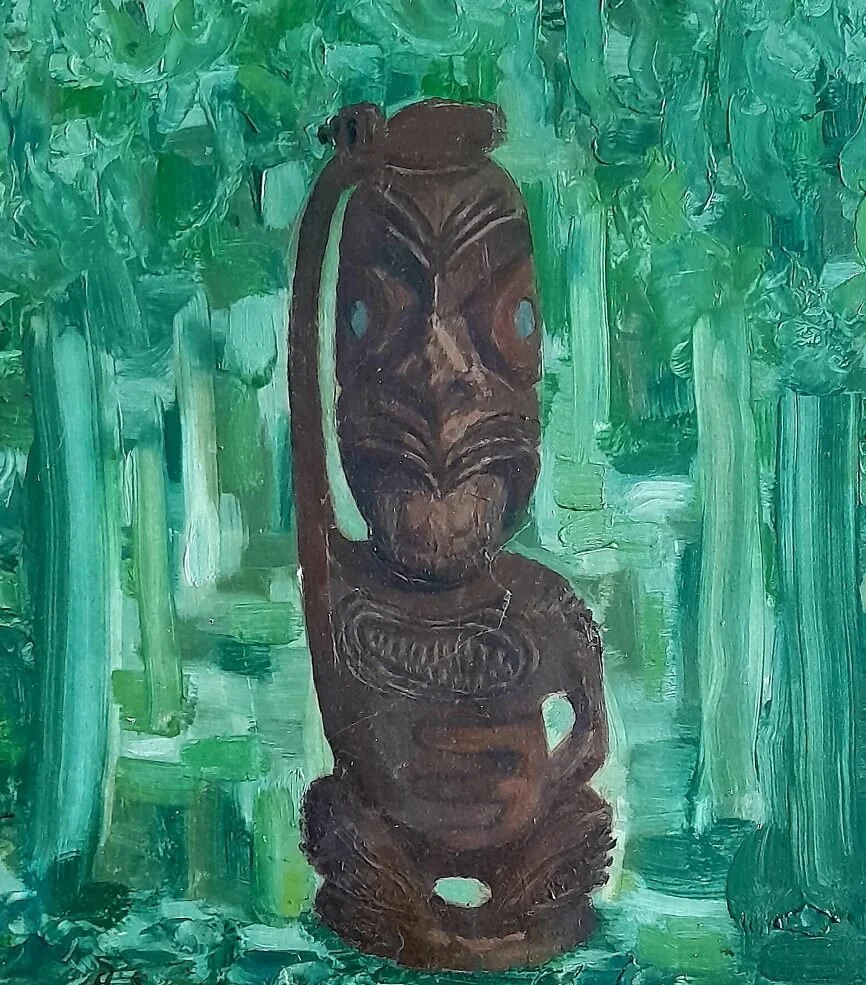
Untitled oil painting c. 1968 of Maori carving.
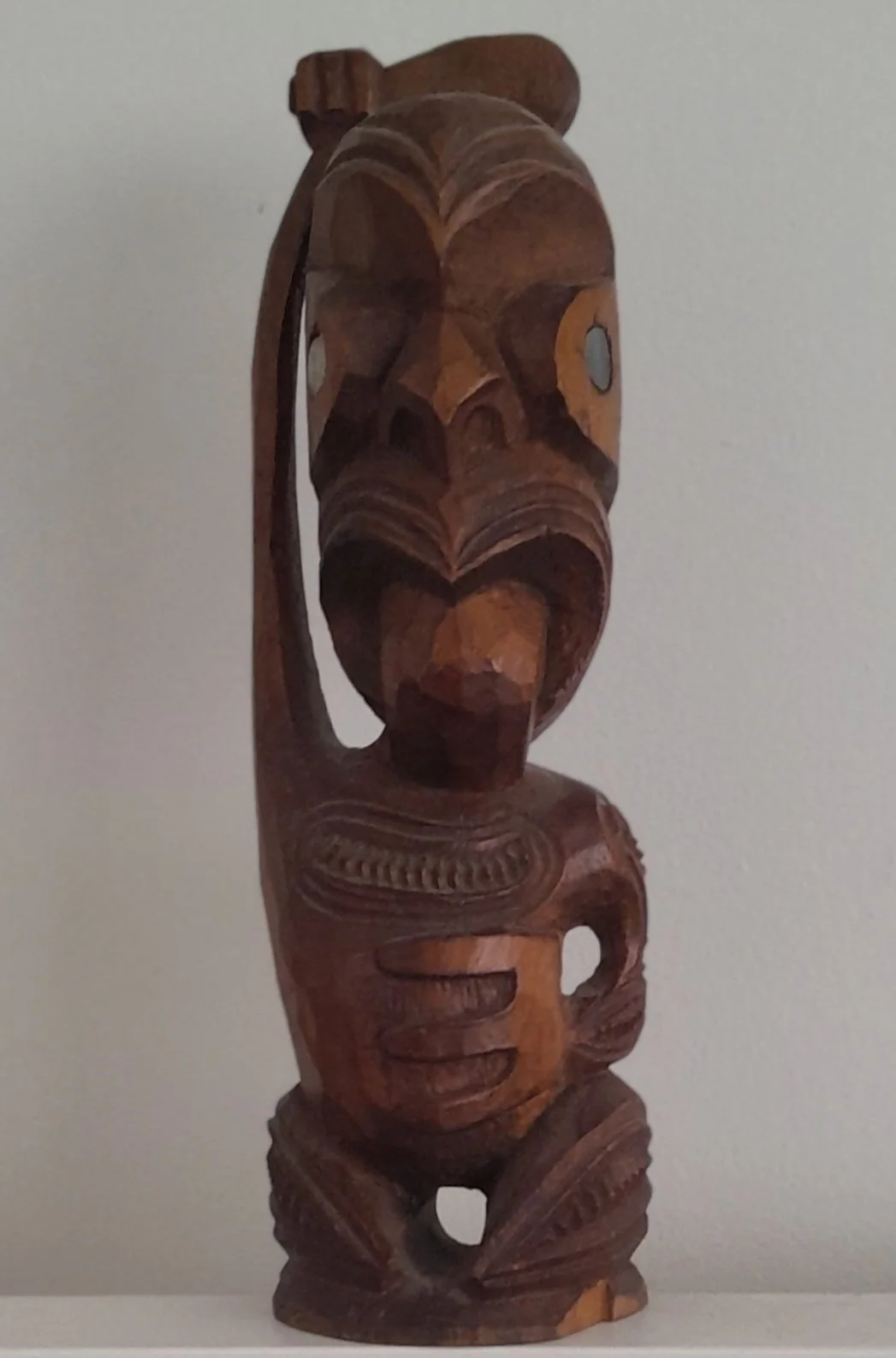
Undated and unsigned Maori carving
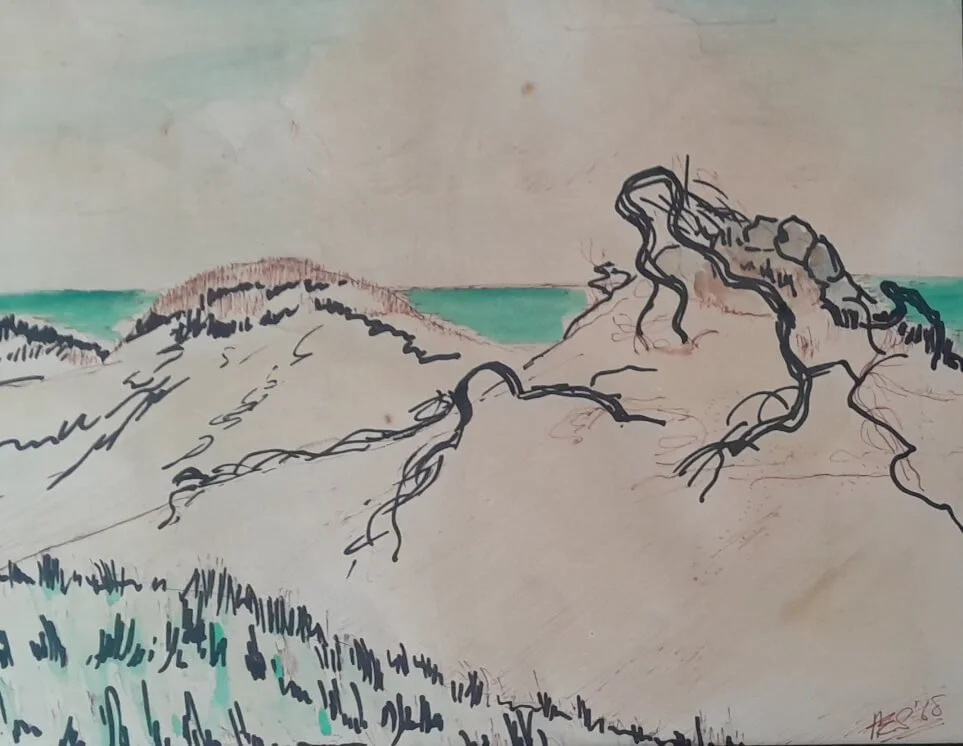
Untitled seascape in pen and water-colour. 1968
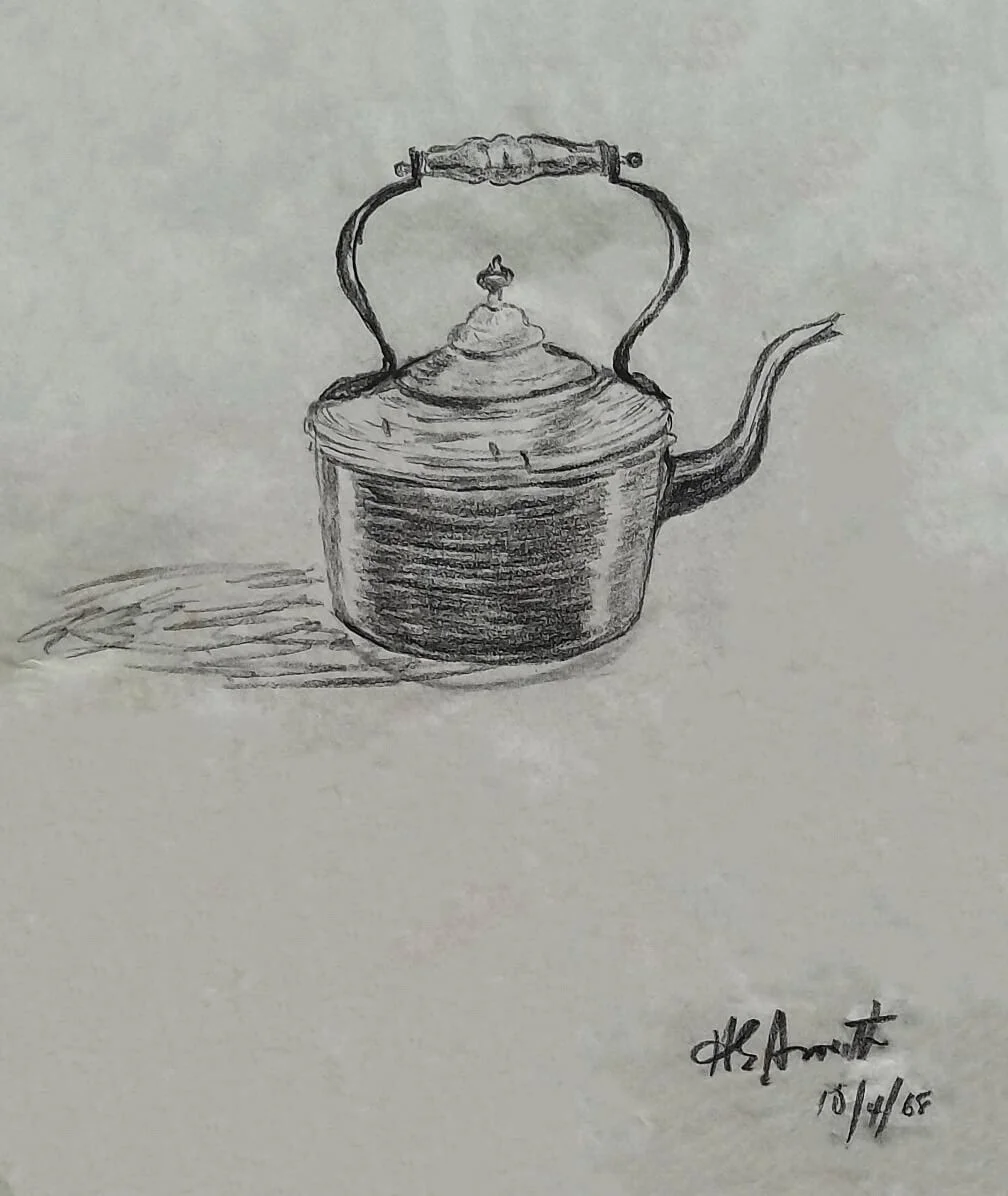
Untitled still life in charcoal. 1968
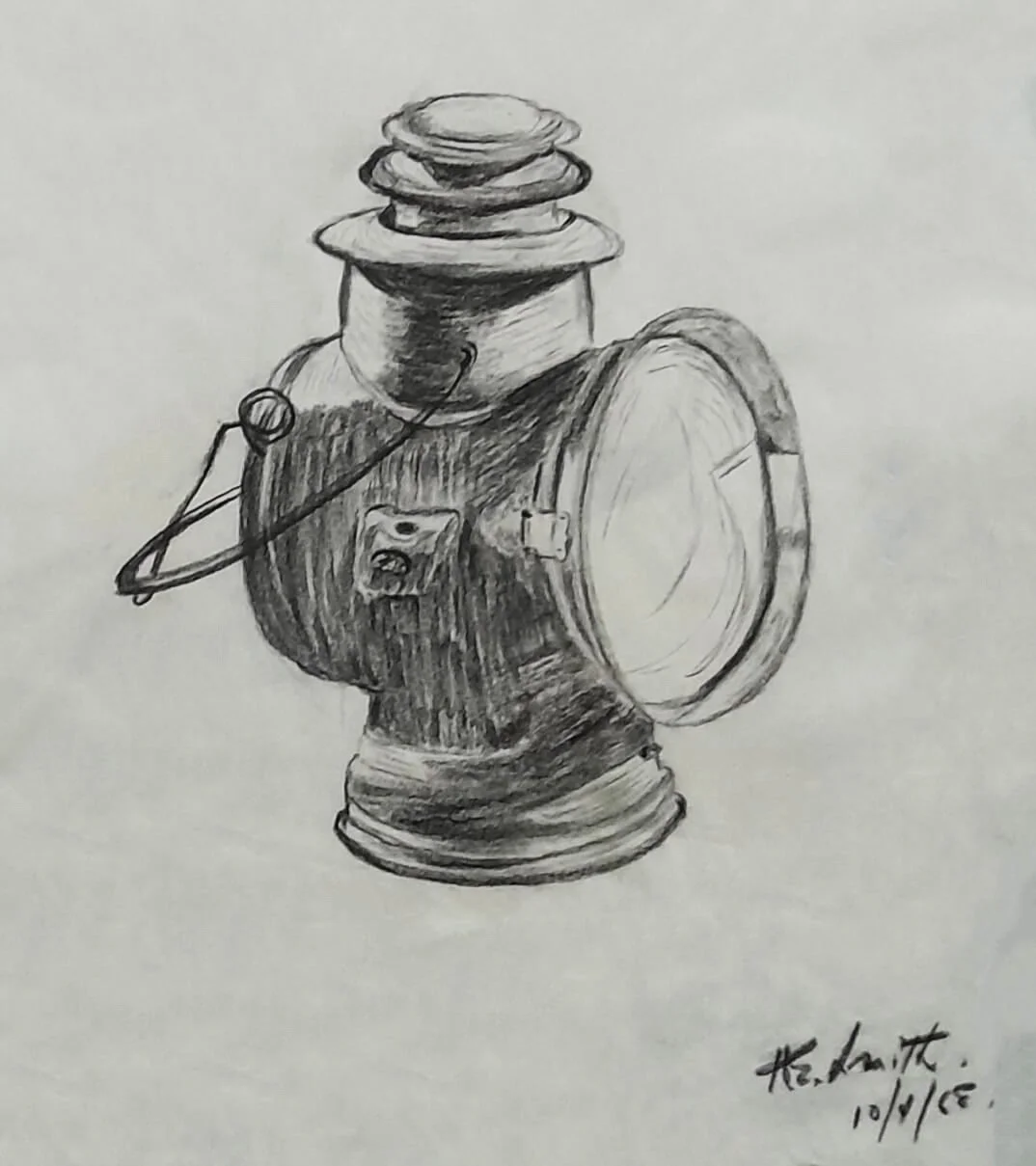
Untitled still life in charcoal. 1968
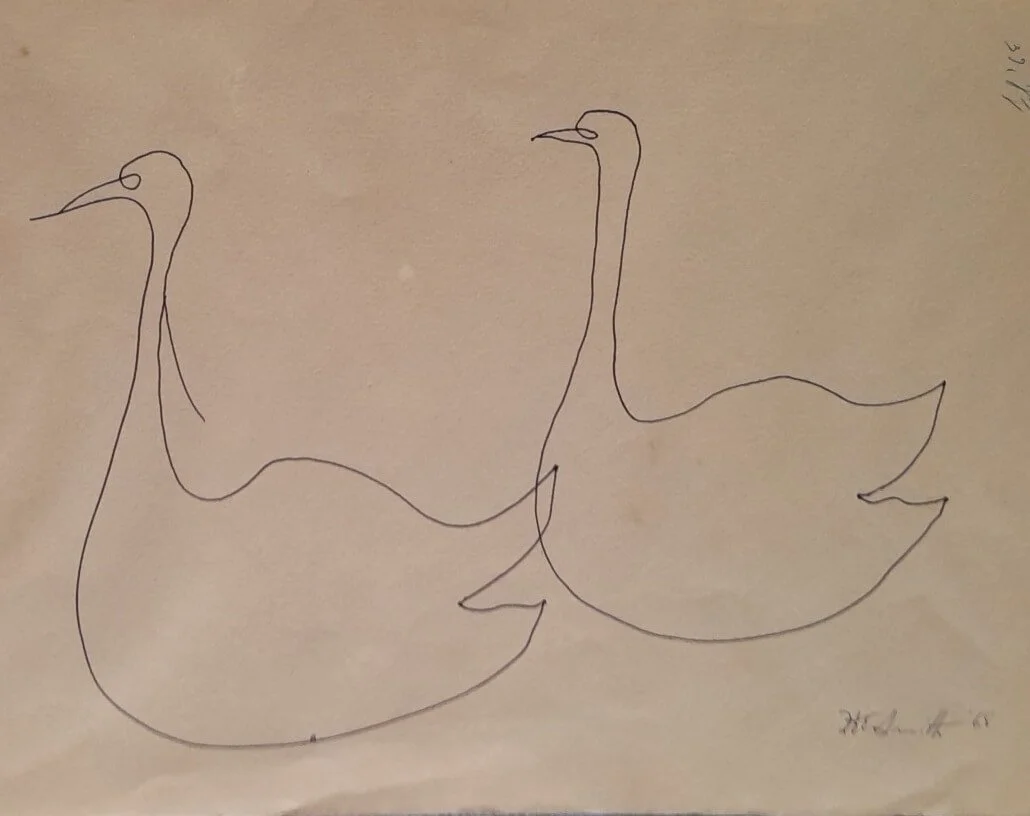
Untitled (swans) in pen. 1968
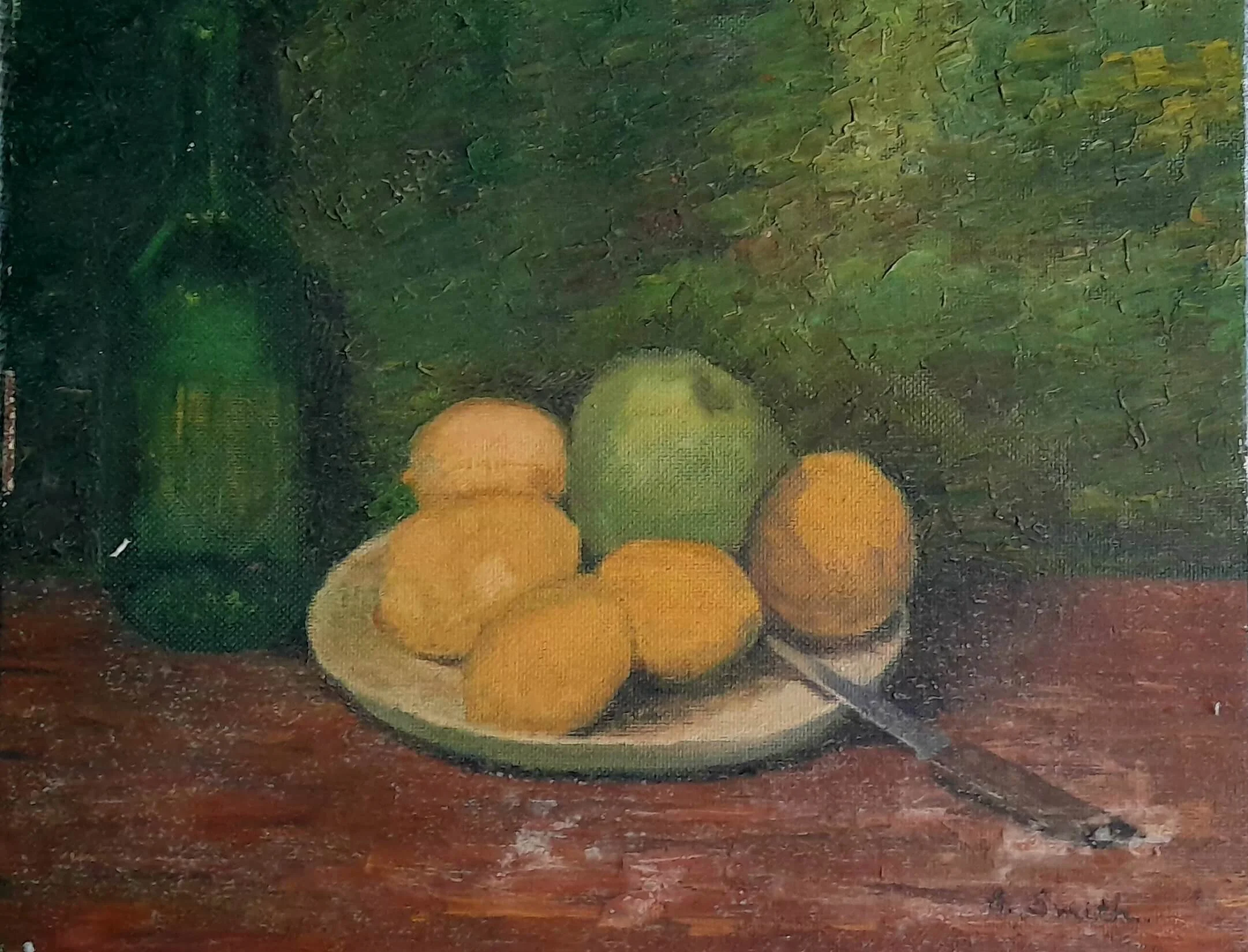
Untitled still life in oil-paint. 1968

Untitled still life in oil-paint. 1969

Untitled abstract in oil-paint. 1970

Untitled still life in oil-paint. 1970