Living in Dandenong
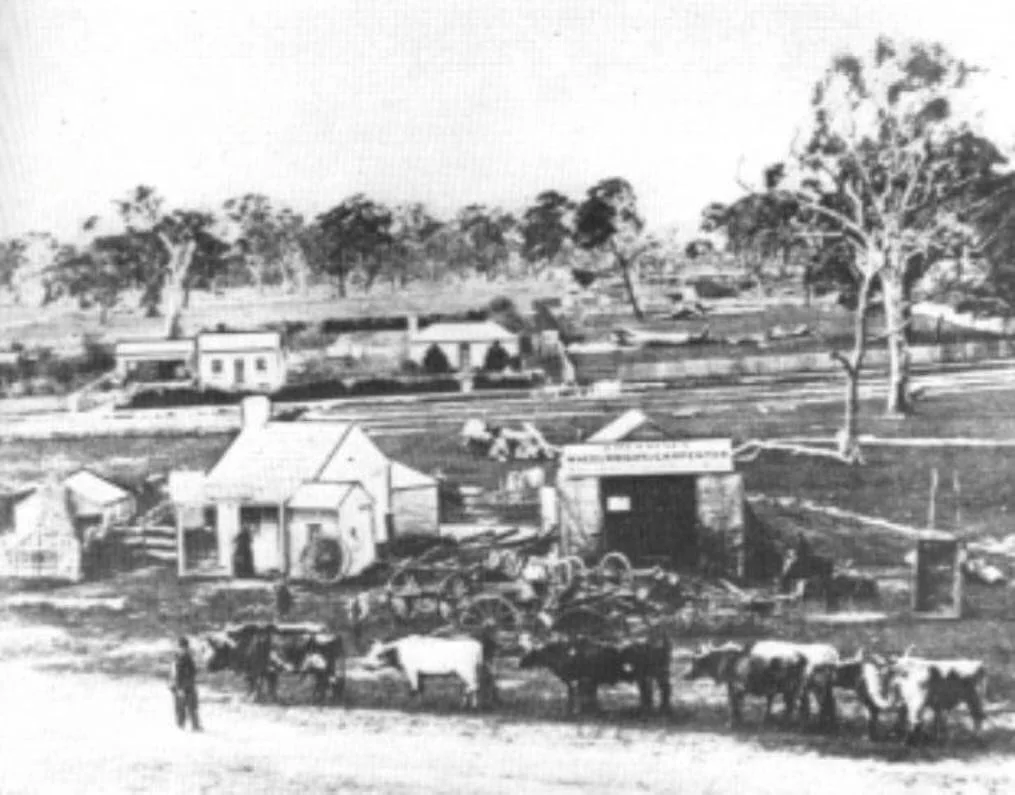
Dandenong in 1856. Pictured is John Hemming’s wheelwright and carpenter’s business, and other buildings in Pultney Street. Behind are some of the river red gums that covered so much of what is now Dandenong.
Over the course of my life, I suppose I’ve lived in an average number of houses, more or less. I started life in Footscray, then went to Mt. Waverley. After that I lived for about four months in an old farmhouse in Portland in western Victoria. Then I lived in Prahran, and briefly, on the Mornington Peninsula. After that it was a long stretch in Murrumbeena, and then back to Mt Waverley for about eight years. For the last two years, I’ve lived in Dandenong. That makes me a newcomer to the place.
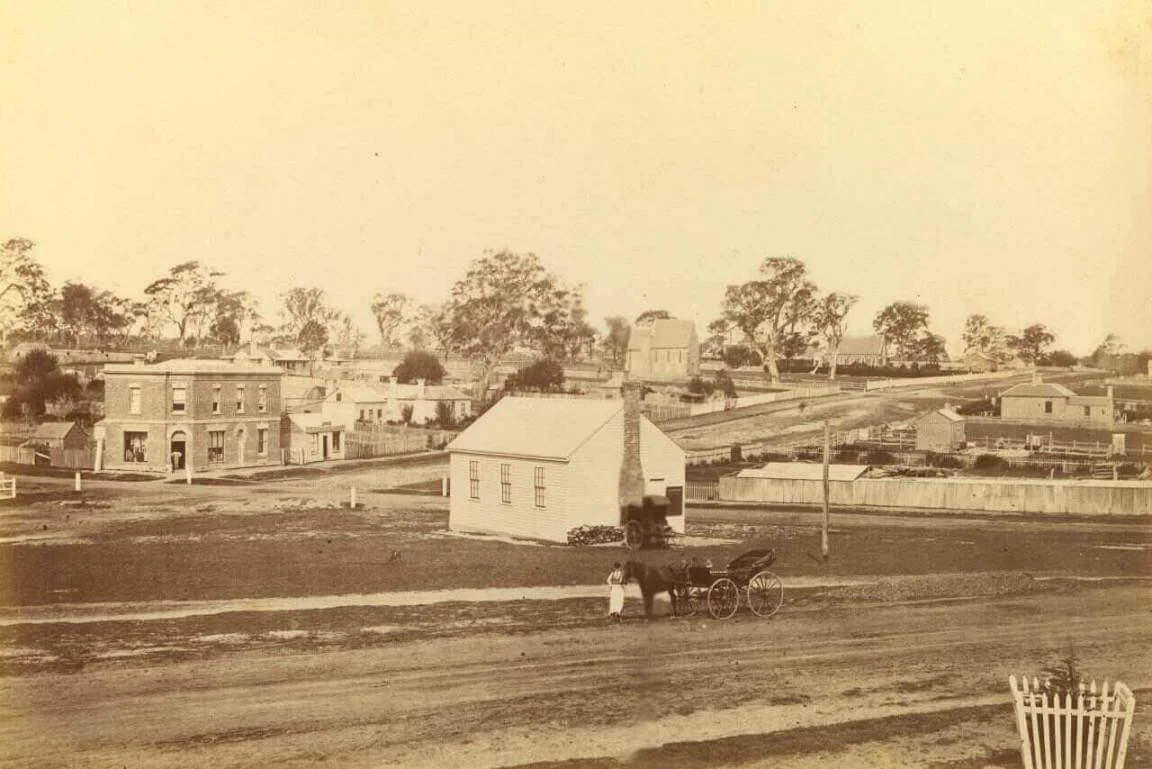
Dandenong between 1866 and 1878.
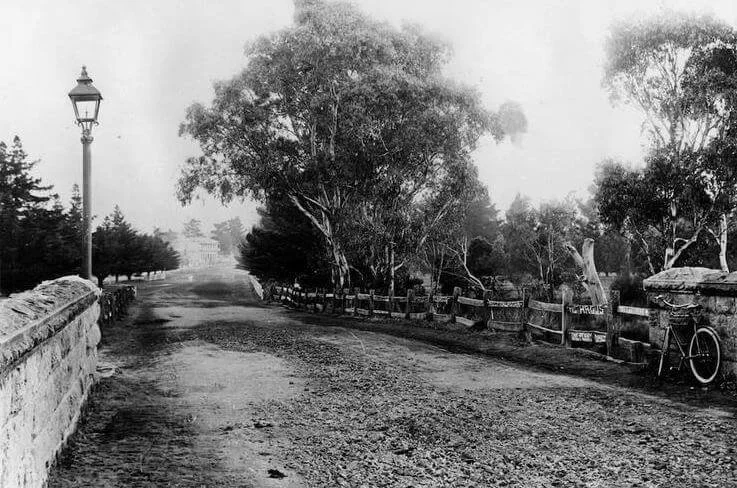
From 1867 to 1919, this stone bridge in Lonsdale Street near Webster Street was the Princes Highway’s Dandenong Creek crossing to travel to Gippsland and beyond. This is the bridge c. 1904.
I came to Dandenong with some prior knowledge of the area. I spent the majority of my teaching career working in the south-east suburbs and specifically Noble Park and Springvale, which together form part of the City of Greater Dandenong. They are, whilst not the size of Dandenong, not dramatically dissimilar to Dandenong itself. They have all experienced economic ups and downs, seen waves of new arrivals from different parts of the world and thus have large multicultural communities, and saw much of their suburban development in the 1940s and 1950s. I always enjoyed working in the southeast suburbs and never saw a need to go anywhere else. I liked the people and I liked the communities they formed.
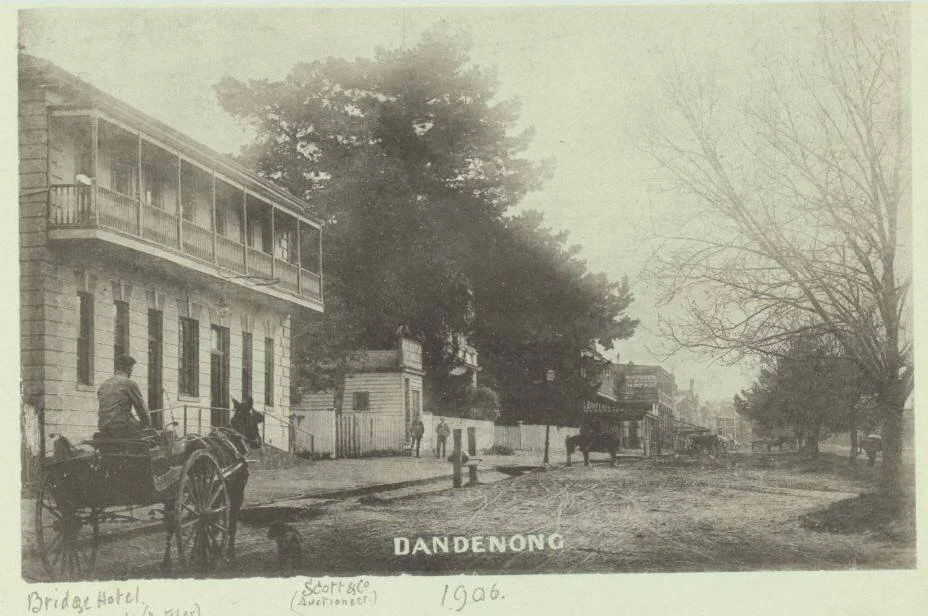
Lonsdale Street in Dandenong in 1908.
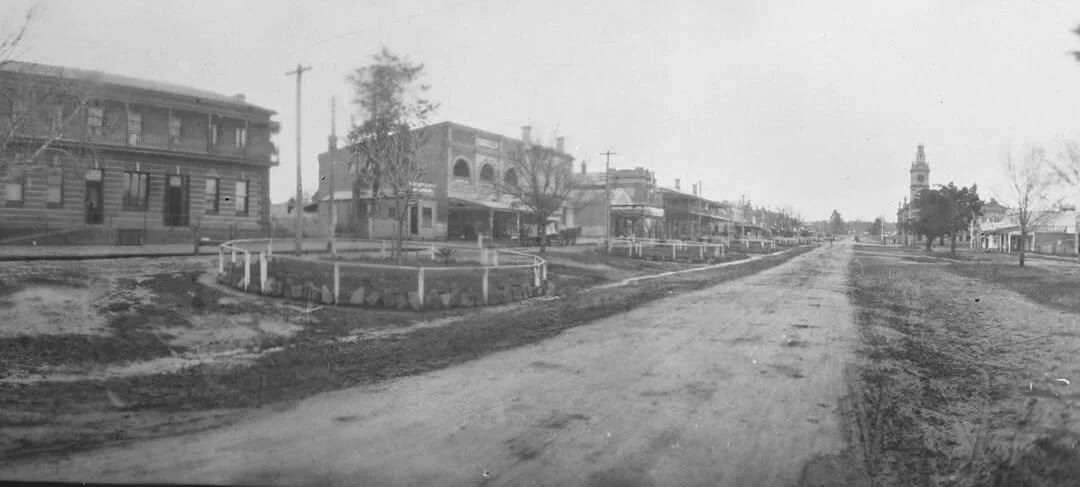
Lonsdale Street in 1909.
Dandenong was colonized by Europeans in 1837 and became a township in 1852. It was known as the gateway to Gippsland and it still is. In 2025, one hundred and seventy-three years later, it may be ‘The City of Opportunity’ as the slogan goes, but in some quarters, it gets some pretty poor reviews. Tell people you live here and you’re unlikely to get a reply like ‘You’re so lucky. I want to live there one day’. Dandenong has a reputation as a place you don’t really want to live unless you have to. When I told people I was moving here, some were surprised that it’s where I’d choose to live. And others, if they didn’t say it, thought it. Why would you want to live in Dandenong? I have, I confess, a perverse side to my character. If there’s a place they say don’t go, I want to go there. I was happy to go to Dandenong because it was familiar and because it wasn’t considered the place to go.
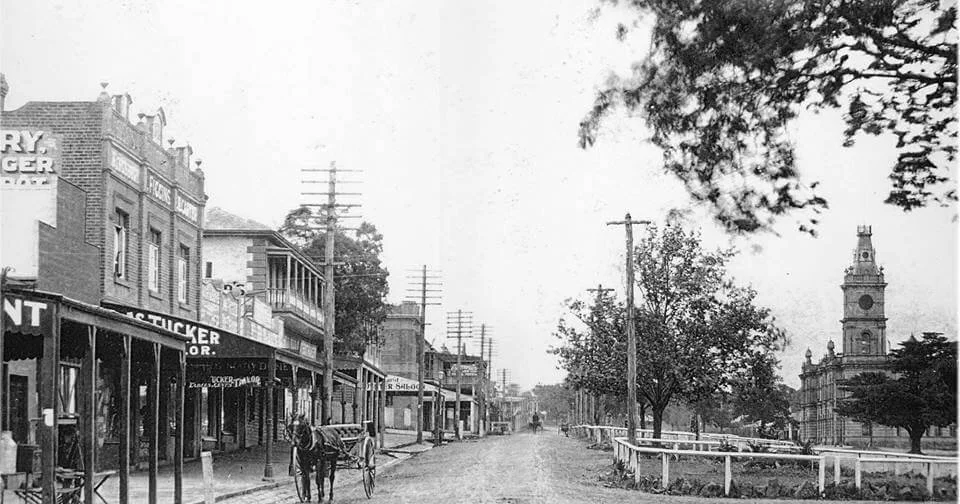
Lonsdale Street in 1910.
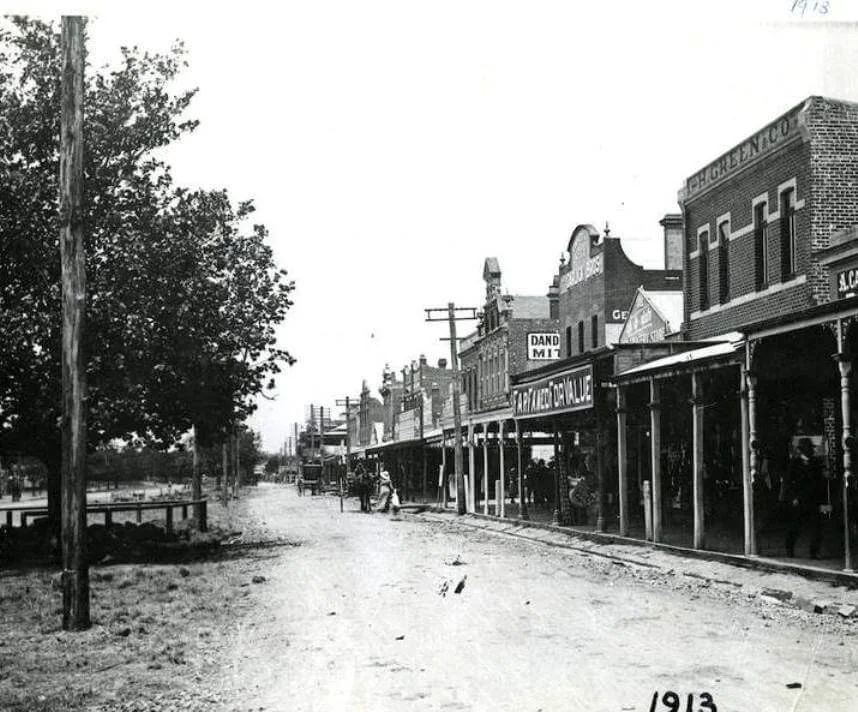
Lonsdale Street in 1913.
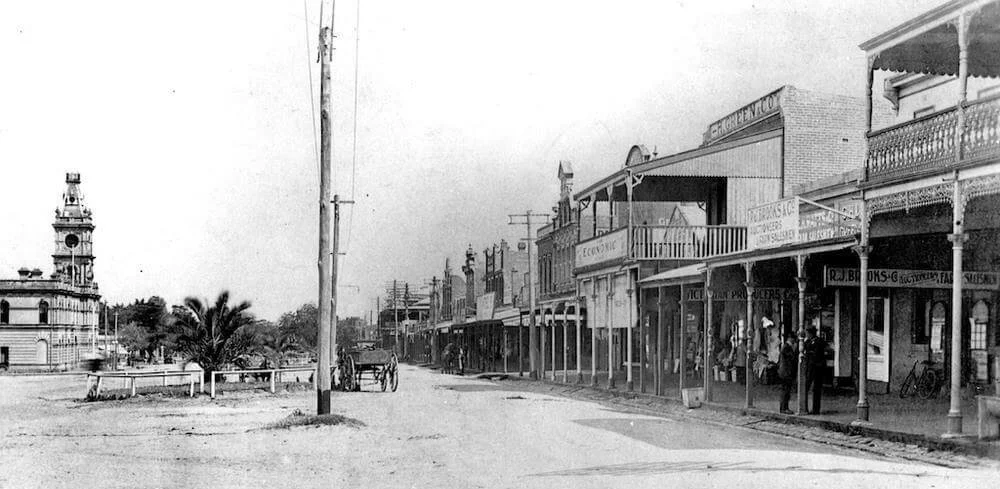
Lonsdale Street in 1920.
People who have lived in Dandenong for 30 odd years or more will tell you that the place is much changed since the 1990s. When General Motors Holden (GMH), Heinz and International Harvester (IH) were in Dandenong, side by side along the Princes Highway, the place buzzed and I believe them. Lonsdale Street was like Bourke Street. Coles and Woolworths variety stores were here, along with Target, Waltons, Guests, Maples, McEwans, Myers and the Dandenong Sports Depot, which supported multiple basketball teams. There were hardwares (including Gerald Maggs, where you could buy single items of anything, which was on Langhorne Street), shoe shops (Verey’s in Thomas Street was especially popular), fish and chip shops (Steve De George’s café was on Lonsdale Street for 54 years, and was, for a time, open 24 hours a day), milk bars, drapers, butchers, grocers, haberdasheries, banks, health food stores, men’s and women’s clothing stores and the like, and cars and people everywhere.
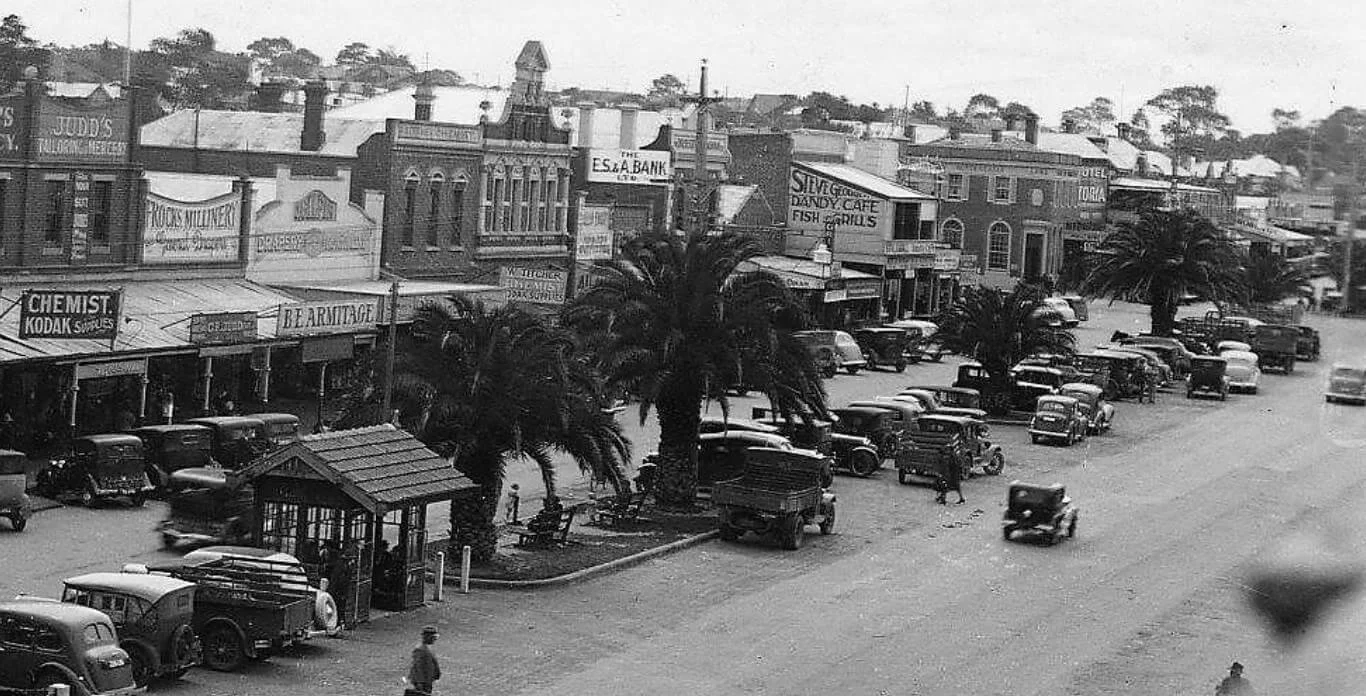
Lonsdale Street in the 1940s.
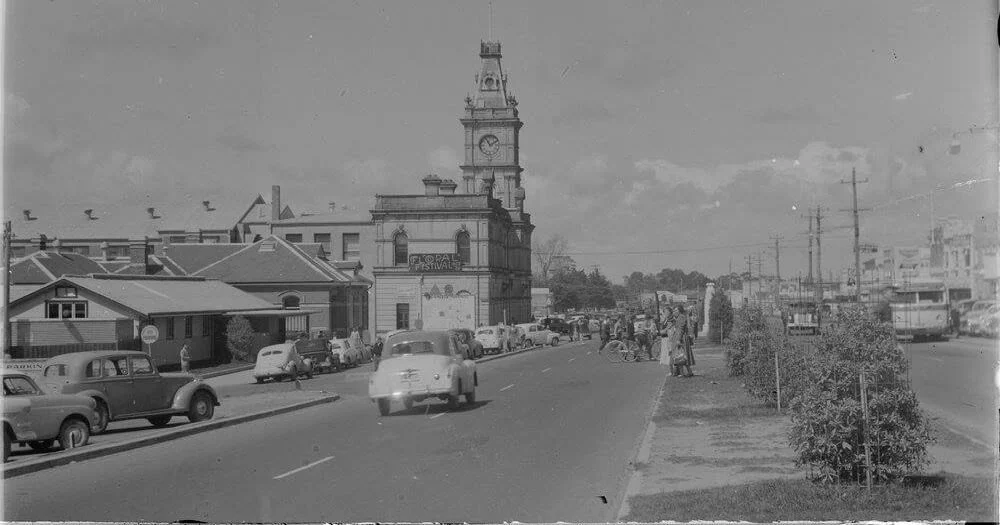
Lonsdale Street in the early 1950s.
GMH, Heinz and IH all closed in the space of a decade. GMH went in 1991, IH in 1992 (acquired by IVECO) and Heinz in 2000. Dandenong has never recovered.
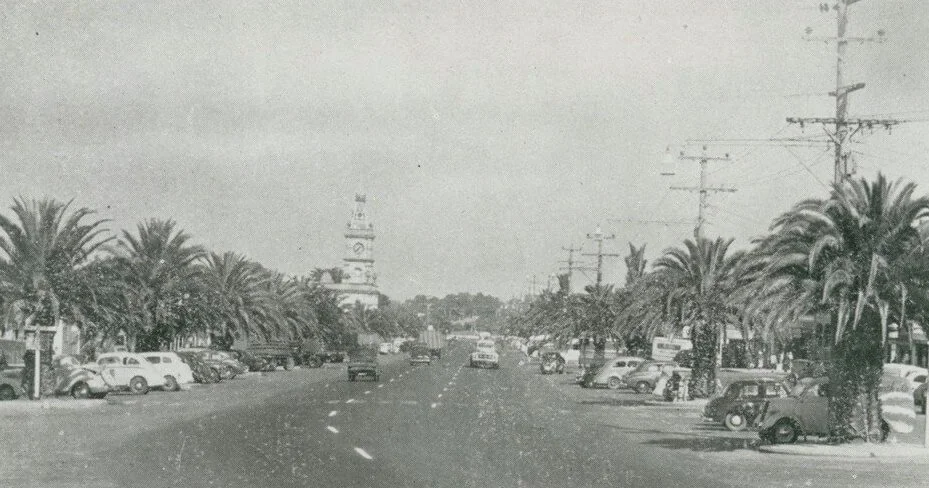
Lonsdale Street in the early 1950s.
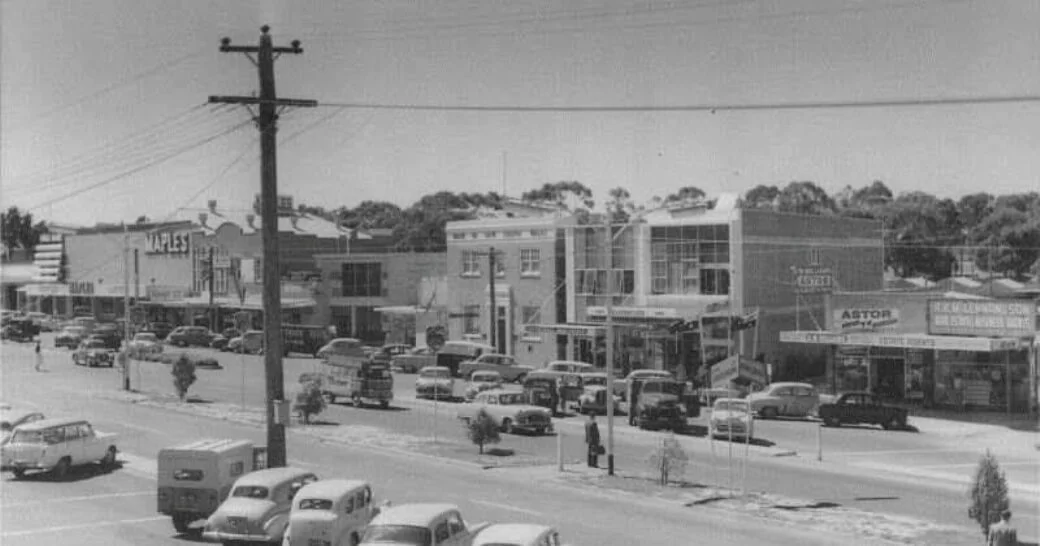
Lonsdale Street in 1959.
Dandenong is much quieter now. Losing GMH, Heinz and IH was comparative to the Latrobe Valley losing the State Electricity Commission (SEC). This also took place in the 1990s. I know that the SEC was a massive presence in the Valley and underpinned its entire economy. Dandenong wasn’t as dependent on its big employers as the Valley, but the comparison stands. Take a walk down Lonsdale Street on a Saturday morning. Fire a cannon and you’re pretty sure not to hit anyone. And without the vibrant Afghan precinct in Thomas Street and Dandenong Market, this would be even more so.
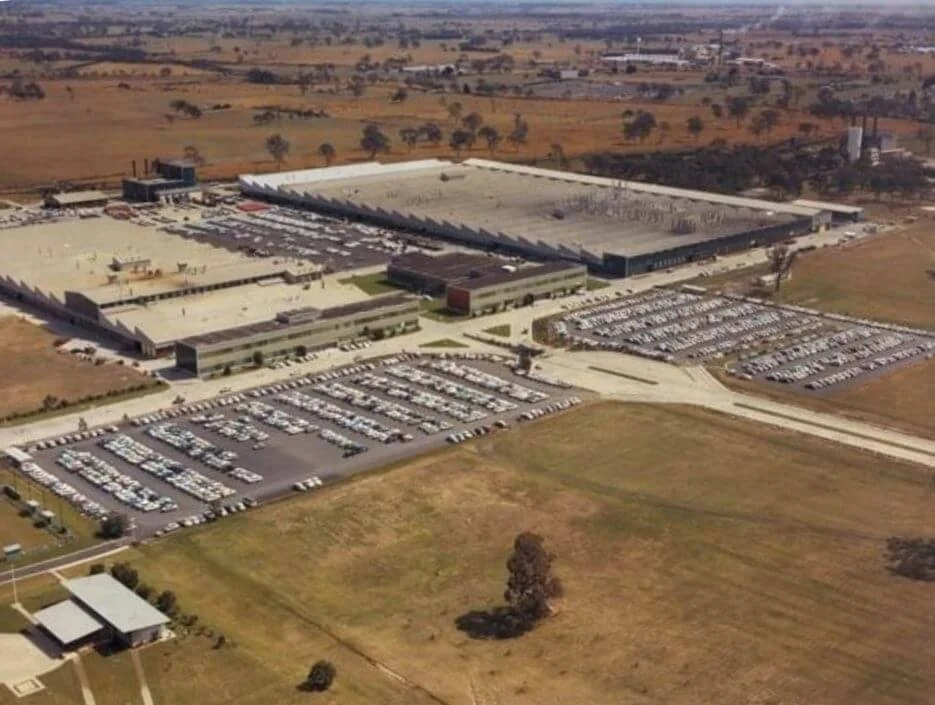
General Motors Holden at Dandenong in 1964.

EH Holdens awaiting export at General Motors Holden in Dandenong. The EH was sold in to countries including Lebanon, Greece, Egypt, Iran and Iraq.
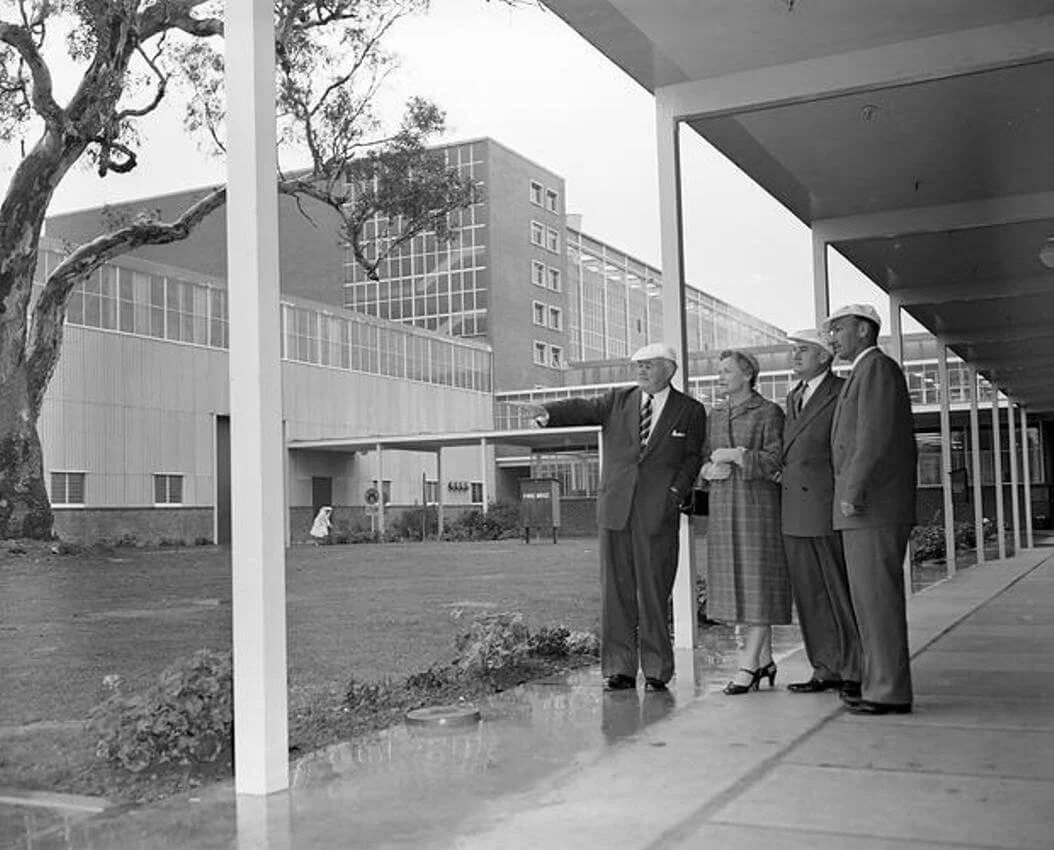
Heinz at Dandenong in 1958.
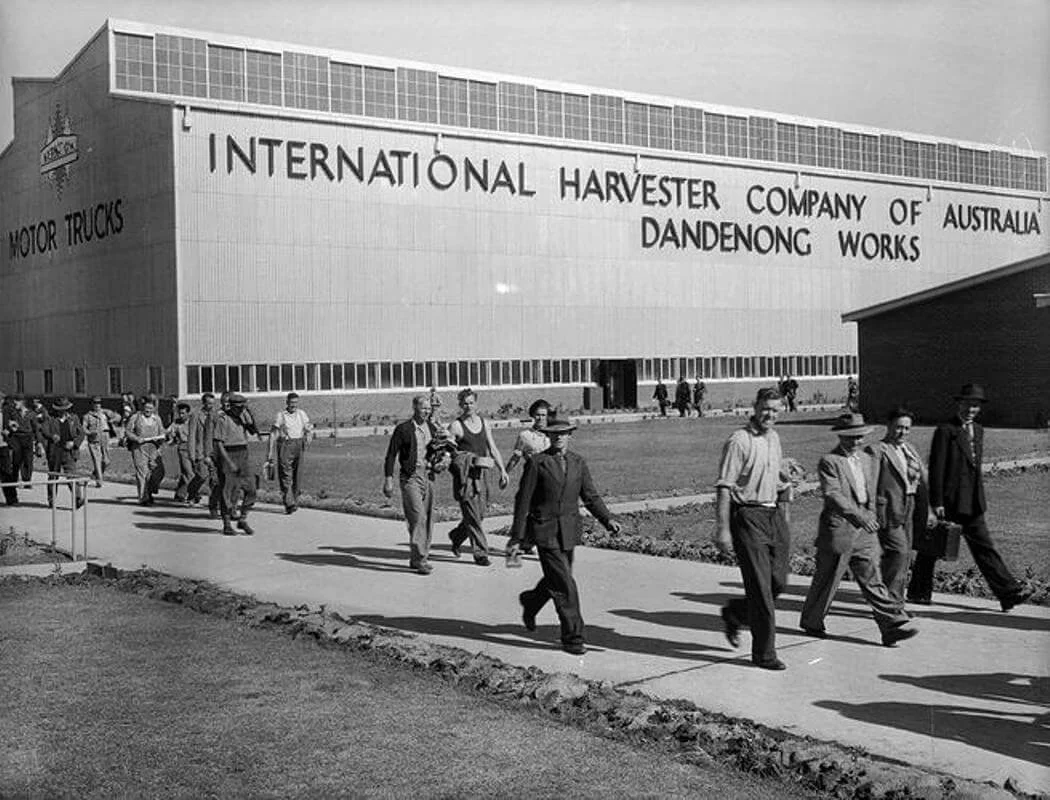
International Harvester at Dandenong in 1953.
The loss of these big companies and subsequent downturn in the local economy has been a contributing factor in the increase in social problems in the area. To be fair, Dandenong is a big place and big places generally attract more problems. But of course, they are everywhere. Pick any suburb, lift the corner of the mat and you’ll find stuff going on. It’s just in Dandenong it’s more obvious, and it’s expected. A homeless person in Mt. Waverley is a rarity and considered out of the ordinary. The same person in Dandenong is expected. This tends to reinforce the idea that Dandenong is not the place to be. We see what we want to see.
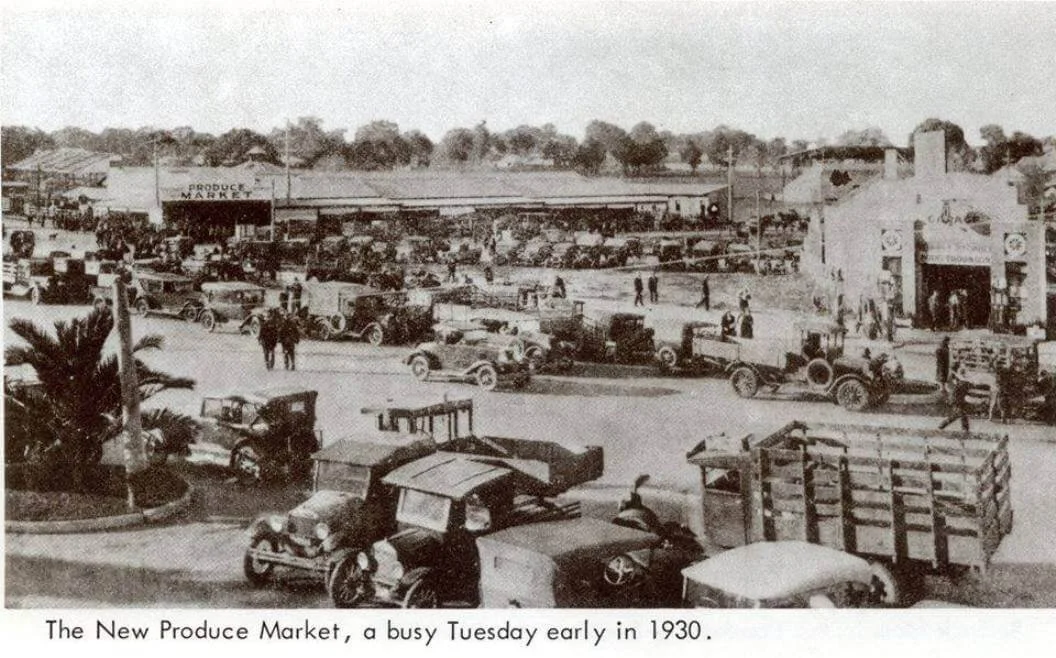
Dandenong Market in 1930.
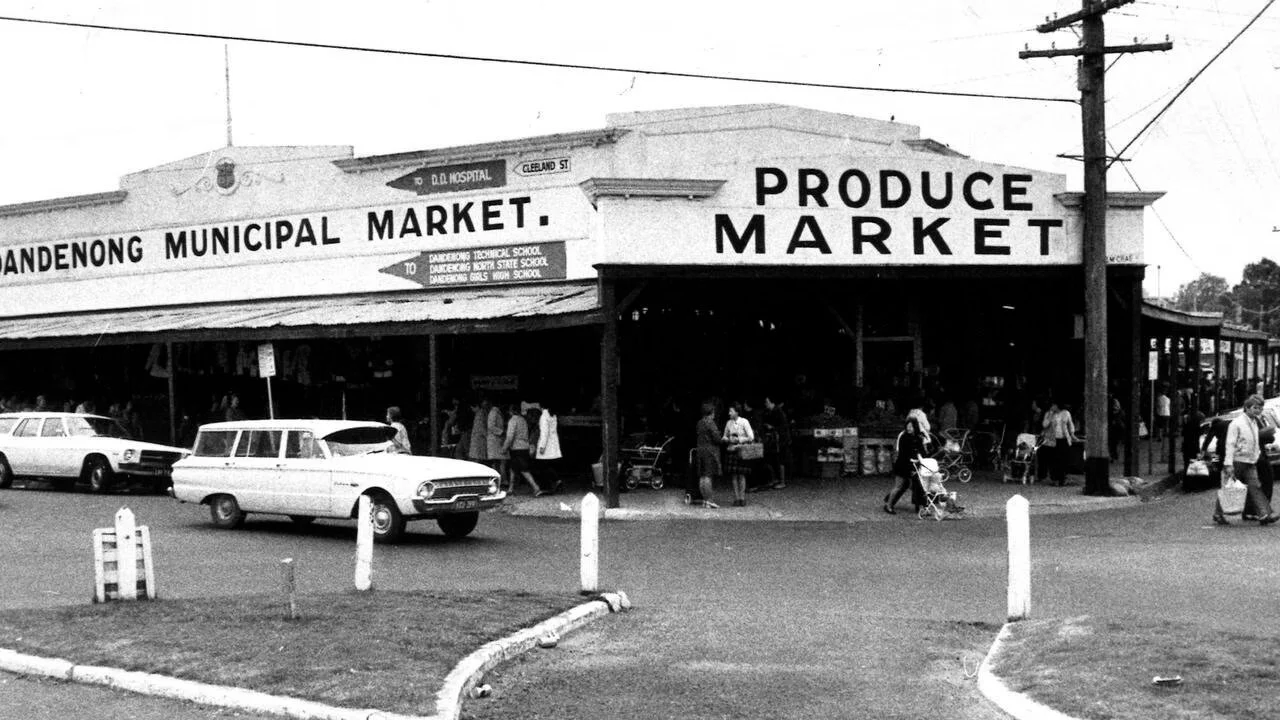
Dandenong market c. 1970.
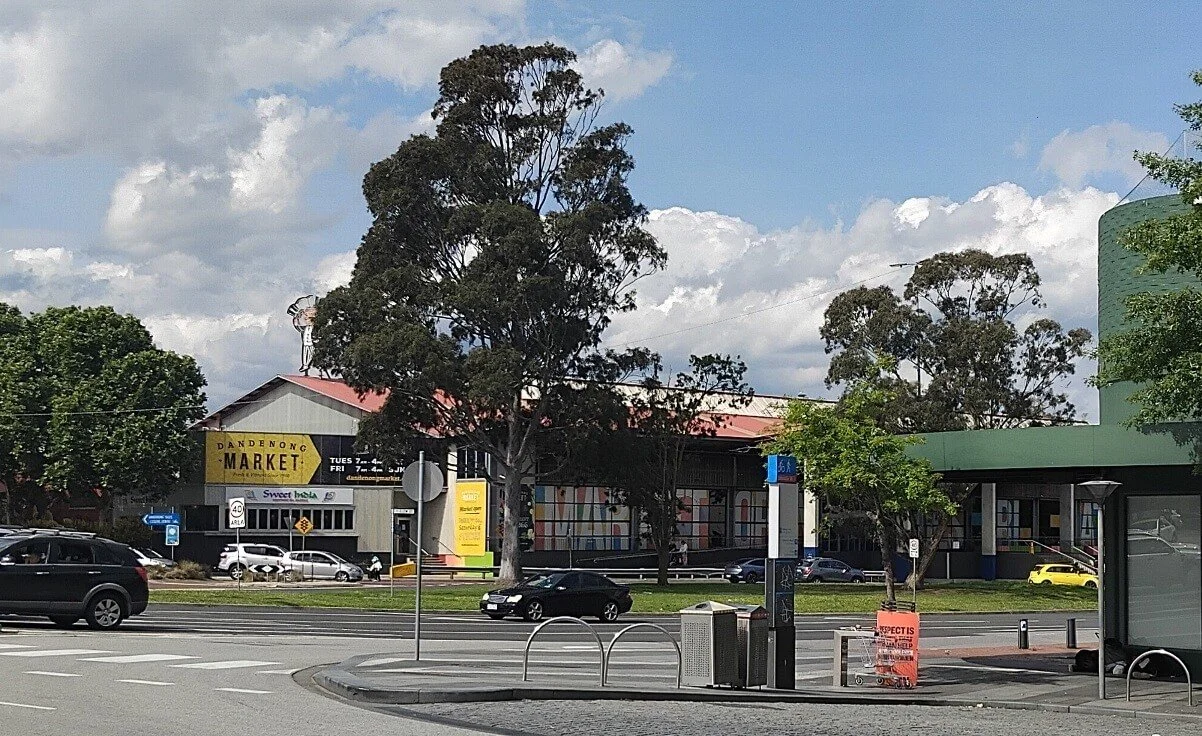
Dandenong Market in 2025.
One of the things that really harmed Dandenong was the wholesale destruction of almost all of its old housing stock. There are plenty of 1950s weatherboards to be found, but find houses built pre-First War, and you’ll struggle. Sometime in the 1950s, 60s and 70s, the developers discovered Dandenong and knocked down almost every old house in the suburb. The oldest and best were, of course, closest to Dandenong proper. They were on the biggest blocks which made them ideal for the ocean of double storey brick flats that dominate much of the area today. Whilst many are well maintained, many others are tired and run-down. It’s such a shame. Whilst providing low-cost social housing is important, they don’t have to look like this and they do the appearance of Dandenong no good.
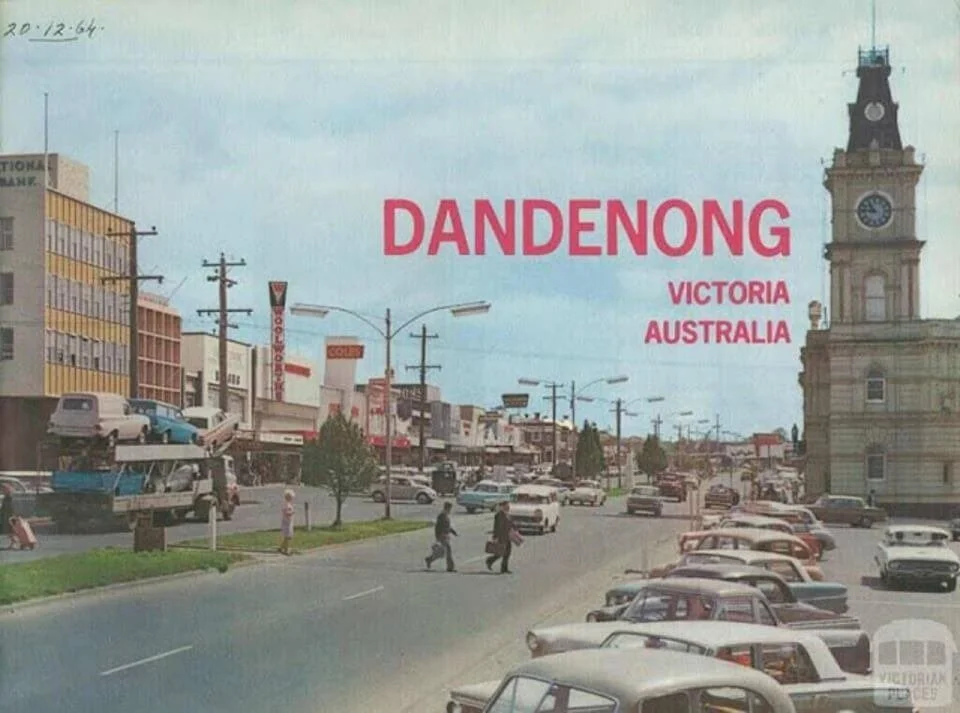
Lonsdale Street in 1966.
We generally all live in the world we want to live in and see what we want to see. If you want to find and participate in the bad side of anywhere, in time you’ll find it. Or it will find you. Similarly, want to see and experience the good, you probably will. I have seen the messiest part of Dandenong and its problems on display, but there is a lot to like about the place as well. There is a lot of good to be seen and found.
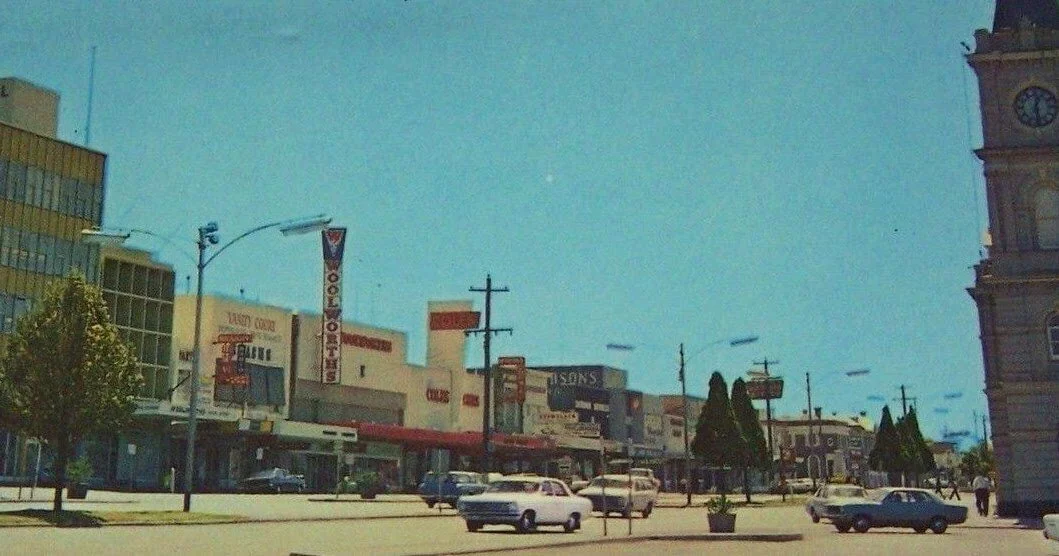
Lonsdale Street c. 1968.
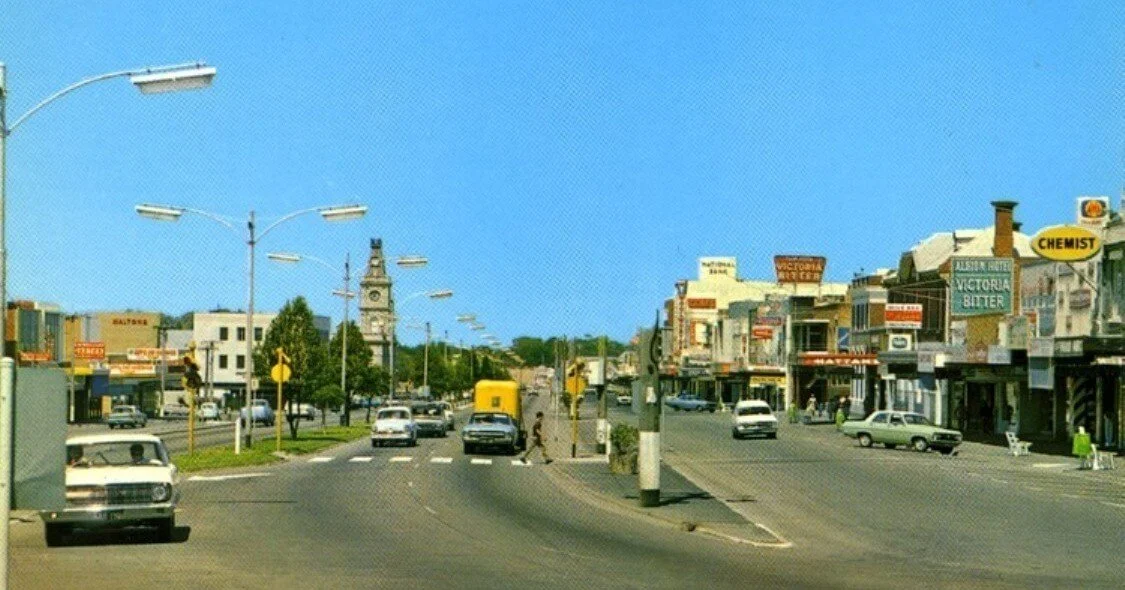
Lonsdale Street in the early 1970s.
Good people are everywhere and there’s plenty of them in Dandenong. Most of them know their suburb, its best and its worst. I know people who have lived elsewhere but moved to Dandenong. A couple in my street lived in Doncaster where people didn’t know or talk to their neighbours. I know that in Doncaster, there will be lots of people who know their neighbours, but this was their experience. They chose to build a home in Dandenong. There must be something in that.

Corner of Lonsdale Street and Walker Street in the early 1970s.
I travel around Melbourne quite a lot and spend time in St Kilda West. In St Kilda West, St Kilda proper, and around this relatively wealthy area, people I pass in the street appear to be no happier than those in Dandenong. In fact, in my experience, it’s just the opposite. Is it because the more people have, the more they feel they need to protect, including themselves? Perhaps. And of course, those same people are dealing with many of the same issues and problems of life that everybody does, such as family, relationships, work, self-identity issues and the like. They even include financial ones; generally speaking, the more people have, the more they want. An interesting defect in the species. Dandenong is not a particularly wealthy area and perhaps a little more egalitarian than most. After all, we are all the same AND we live in Dandy. How up yourself can you be when you live in Dandy?
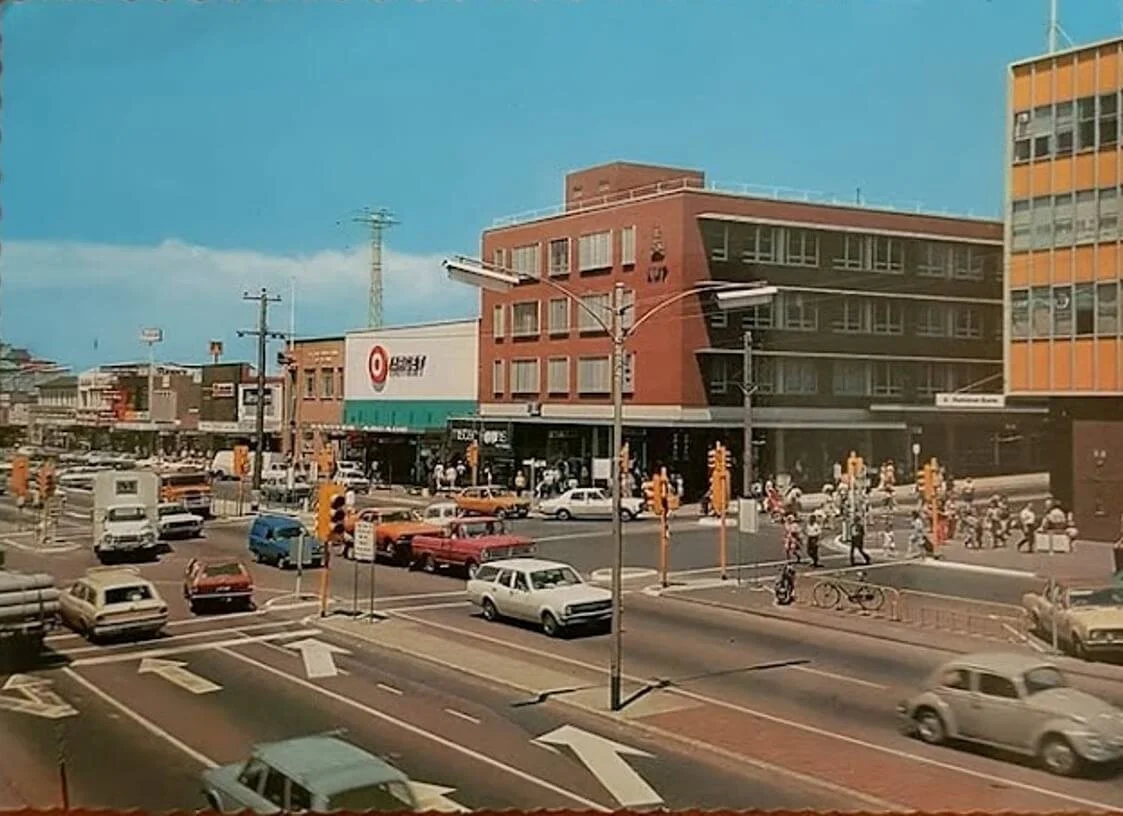
Corner of Lonsdale and Walker Streets in the mid-1970s.
There are a lot of people in Dandenong who were born and raised here. It’s slightly old-fashioned, but staying close to family and the family home is pretty prevalent. If there are a few simple yardsticks to measure the desirability of a place to live, staying there must be one of them.
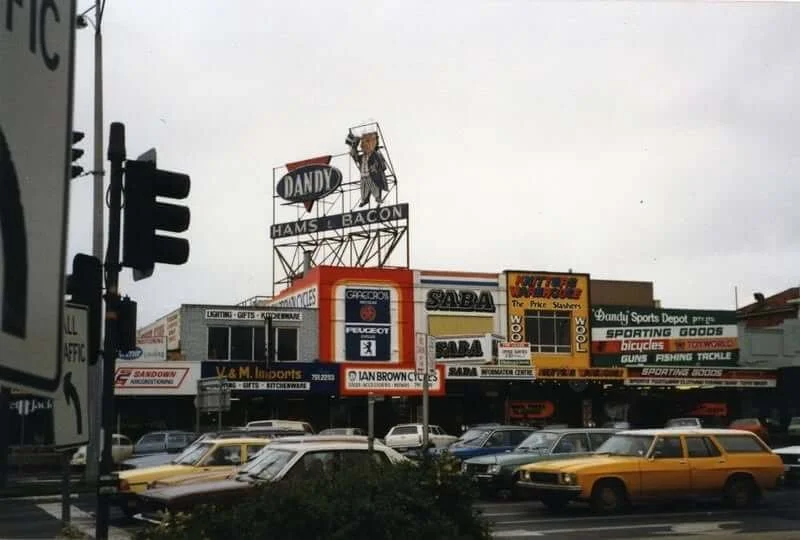
Dandy Ham and Bacon sign in Lonsdale Street c. 1990. The sign was erected by the Gippsland Co-operative Bacon Curing Company above its Dandy Bacon shop on the west side of Lonsdale Street in the 1950s and became a Dandenong landmark. After the factory closed in 1983, it went into storage until 1993 when it was placed above Dandenong Market.

Relocated Dandy Ham and Bacon sign at Dandenong Market in 2025.
One of the appeals of Dandenong is its unpretentiousness. Dandenong is what it is. This is so readily seen in its houses and streetscapes. Many houses are so very well looked after, whilst others are in varying states of deterioration. Front gardens can be beautifully cared for with the neatest of garden beds and manicured lawns, whilst others support long grass, cars beyond restarting, and an array of used and unused domestic items stored outside and placed where they land. Nature strips are mown and trimmed, or allowed to grow long and wild or somewhere between, some sporting an array of the discarded materials of life. In this working-class suburb, people live as they live and express their lives largely unconcerned with what others may think. This reflects what is frequently a different set of priorities to many of those in wealthier suburbs. There is a ‘live and let live’ approach to life. You worry about your issues and I’ll worry about mine. No-one is keeping up with the Joneses. This all indicates what I think is a pretty healthy approach to living.
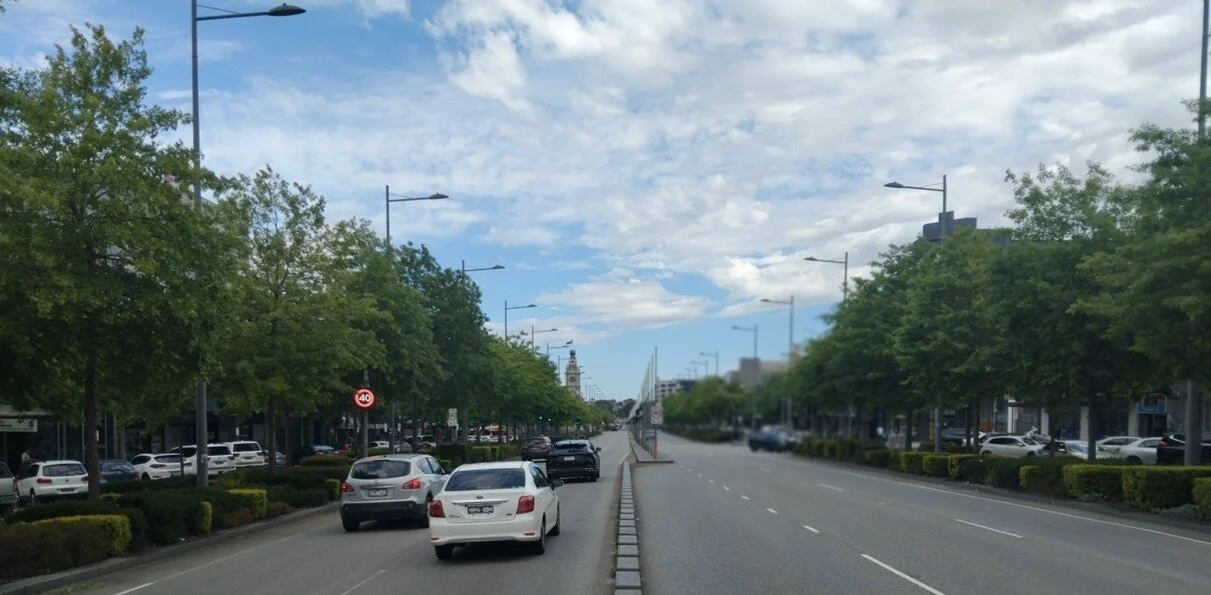
Lonsdale Street in 2025. The problem for Dandenong is that virtually all the traffic that comes down the Princes Highway into Dandenong just passes through it.
A reason to enjoy Dandenong is its multiculturism. It seems to work pretty well here. I don’t think Pauline Hanson’s One Nation (Is the irony in the name not lost on her?) or those of a similar ilk will be coming down any time soon. In that respect, the horse has well and truly bolted. Multiculturalism is evidenced everywhere in Dandenong and perhaps no more than at Dandenong Market. Every colour, style and shape is on display. Everyone is just doing their thing whilst rubbing shoulders with everyone else. Of course nothing is perfect. Some of the people who have come here have been damaged in the places they have come from. Some have seen and experienced things that no human should experience, many because of war. (It’s extraordinary that so little effort goes into avoiding war, given the unspeakable horrors it releases on all involved. It’s a little cliché, but if the politicians who foment the hatred that goes into causing war had the atrocities it brings done to them, they might think twice about what they are about to embark on before doing so. But of course, they won’t and don’t. Liars, hypocrites and cowards.) And some of that damage comes here. In an imperfect and frequently violent and cruel world, as far as is possible, we should support and help repair the lives of those who have experienced these events. Afterall, in a different life, they could have been us and we them.
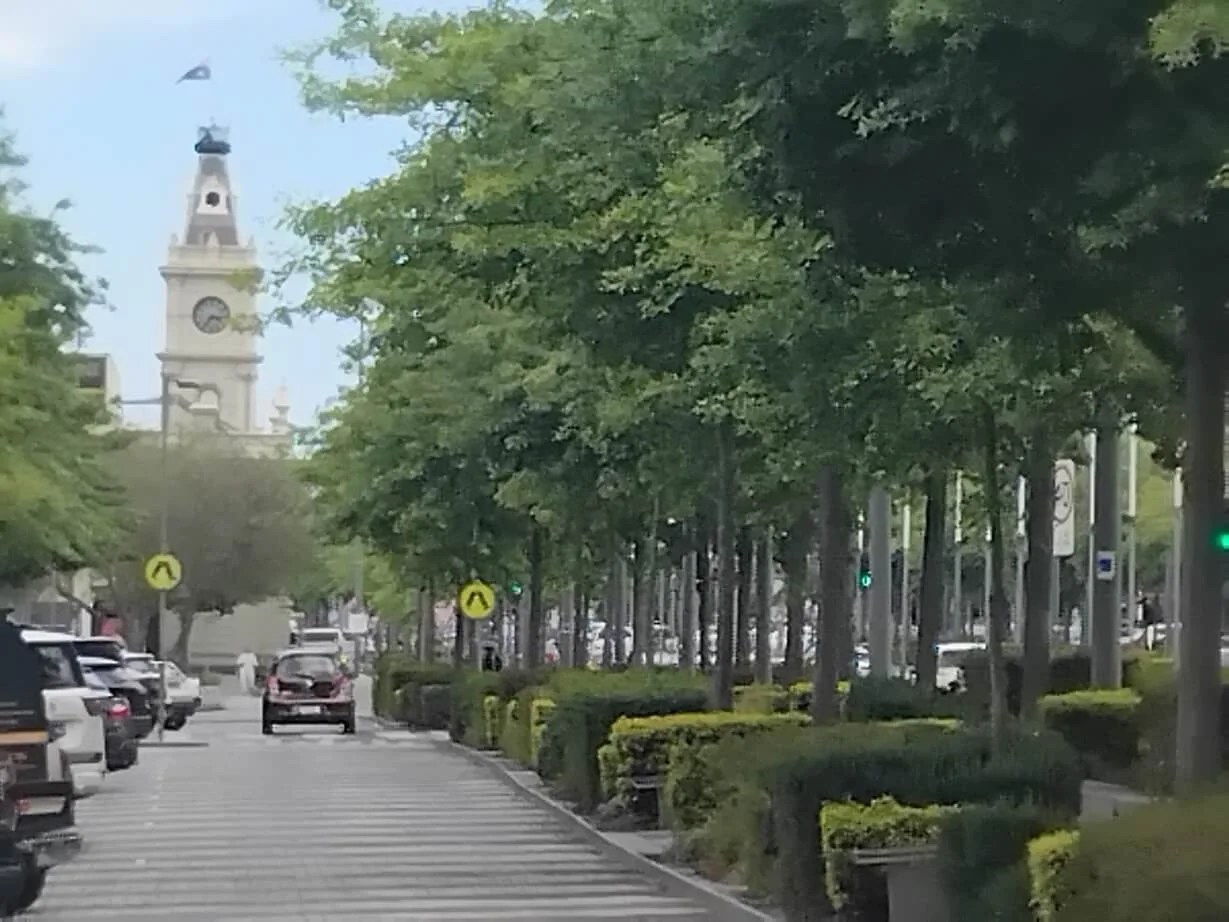
Lonsdale Street in 2025.
One of the things multiculturism has brought to Dandenong is amazing foods. Visit the food court at Dandenong Market and find out. The Afghan and Indian communities are strong in Dandenong; this reflected in their respective precincts. The number and diversity of cafes and restaurants in these places is brilliant. And other cultures, such as the Turkish and Thai communities, and many others are in Dandenong along with their delicious foods.
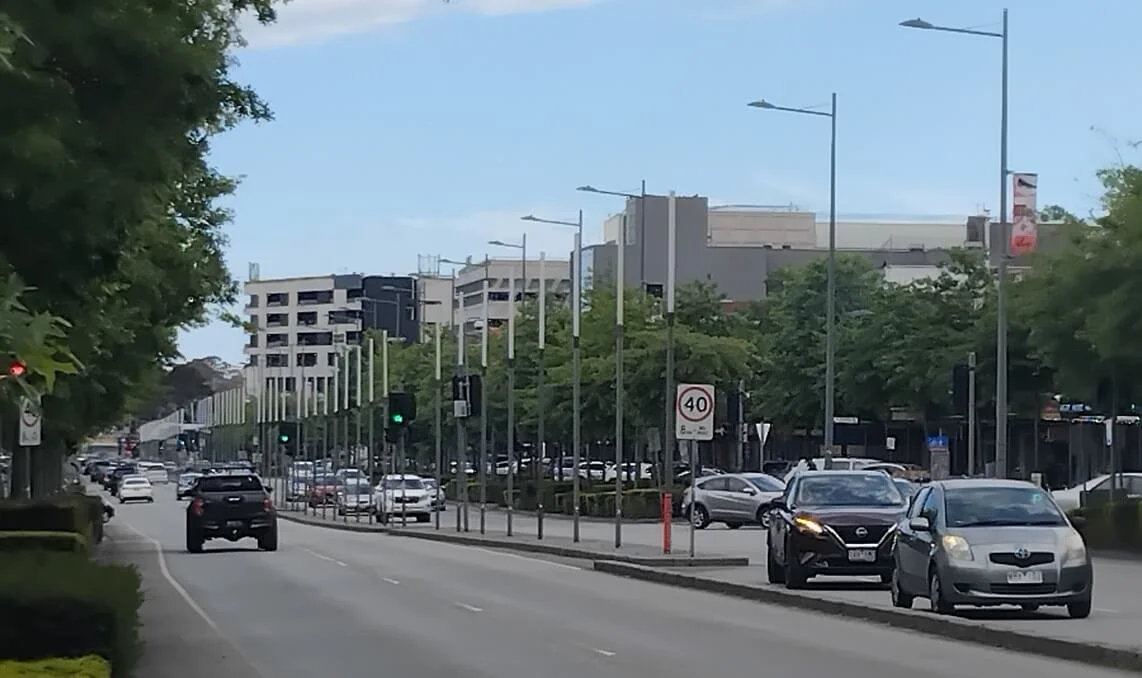
Lonsdale Street in 2025.
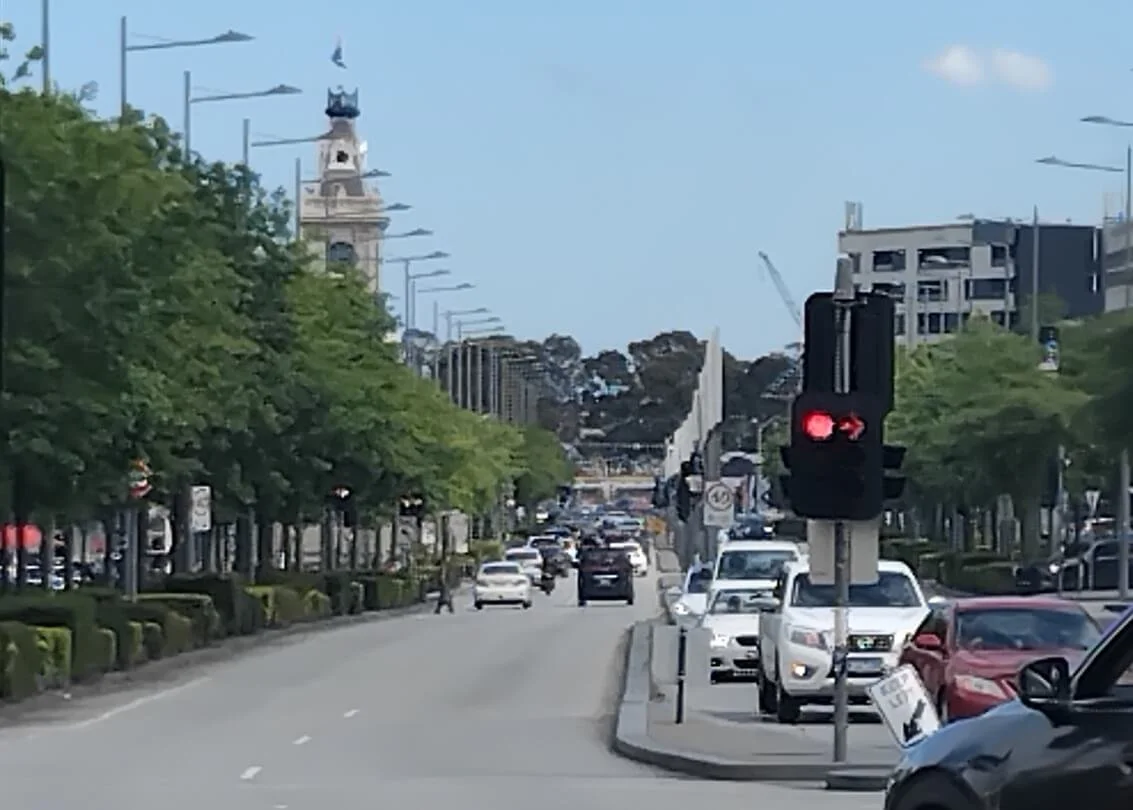
Lonsdale Street in 2025.
Dandenong is easily accessible to almost everywhere. It’s surrounded by major roads and freeways that enable travel in almost any direction with relative ease. Drive southwest for 20 minutes and you’re at Edithvale Beach. Drive northeast for 10 minutes and you’ll find Churchill National Park. Drive for 20 minutes and you’re at the base of the Dandenong Ranges. Head south and you’re on the Peninsula. You’re a distance from the city, but for all that, just time your drive on the M1 or Dandenong Road and it’s not too bad a run. And Dandenong has its train line which travels to the city one way, and to Pakenham and beyond on one line and to Cranbourne on the other.
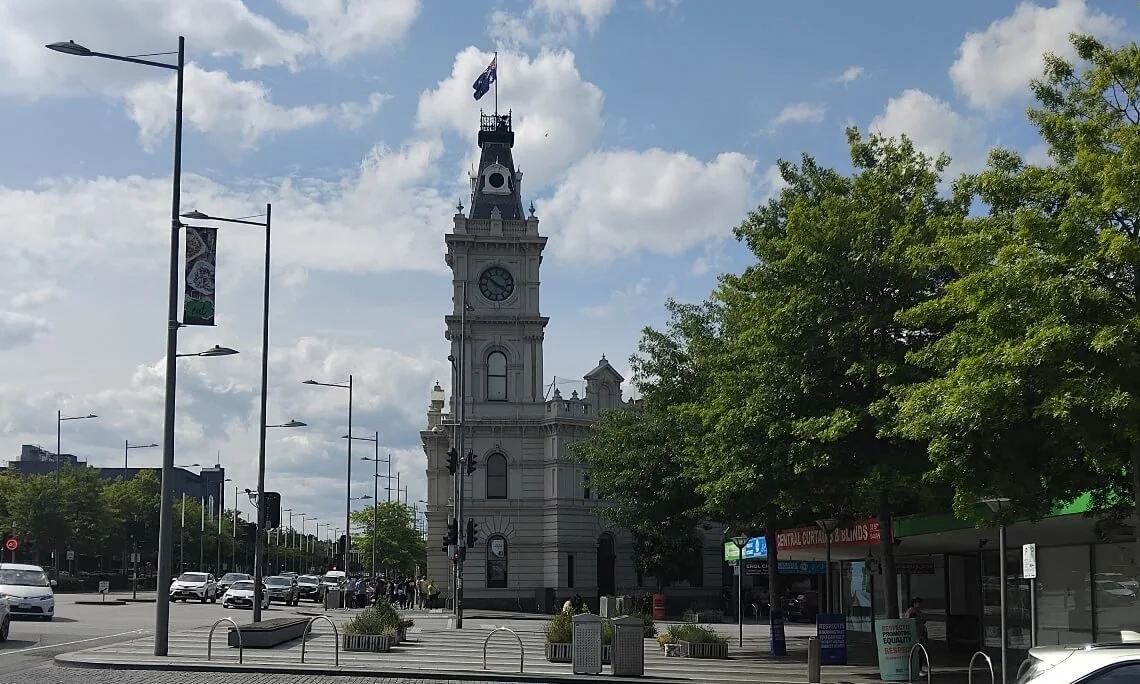
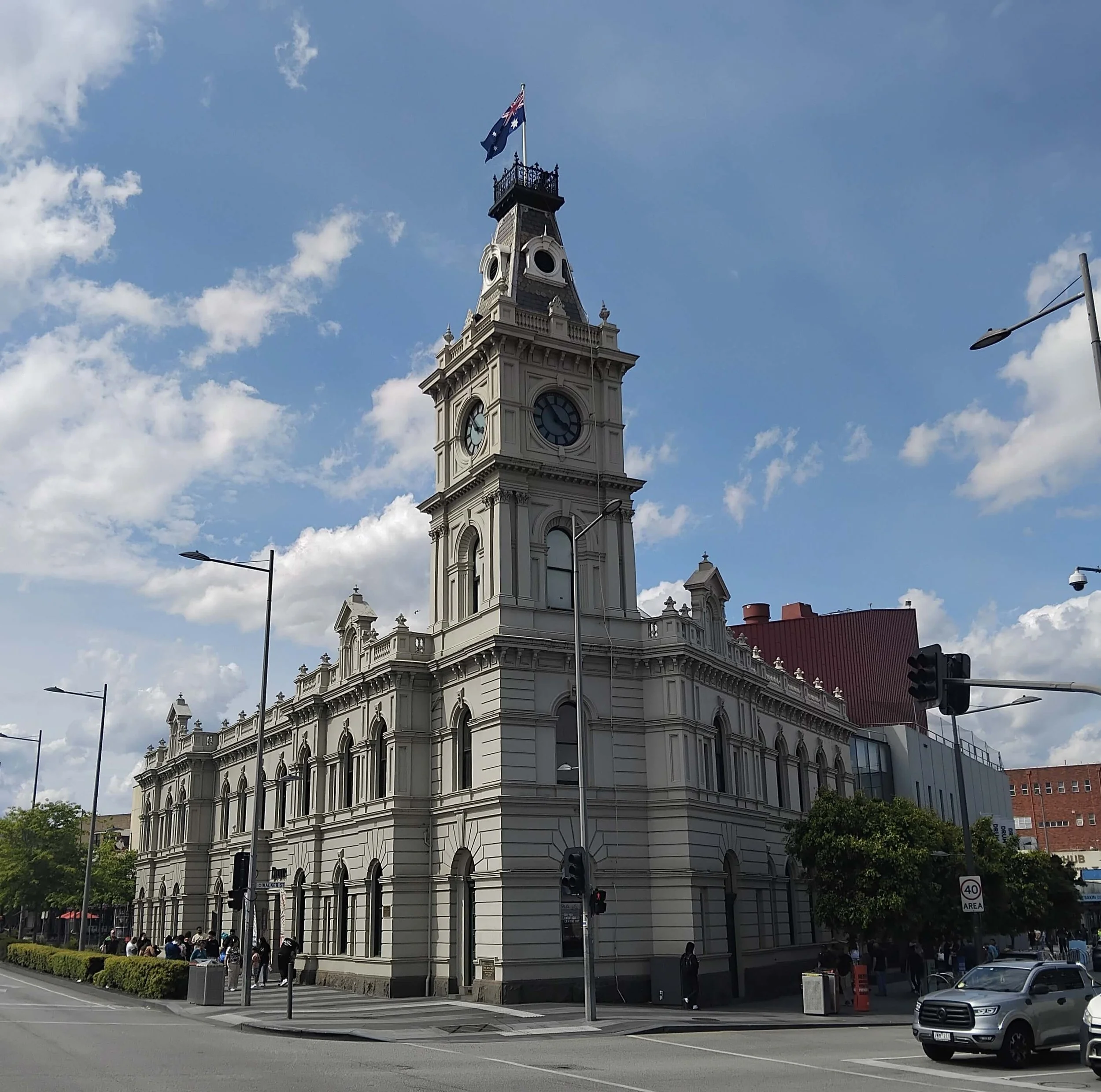
The former Dandenong Town Hall in 2025. This has always been Dandenong’s most important public building and anchors Lonsdale Street. Built in 1890, it has functioned as Dandenong’s main social hub. It’s been a dance, cabaret and ball venue and movie theatre. It’s been a refuge in times fire and flood, functioned as a vaccine station during the 1930s polio epidemic, and seen soldiers depart for war and welcomed many of them back. It was Dandenong’s town hall until 2006 when it was developed as Drum Theatre.
Dandenong is close to or has just about every service or product you could want. It’s got anything and everything your car could possibly need. (How all the panel beaters in Bennett Street stay in business is beyond me.) There is a plethora of furniture and electronic outlets, warehouses storing everything, building supplies, gyms, glass supplies, fast food outlets, cafes, op shops, car and motor dealerships, and a lot more. When I was painting my house, the Australian paint company, Haymes was and remains a three-minute drive from my house. When I’ve had a flat tyre, Bridgestone is two doors from Haymes. My groceries come from LH near the corner of Dandenong Road and Jones Road. Yes, it’s just opposite Bridgestone. Too easy.
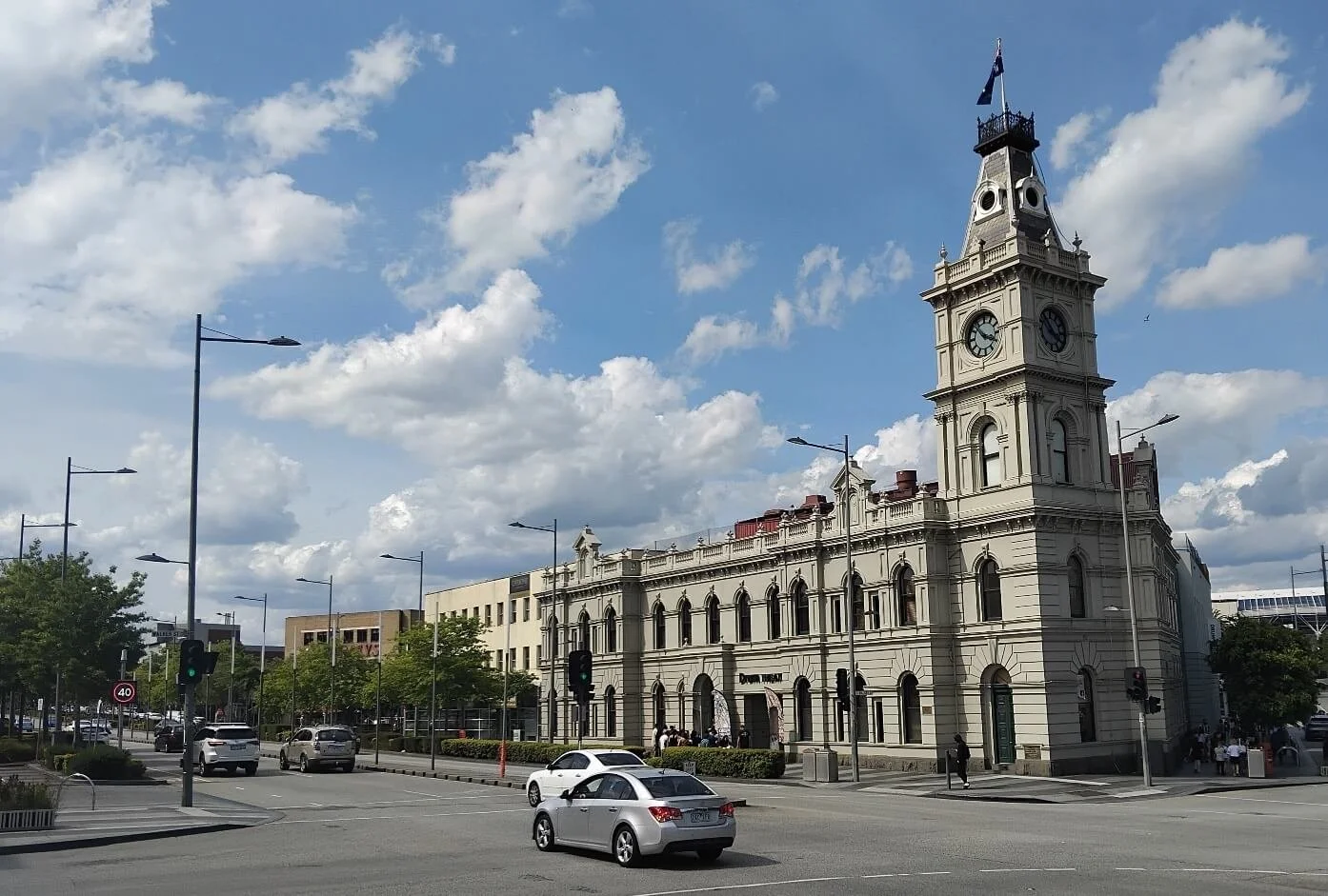
The former Dandenong Town Hall in 2025.
The Dandenong area has some beautiful trees. The place was once covered in river red gums. Great forests of them. They and the wildlife they supported would have made the place a natural wonderland. Of the thousands upon thousands felled for agriculture, fuel and building materials, a handful remain. Some are young and some are old, and the old ones are extraordinary. Surviving in places like Dandenong Park and in some of Dandenong’s other parks and reserves, in Noble Park’s Ross Reserve, along Dandenong Creek, and along the Princes Highway towards the South Gippsland Freeway, these trees are extraordinary and beautiful. I regularly use the Princes Highway and always marvel at the big trees along that road. A big tree is worth looking at and appreciating, and just another reason to enjoy what Dandenong has to offer me, a new arrival in the area.
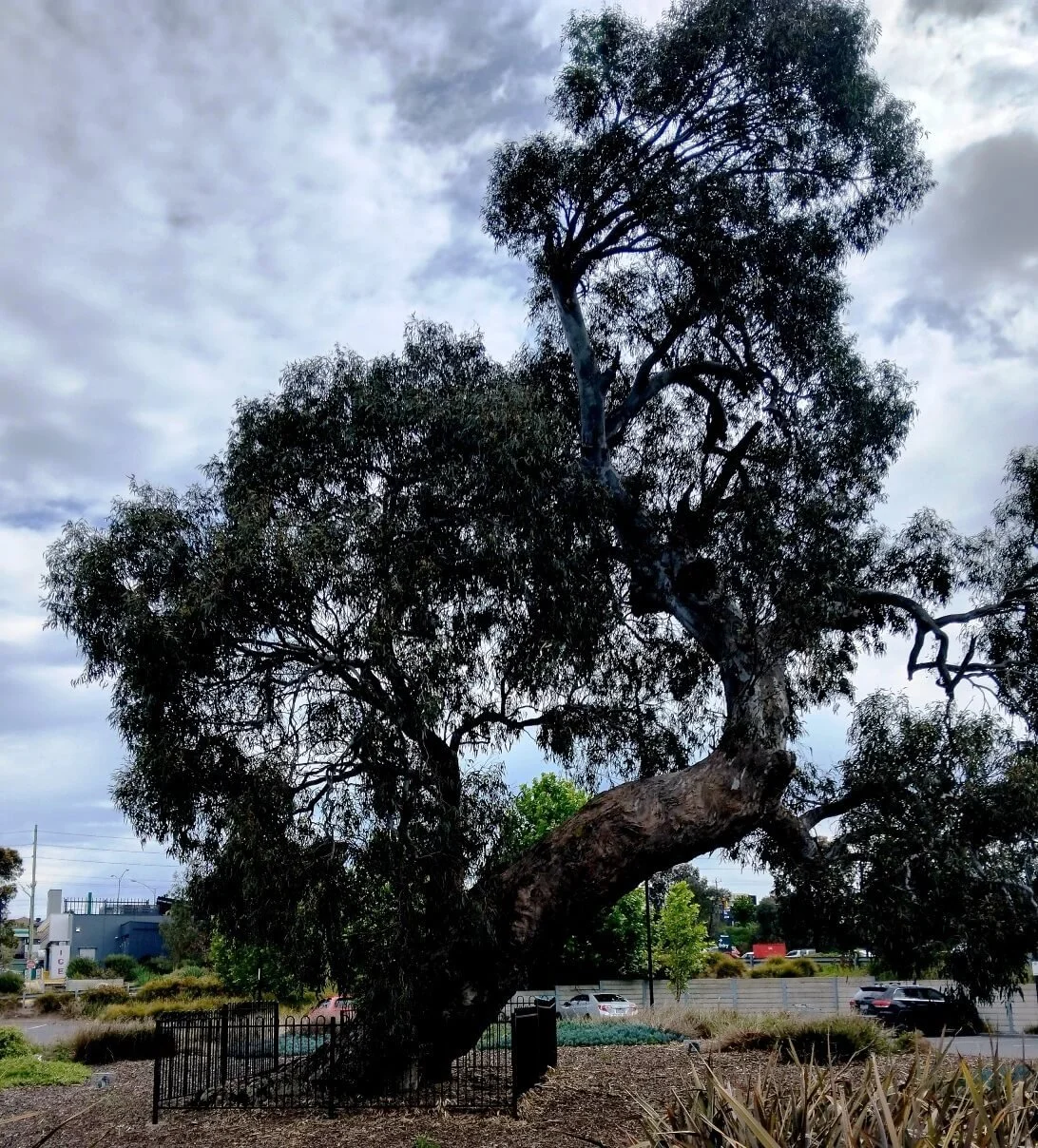
Remnant river red gum on the the former site of General Motors Holden in Dandenong in 2025

Remnant river red gum on the Princes Highway near the former site of GMH in 2025.
What Dandenong shows is that, like the Latrobe Valley, an area is only as strong as its economy. Take away the employment base that underpins it and it will struggle and need to reinvent itself. It will be interesting to see what the next incarnation of Dandenong looks like.
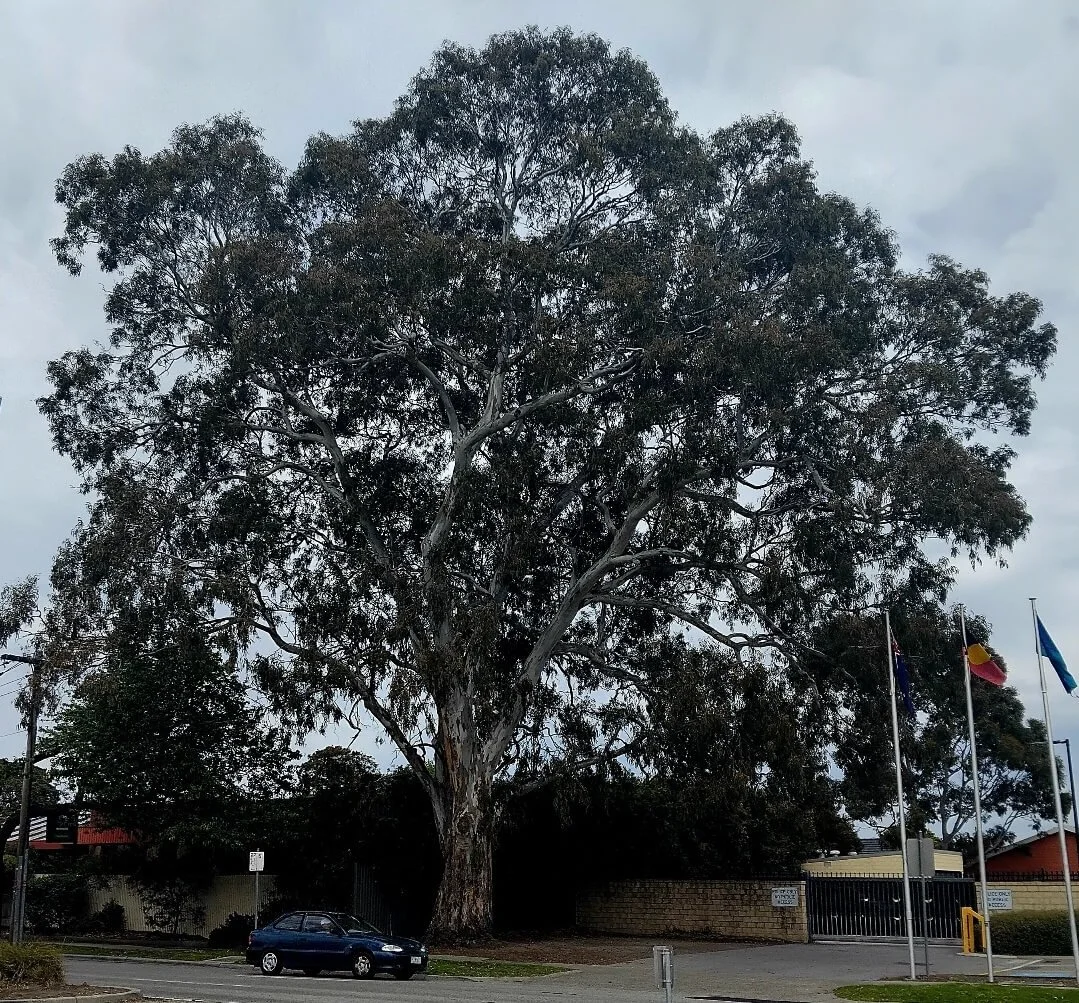
Remnant river red gum in Springvale Road, Springvale in 2025
Dandenong is a diverse and complex place. Whilst it may not be for everyone, what it does provide is a slice of real life in all its colour, shades and challenges. I’ve never found postcode snobbery to be especially appealing. Everywhere has its good and bad; it’s just that in some places it’s more sanitized than others. Look closely at any postcode area. Wherever it is, there’ll be something going on.
Whatever Dandenong is for others, it works fine for me.
Credits
*Pic 1 General Motors Holden at Dandenong in 1964. Photograph by Wolfgang Sievers
*Pic 3 Heinz at Dandenong in 1958. Photograph by Laurie Richards studio.
*My thanks to the Dandenong District Historical Society where most of the photographs on this page have been sourced.