Western and Northern Victoria 1980
At the end of 1980 I was living in a house in Perth Street, Prahran. It was owned by my parents, who had bought it in the late 1970s when a house in Prahran or anywhere cost a fraction of what it does now. My sister was doing nursing at the Alfred Hospital and renting in Greville Street. She moved into the Perth Street house which she shared with others, including for a time, me.
The rendered brick single-storey house on the corner of Perth and Athol streets was built in the 1890s, and was in pretty much original condition when they bought it. It had been divided into two flats. For most of the time I was there, Terry and Stuart rented the back half of the house. Their gate opened onto Athol Street. We rented the front half, which opened onto Perth Street. We were separated by the door that blocked the hallway which led from the front of the house to the rear. Whilst it was almost always closed, there was a lot of interaction between the front and back flats. Our neighbours were good people and obviously in close proximity. We knew many of the same people in the area, a good number of whom lived in Prahran and South Yarra. Whilst much of this had become gentrified, especially South Yarra, there were still significant pockets that weren’t. It sounds like a hundred million years ago. It feels like it too. Music was a much bigger deal back then and we all listened to many of the same musicians. This was in a pre-internet and pre-CD era, which for better and for worse, had greater levels of censorship. A new record coming out by someone good was an event. I can remember buying two copies of Marianne Faithfull’s Broken English from beneath the counter of Greville Records, when the shop was still in Greville Street, but close to Chapel Street. It must have been one of the last records banned in its original form in Australia; banned because of the lyrics on final track on side 2, titled Why D'Ya Do It. The track is of a woman paying out on her man. The album was re-released with the offending vocals removed from the track. We were all saved from Marianne Faithfull and her offensive lyrics. It’s worth saying that her version of John Lennon’s Working Class Hero on this record is the finest cover of this song ever made. She spits the words and makes it her own.
Prahran in the late 1970s and early 1980s was a good place to be. It was becoming gentrified, but still had a healthy dose of grunge about it. The row of 2-storey terraces that dominated the mid-section of Greville Street, diagonally opposite the College Lawn Hotel, were still pretty run down and occupied mainly by nurses, bikers and druggies, amongst others. My sister had lived in one of those terraces. She was in the first category, but knew the second and third.
At the end of 1980, I’d just finished gaining a Graduate Diploma in Special Education at what is now Deakin University in Burwood. The course was the reason I’d cut short my time in North Africa. It was the commitment that brought me back. I had time and energy on my hands, as did our neighbour, Terry. Terry and I decided to use our time by riding our bikes (bicycles) around Victoria, somewhere. We had about two-and-a-half-weeks to fill and that we did.
It was summer and hot. We thought about riding down the west coast, maybe to Warrnambool, but we decided not to. I can’t remember exactly why, but I think we thought it wasn’t quite challenging enough. Also, at that time, my brother was camping with friends in the Grampians, and catching up with him may have helped us redirect our energy away from the coast, and inland instead.
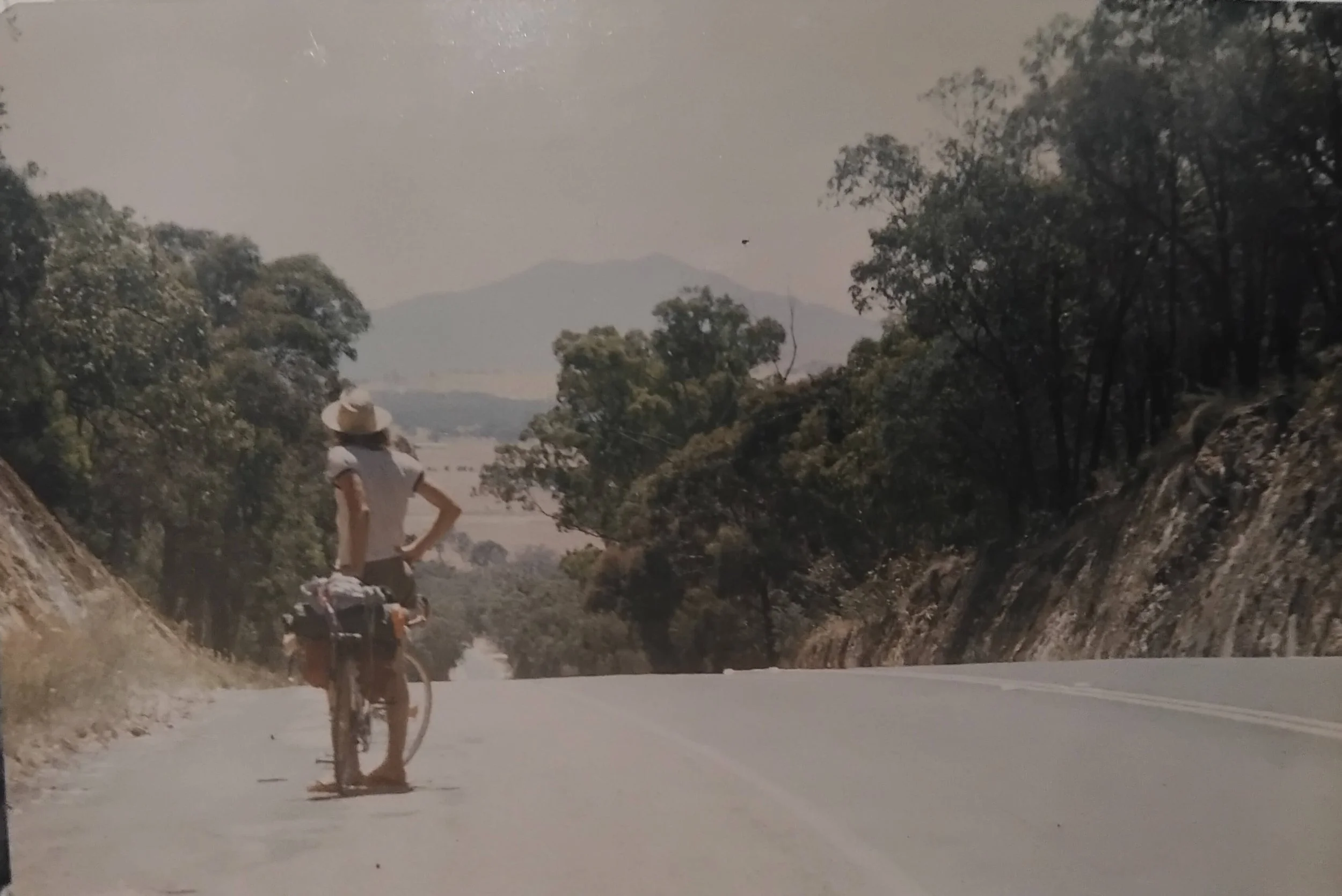
Riding west towards the Grampians.
With typically zero planning, we decided to ride to the Grampians and then north to somewhere on the Murray River. From there, it would be on to Echuca and then back to Melbourne. Too easy.
The fact that the summer of 1980 was a hot one should have been a warning to us and factored into our decision-making, but it never occurred to us that it might become a problem. As I’ve said elsewhere on my Blog; too young and stupid to think, know or care.
I can’t remember how Terry and I left Melbourne, but I have a feeling we caught the train to Ballarat and rode out along the Western Highway from there. We made the Grampians in a single day. We managed this with some help. I knew that my brother’s girlfriend was driving to the Grampians to meet up with him and that she was also using the Western Highway. I can’t remember if she saw us first or vice versa, but one way or another, she stopped and picked us up. She was concerned that our bikes wouldn’t fit into her small car, but we weren’t. We knew they would because we were already done. It was hot and we wanted to get to the Grampians. And we did get our bikes in her car and we did get to the Grampians.
We camped with my brother and his friends near MacKenzie Falls. Camping in the Grampians was much less restricted back then and you could camp almost anywhere in that spectacularly beautiful place.
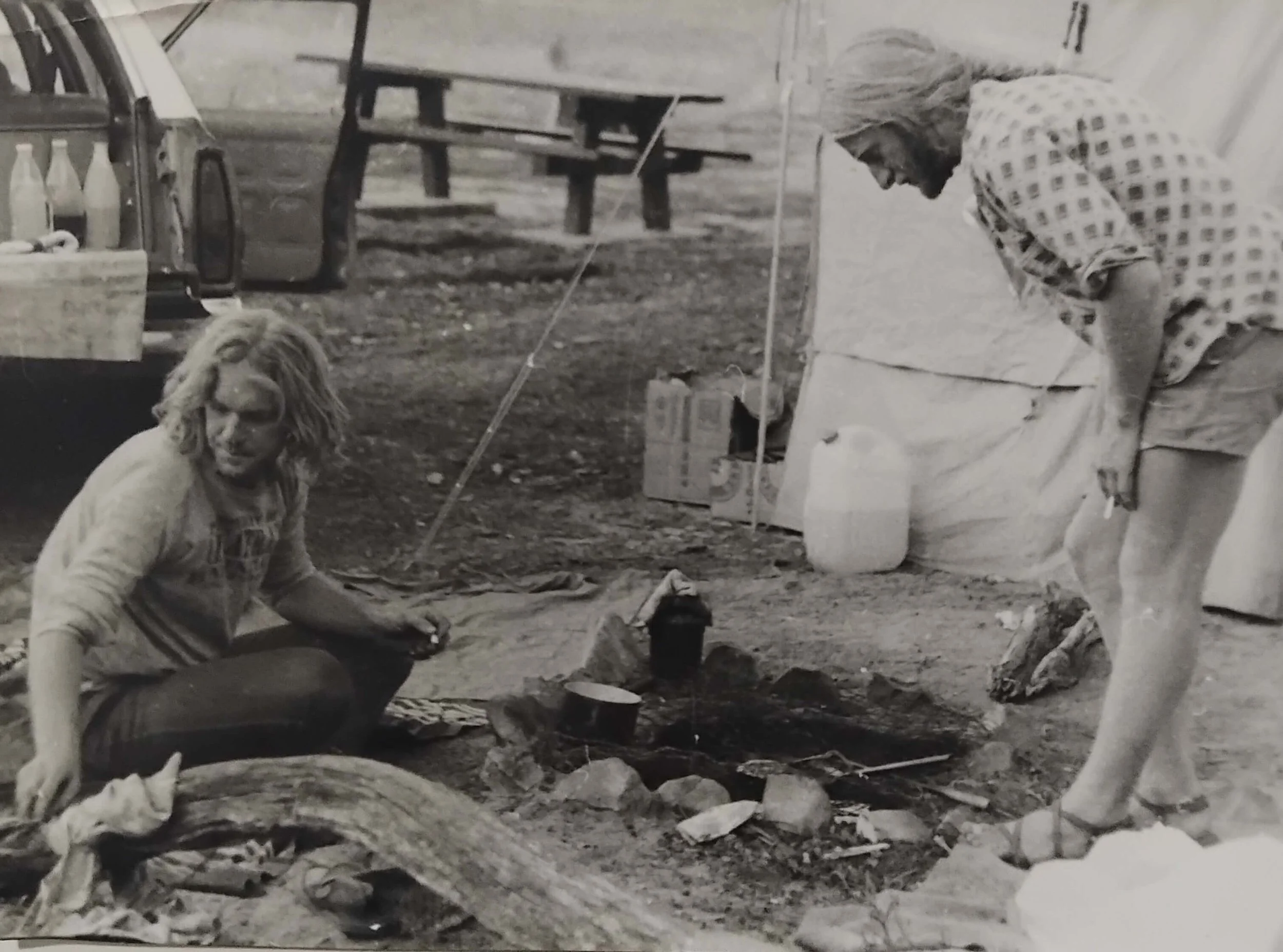
My brother's friend, Garry and me in the Grampians.
After a few days there, we left for the Murray River. The road took us from Stawell to Donald along the Stawell-Donald Road, passing through Marnoo. From Donald, we rode northeast to Kerang and from Kerang to Koondrook on the Murray River. What I remember of that ride is the heat. It was relentlessly hot as we rode into a brutal and unceasing north wind.
Somewhere not far from Donald, Terry came off his bike. We were both feeling the heat and getting to there was our goal. Push on until we get there, and then rest. Terry collapsed from his bike only a couple of kilometres from the town. We were so close we could see it. He didn’t hurt himself hitting the road, but he was sick. He was panting, having difficulty breathing and cramping in the chest. I think we were taking salt tablets and drinking what we thought was plenty of water, but it clearly wasn’t enough. It was pretty obvious that Terry was suffering from heat exhaustion and dehydration.
I got to Terry, threw our bikes into a ditch by the roadside and waved down a car. The first car to come by, stopped. Rob was a young guy, maybe only 19 or so and driving his ute into Donald where he lived with his parents. We got Terry into his car and drove to Donald Hospital where he was admitted. Later, we picked up the bikes.
Terry had all the symptoms of moderate heat exhaustion. The doctor who saw him called it ‘Fun Run Syndrome’. It made sense to us. He said that if Terry was left in his condition for an hour or so, it would become serious and then critical, but thankfully he wasn’t there yet.
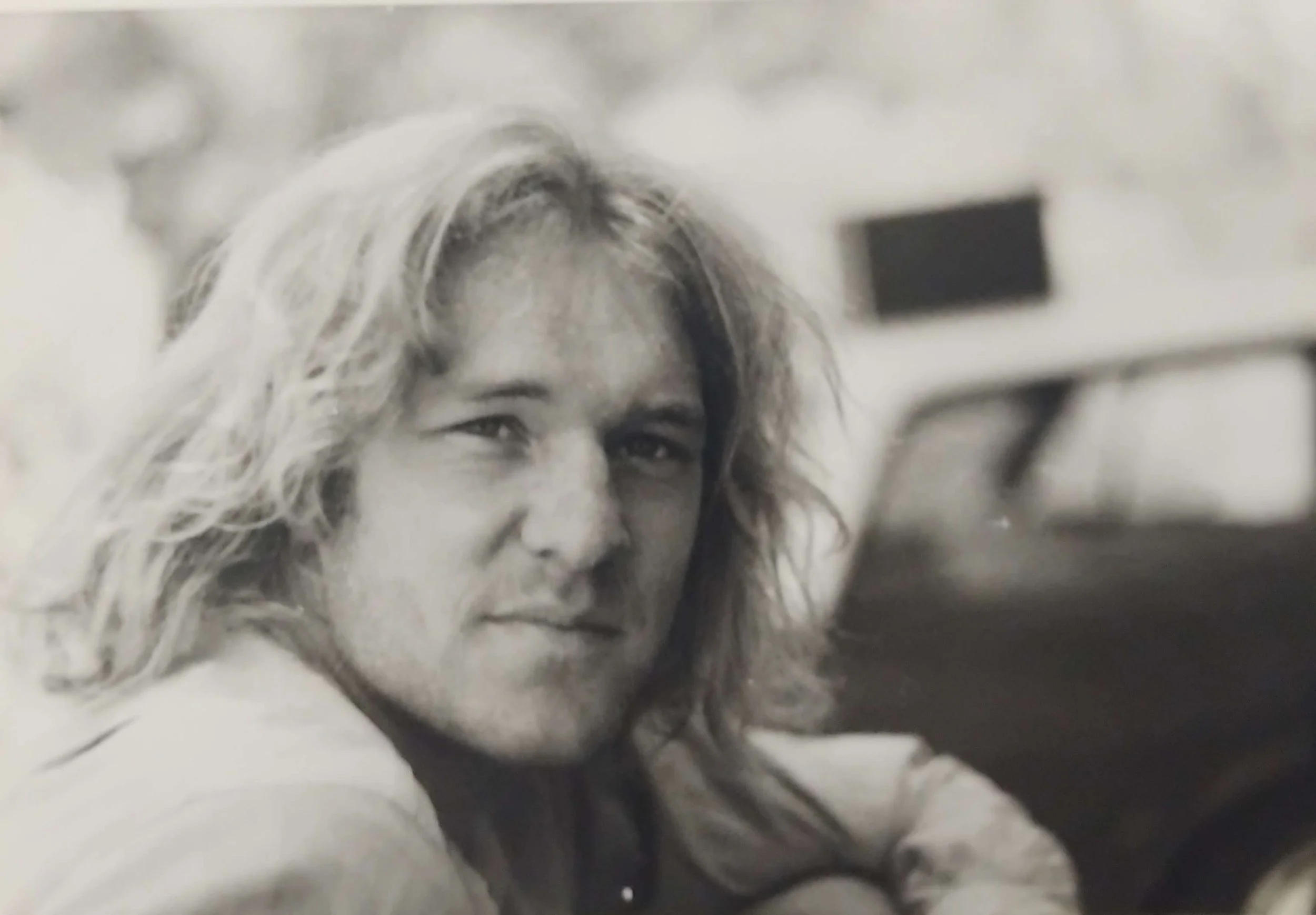
At the Grampians.
Terry spent the next two days in Donald Hospital hooked up to a saline drip and whatever else they do to you when you’re dehydrated. Rob’s parents lived around the corner from the hospital. They put me up and fed me for the time Terry was hospitalized. Talk about country hospitality. They were the nicest and kindest people who wouldn’t have allowed me to stay anywhere else. Good people are everywhere and they’re in Donald too. I hope I thanked them enough for their help. I don’t remember.
Terry recovered and we rode on. The rest must have done us both good, because after Donald, we both felt stronger and rode better than we had. We rode on to Koondrook.
In 1980, Koondrook was a tiny place and well off the beaten track. It looked like the world had passed it by. The disused railway station, a part of the railway line that had linked the town to Kerang, sat in the centre of the main street and thus the centre of town. It was the main feature in a place dominated by old and empty buildings, a pub and a general store. It felt and looked like the town that time forgot.
Next to the town is Gunbower Island, the largest inland island in the southern hemisphere. Its heavily forested and frequently flood-prone landscape is part state forest and part national park. Koondrook National Park was declared in 2010. Prior to its establishment the island was state forest and largely available for logging and firewood collection. Both activities have now essentially ceased. But back in 1980, we knew that timber was being cut because we met a couple of the island’s timber cutters. We had set up camp on the island. Close to the town, we could easily walk to the general store to get food and supplies. We met them when they walked into our camp.
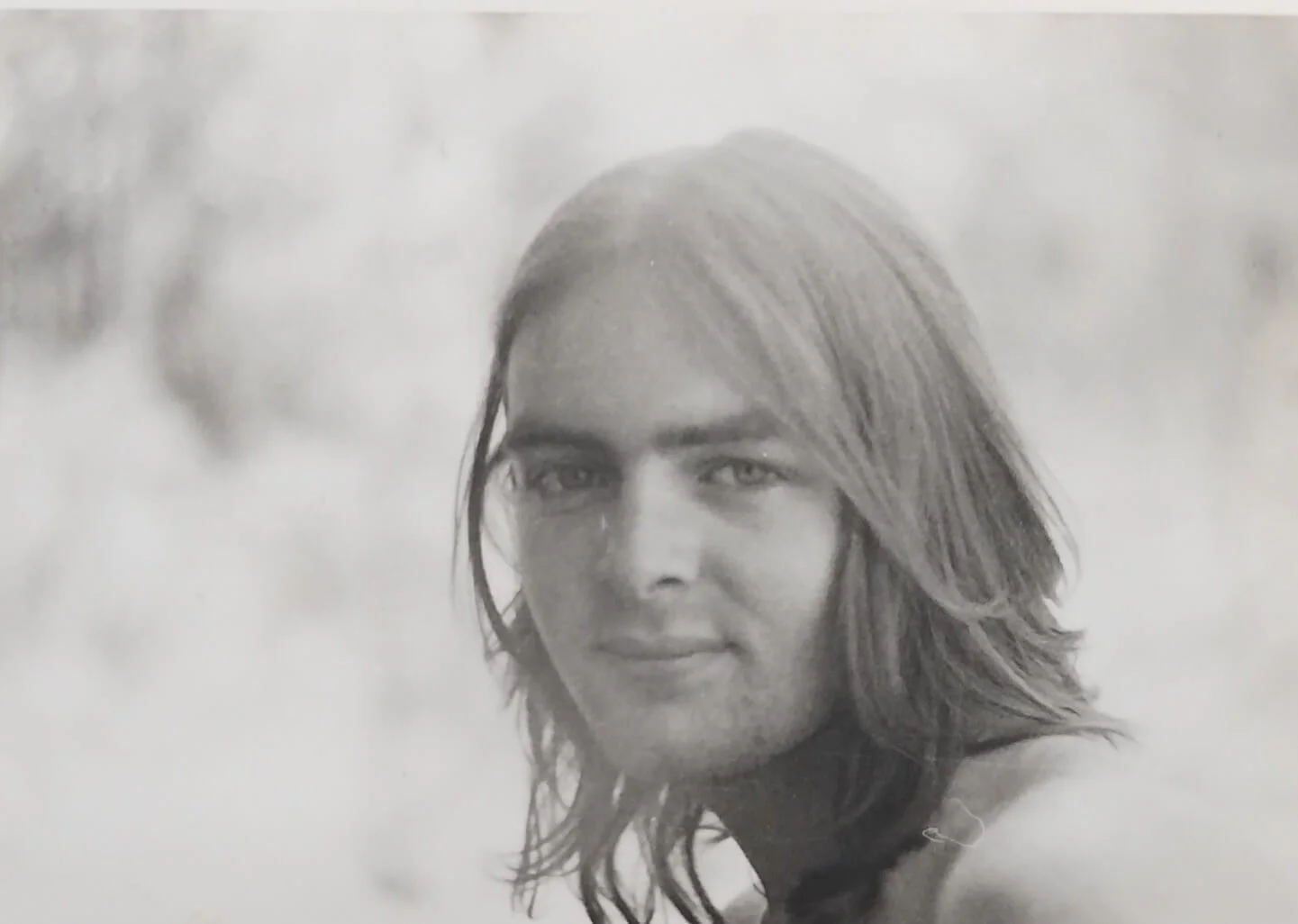
Terry in the Grampians.
Our new friends were two single blokes whose names I have long forgotten and who were probably in their 60s. They were good mates and lived on the edge of town and close to the island and the trees they felled. I think they cut redgums for fence posts and firewood.
They were pretty friendly to us, I suppose because our presence there was out of the ordinary and of interest. I also got the impression they had each other as mates, and not a lot else going on. One of them invited us along with his mate to his place for a meal and a beer. His place wasn’t far from our camp and so we went.
I don’t want to be unkind to these men because we were invited to eat with them and because we came from two very different worlds with next to nothing in common. Terry and I were young, largely non-drinking Melbournites on the road. They were two hard-living country men who lived isolated lives in a remote area of a remote part of northern Victoria.
My memory of our evening has pretty much faded over time, but the brilliant Australian movie Wake in Fright comes to mind. For those unfamiliar with the film, the Google summary says it all. ‘Wake in Fright (1971) follows a young schoolteacher whose stopover in a remote outback mining town spirals into a harrowing descent through gambling, heavy drinking, and the town’s menacing rituals. Visually striking and unsettling, it’s a landmark of Australian cinema praised for its raw authenticity, tense atmosphere, and powerful performances, though its brutality—especially a real kangaroo hunt—makes it intense viewing for the squeamish’.
We didn’t ‘do’ Wake in Fright, but we had a taste of it. What I remember is two blokes (not us) getting increasingly drunk and angry, not necessarily at us, but at the world in general, which included each other. There was hostility in their conversation. With a few drinks in them, they became two men with chips on their shoulders. It all became more and more tense as we said less and less and they, more and more. We tried to leave several times, but they preferred we didn’t. We kept on trying until we were eventually released. Our host must have deemed the evening a success, because the next day he invited us back to his place to admire his prize bull, and we went. It appeared to be a very fine animal, though I don’t claim to be an expert on the subject.
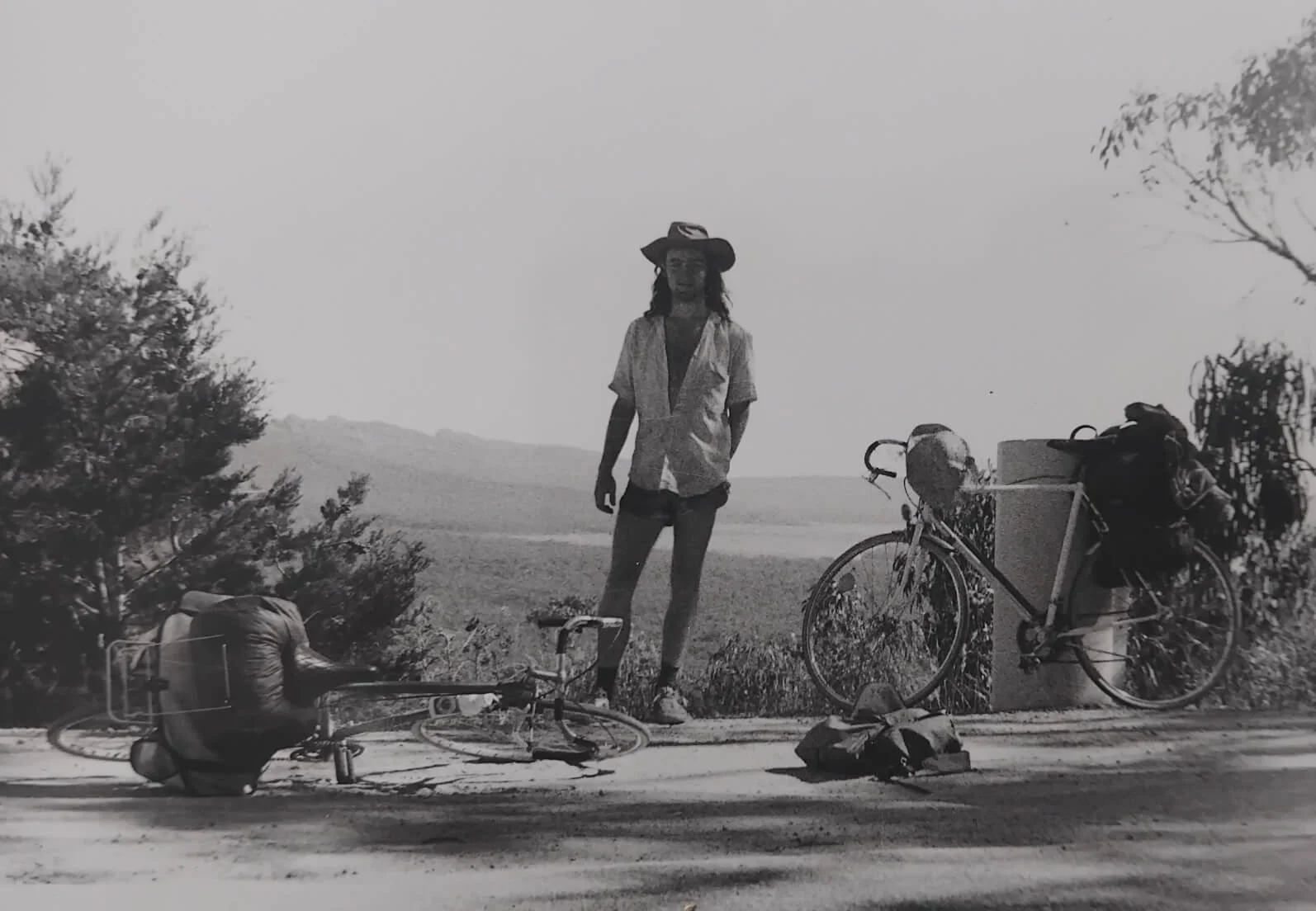
Terry in the Grampians.
I think the evening with our new acquaintances represented the sound of two worlds colliding and taught us a couple of useful lessons. One was about being careful socializing with people you don’t know in an unfamiliar place. It was also a lesson in how people can turn so quickly when they have a skinful of alcohol. I think for our host and his mate, it was just a normal night out. You drink some, you make some noise and maybe a threat or two and take it from there. And the next day, everybody are friends again. For us and them, it was the same event, but perceived in very different ways. It’s like what is normal when there are a million normals out there?
From Koondrook we rode to Echuca and camped by the river. The ride from there to Melbourne was completely uneventful. I can’t remember anything about it except for the last couple of hours. We rode through some of the valleys northwest of Melbourne as we approached the city. By then we were comparatively hardened riders. The riding was easy and enjoyable. We got back to Prahran and our trip was done.
I can’t remember when I lost touch with Terry. I think the last time I saw him was in the early 1980s at his mum’s place in Richmond. I think he was going to study at Charles Sturt University at Orange in NSW. Where he is now, I have no idea, but I hope he’s alive and I hope he’s well.
It was some time before I wrote to Rob’s family in Donald to thank them for their help and hospitality, but I did. The reply I got was from Rob’s sister, who told me that her brother had been killed in a road accident. This must have been only a month or two after our time in Donald. I didn’t reply because I was floored by the news and didn’t know how to. Now of course I would have, but back then, I was too young to know what to say so I said nothing. I don’t know if Terry wrote to Rob’s family or not.
I suppose a theme of my blogs is that life is short, precious and frequently unfair. If there’s a message, it’s live life as well as you can, because it’s the only life you’ll get and you have no idea what’s around the corner. You have as little idea as I do.
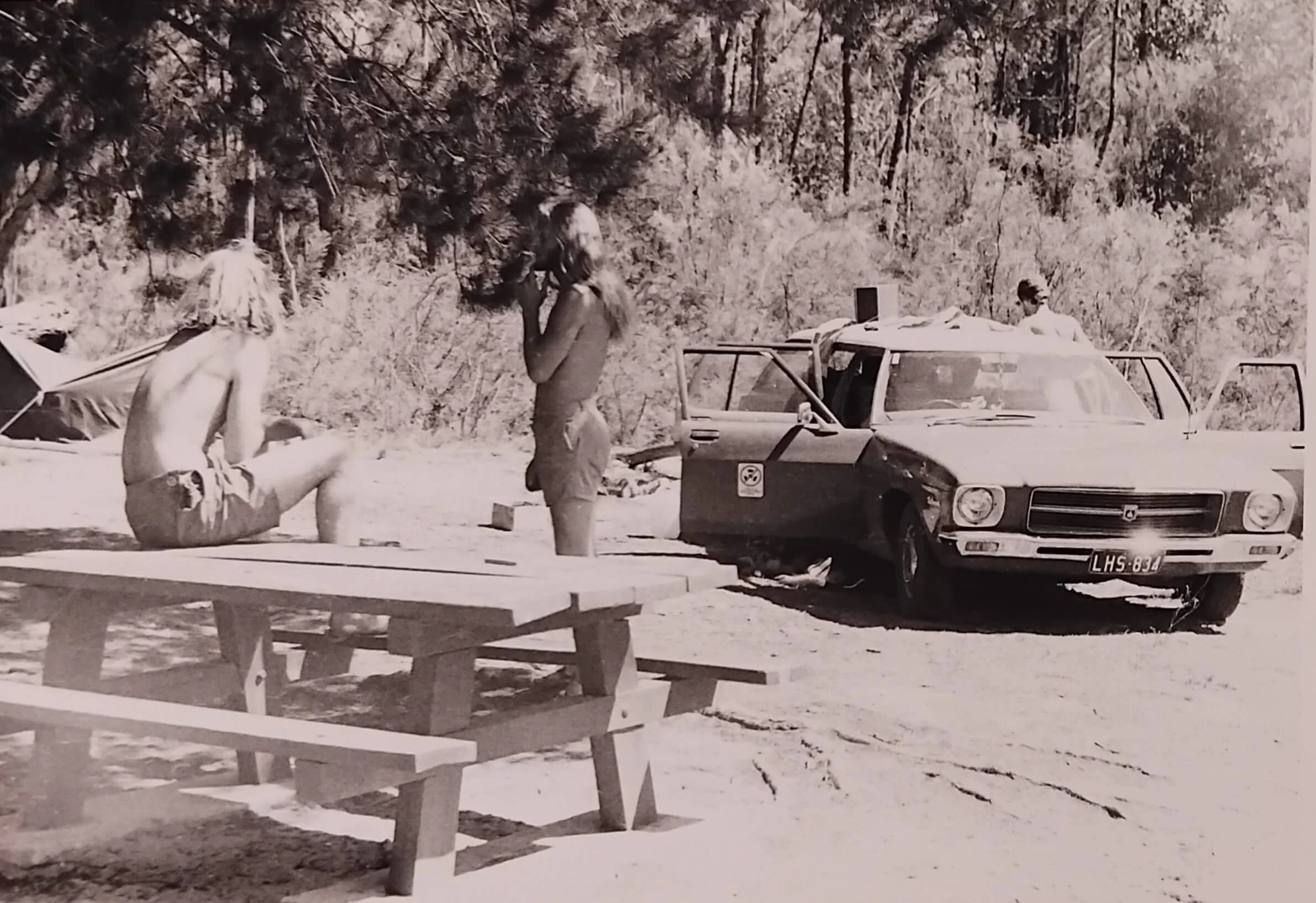
Garry and me in the Grampians. Garry's HQ was red with a white roof. My brother, Chris is behind the car.
The Ride
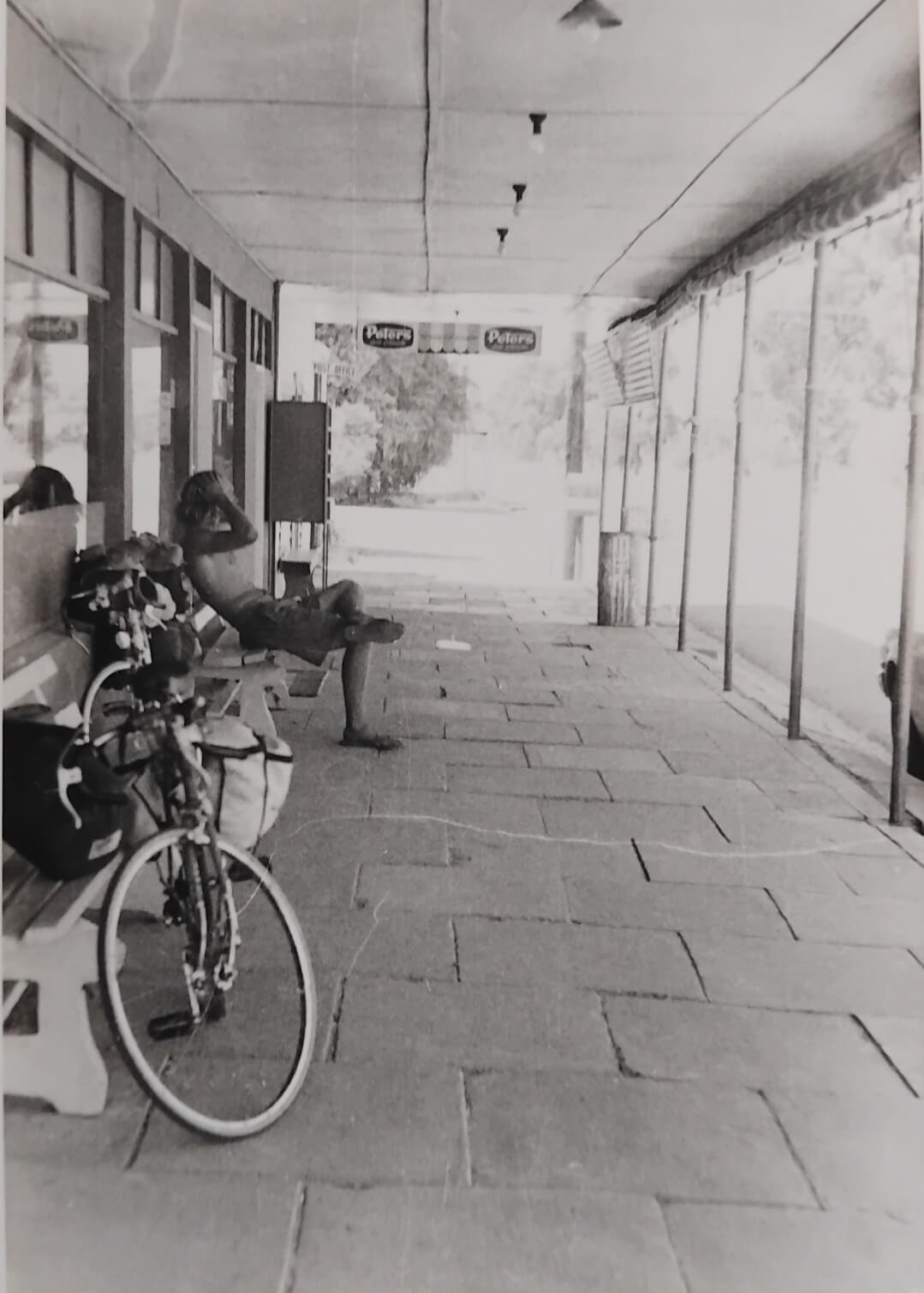
Main Street Marnoo.
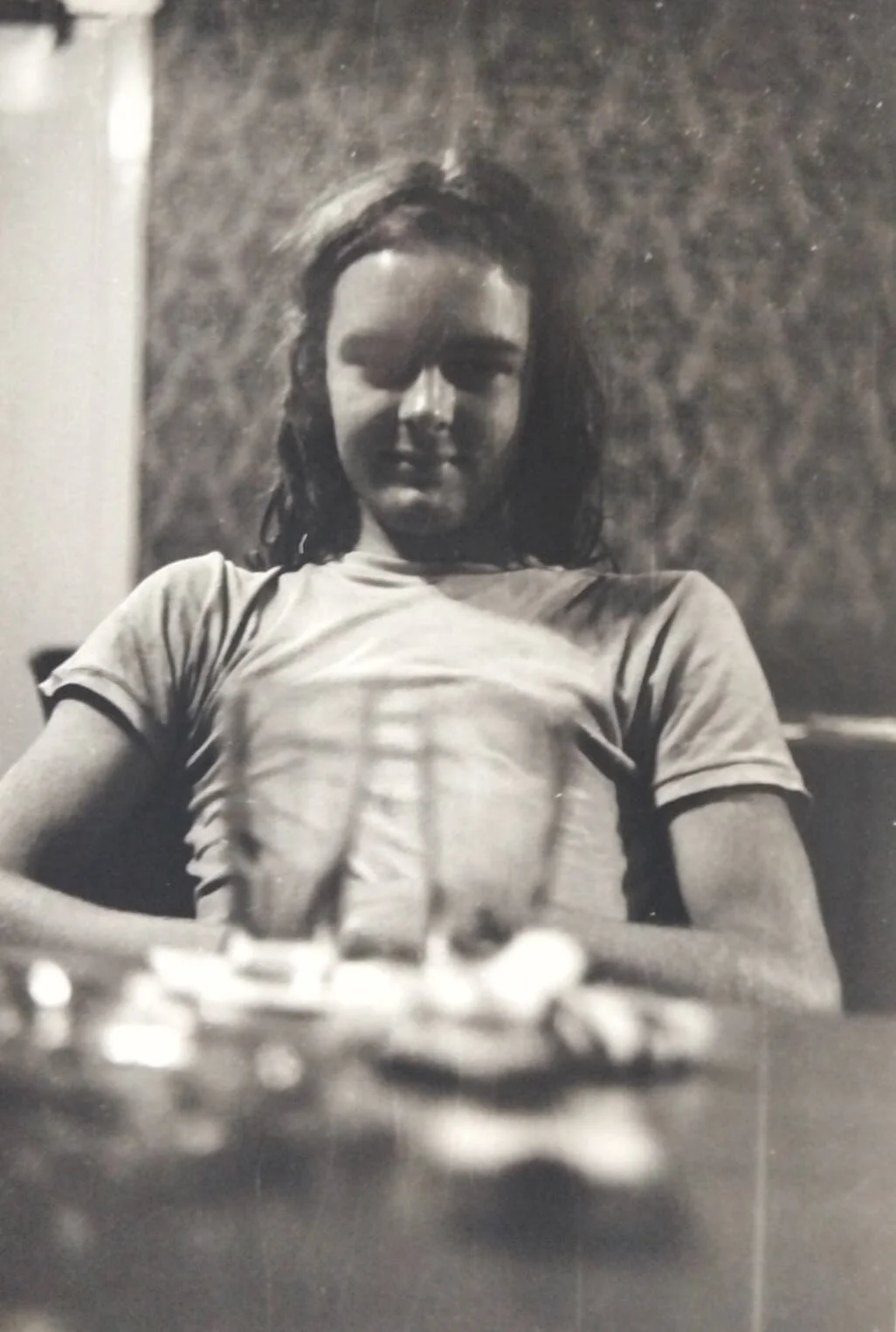
Terry in Marnoo.
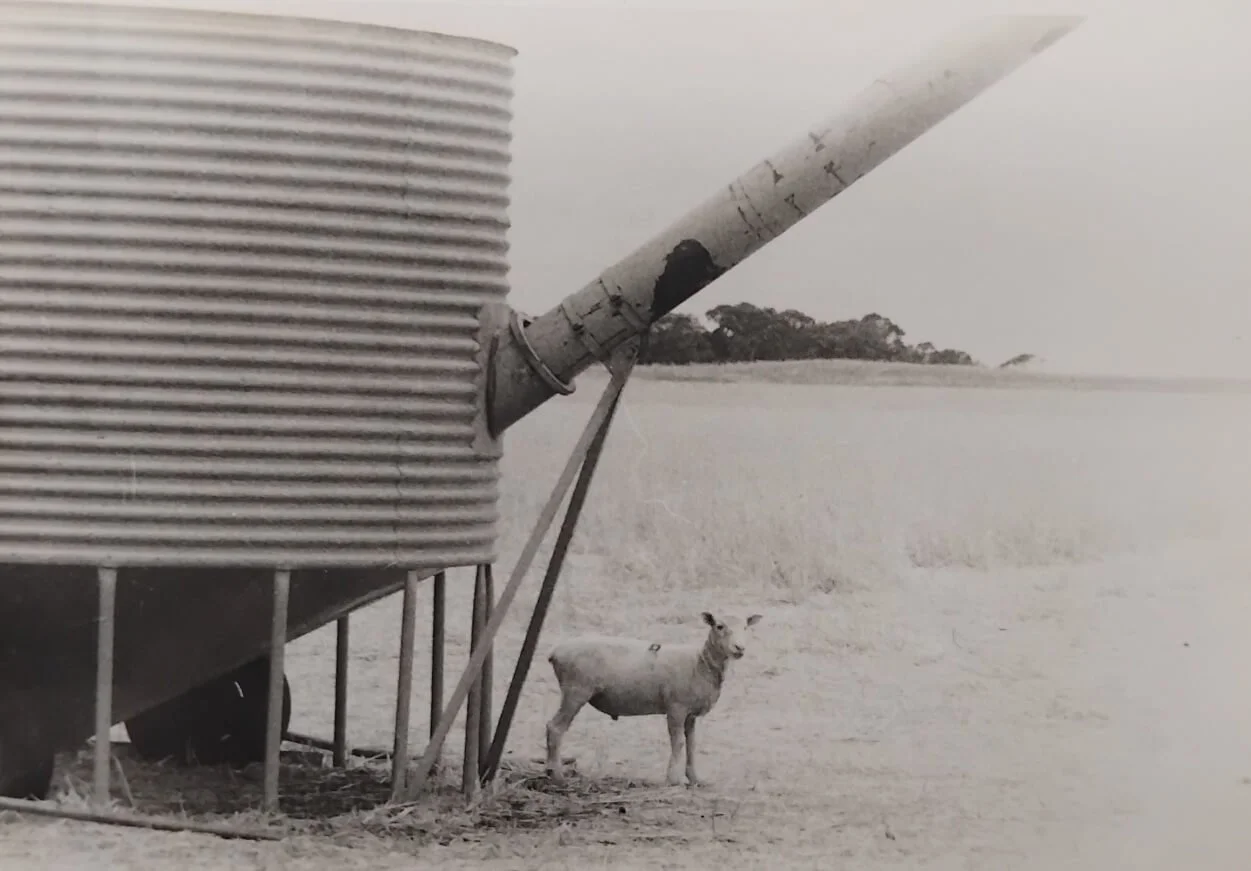
A spectator somewhere up there.
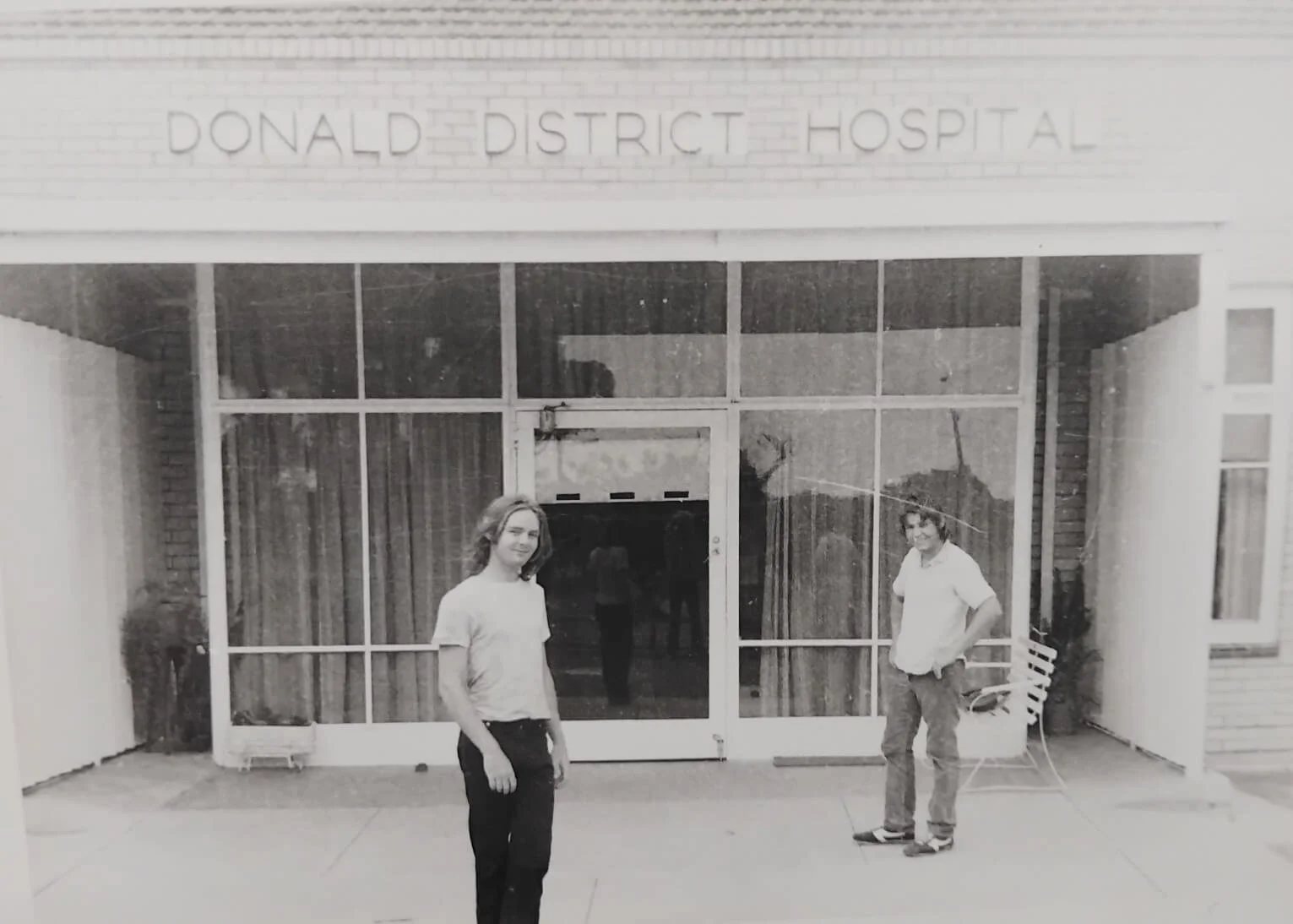
Terry and Rob at Donald Hospital after Terry's recovery.
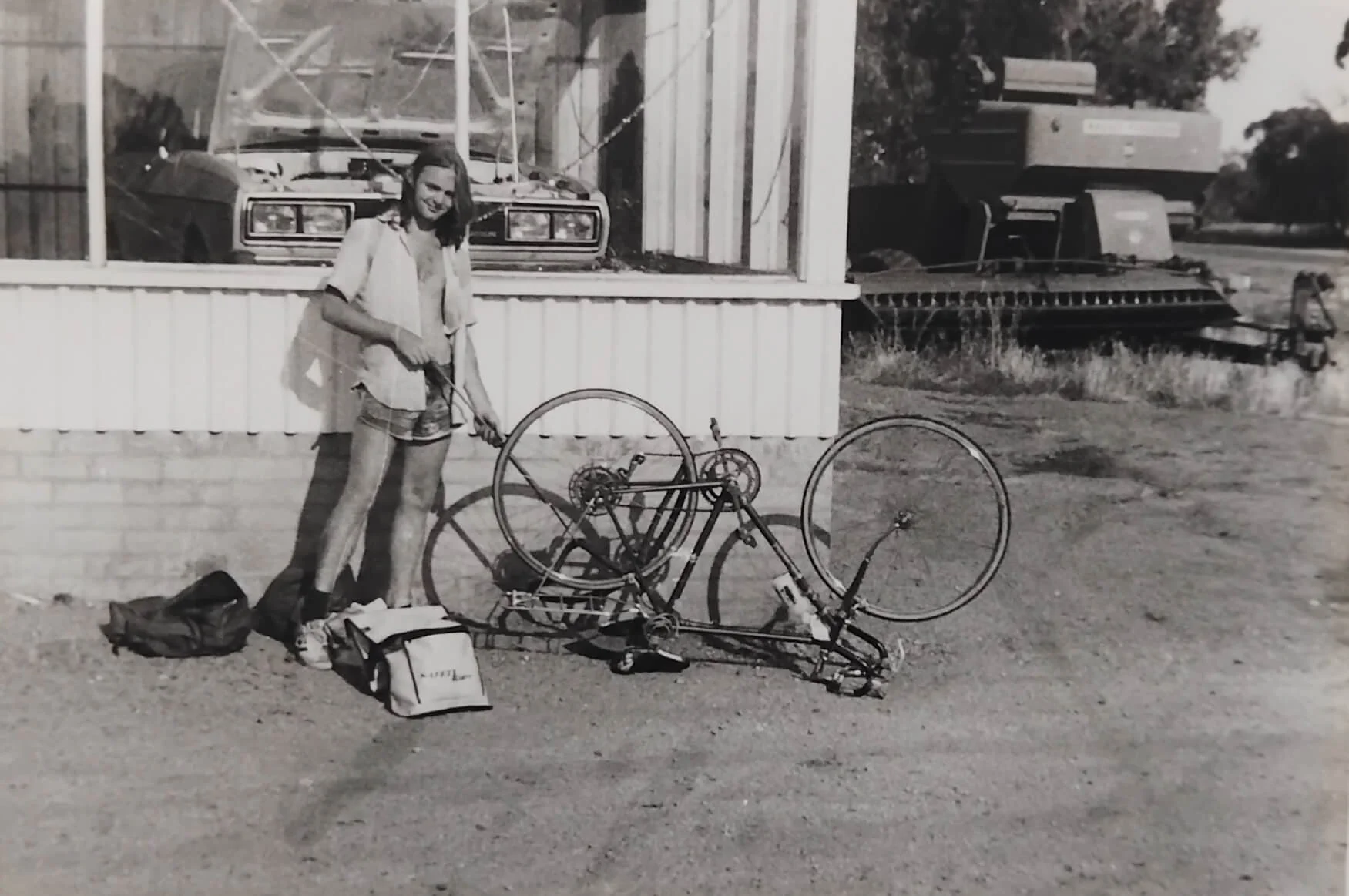
Terry fixing a flat tyre somewhere on the ride.
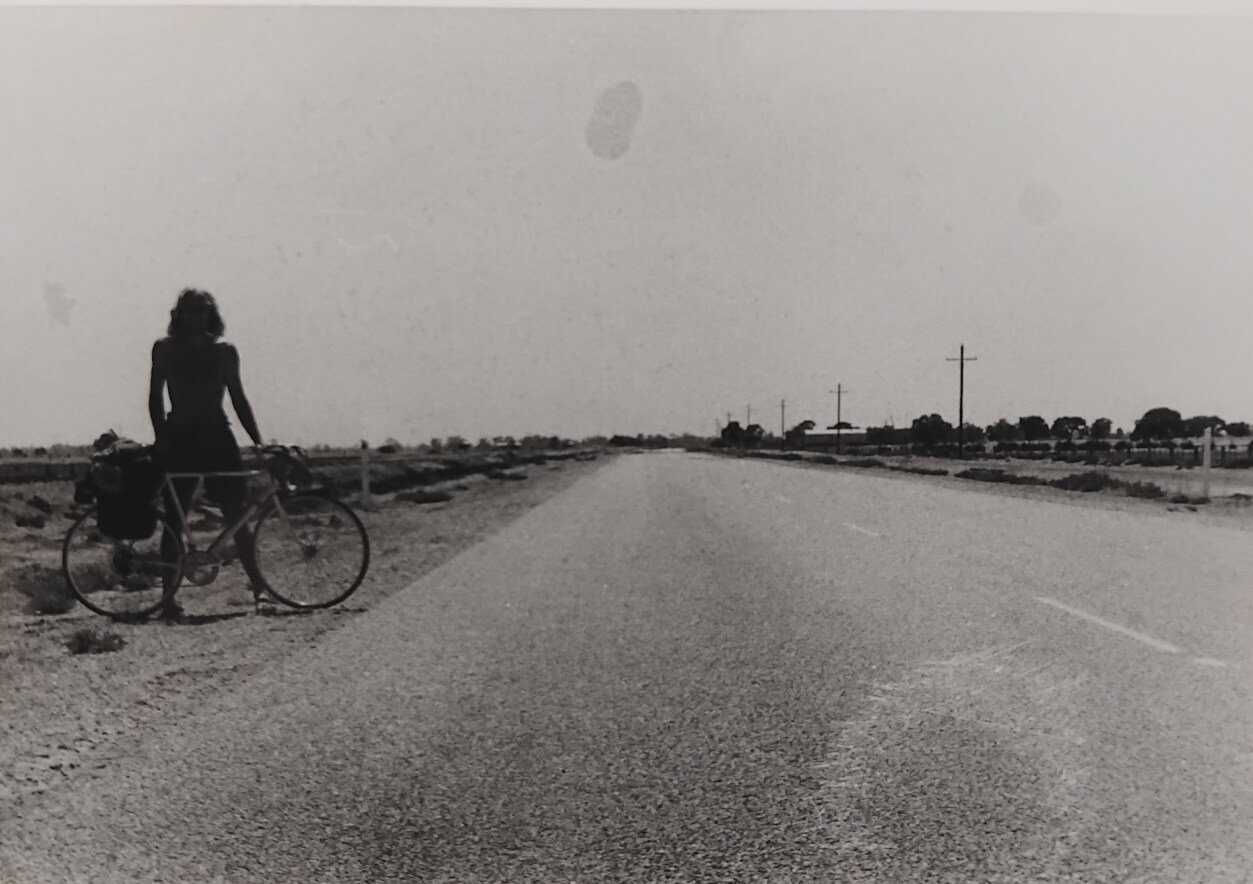
Between Kerang and Koondrook.
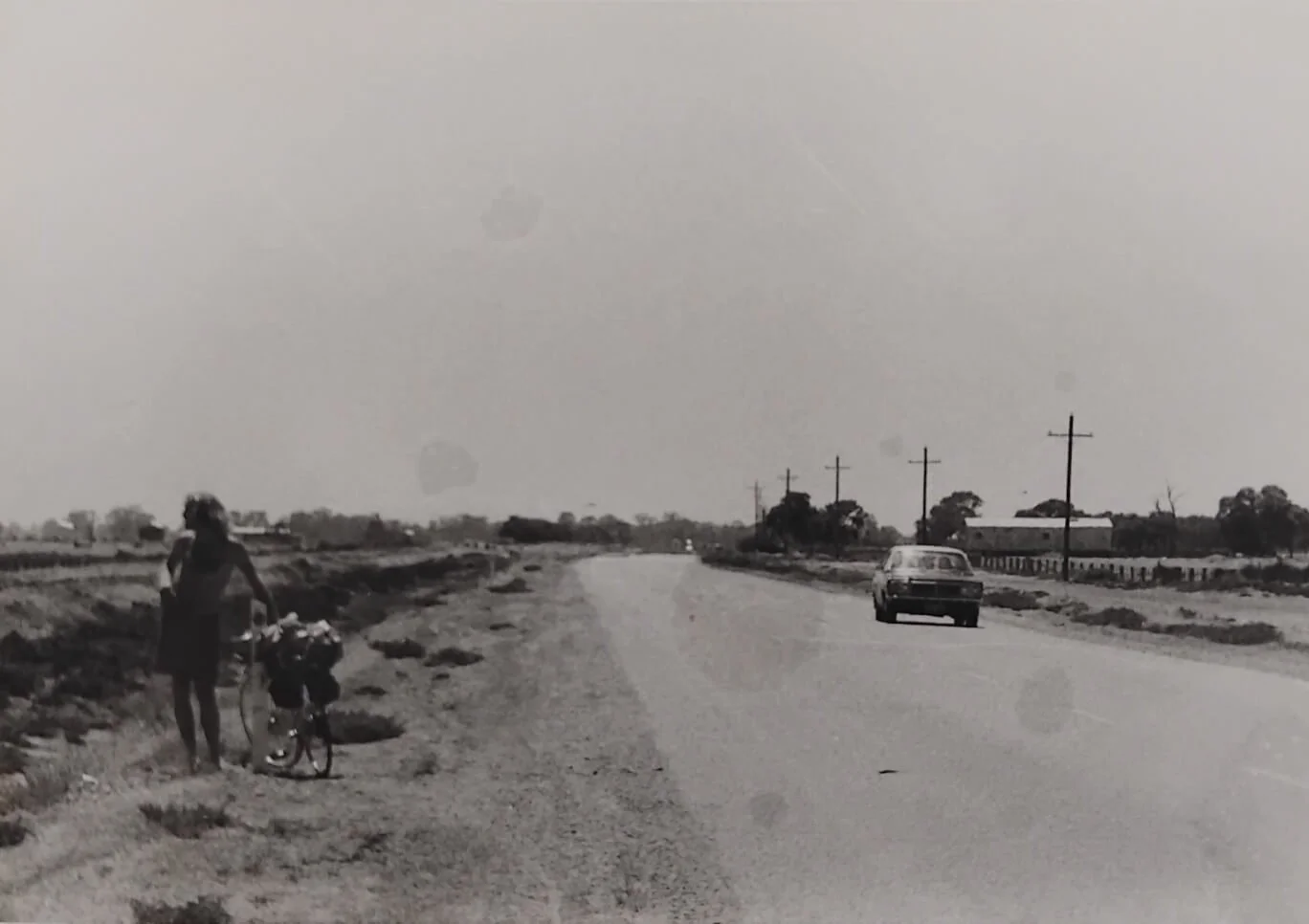
Taking it all in between Kerang and Koondrook.
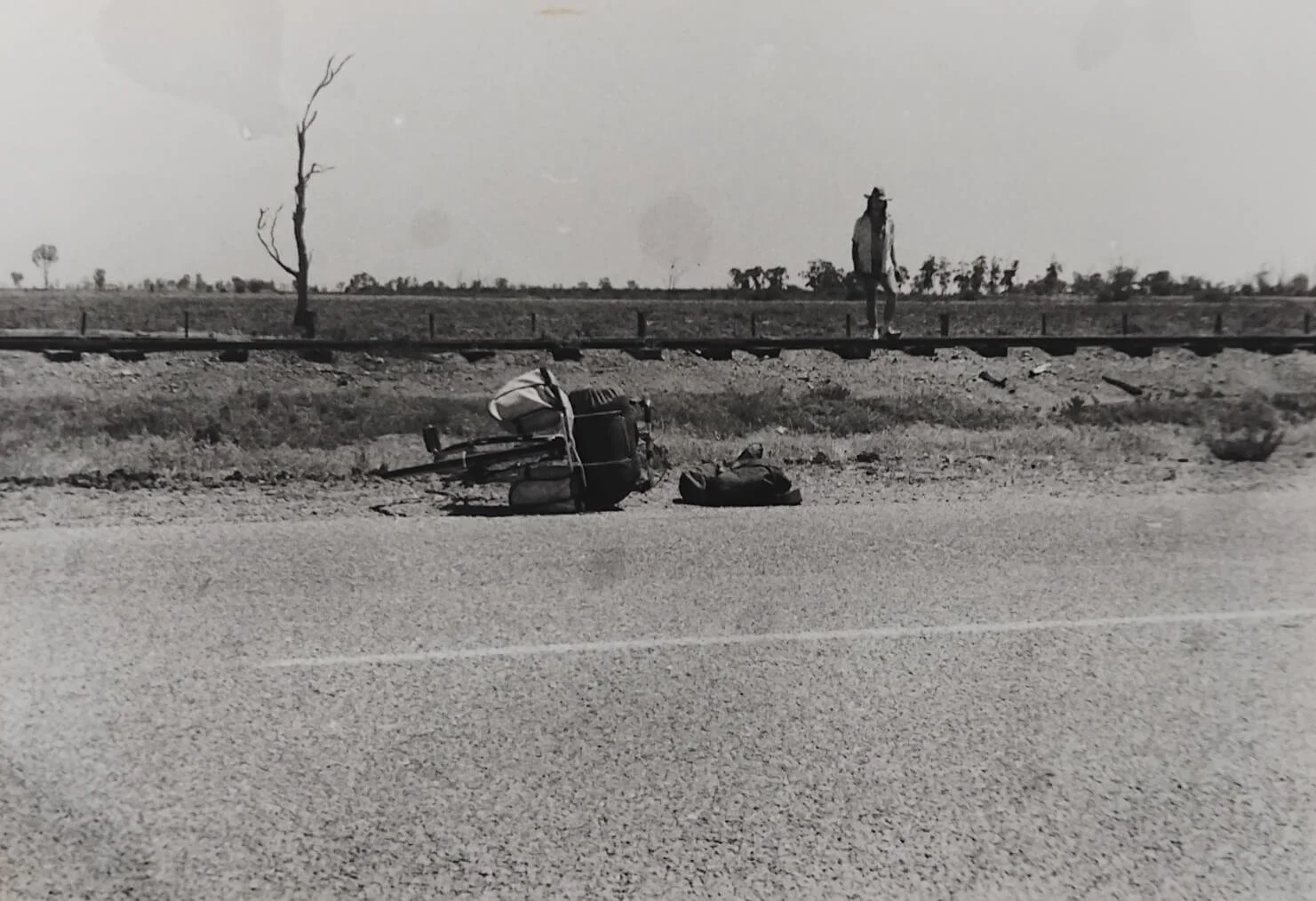
Terry on the tracks between Kerang and Koondrook,
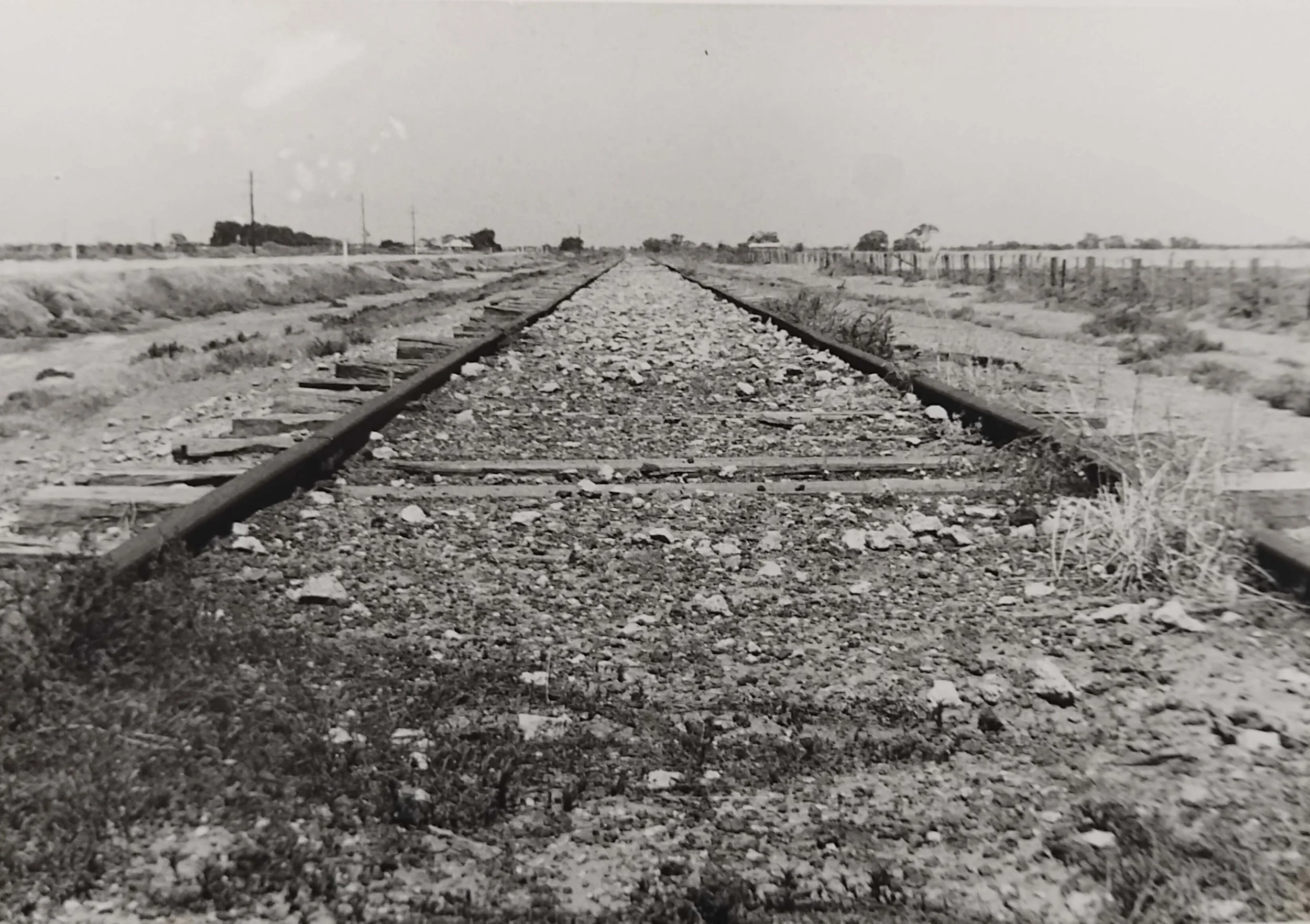
The railway line somewhere between Kerang and Koondrook.
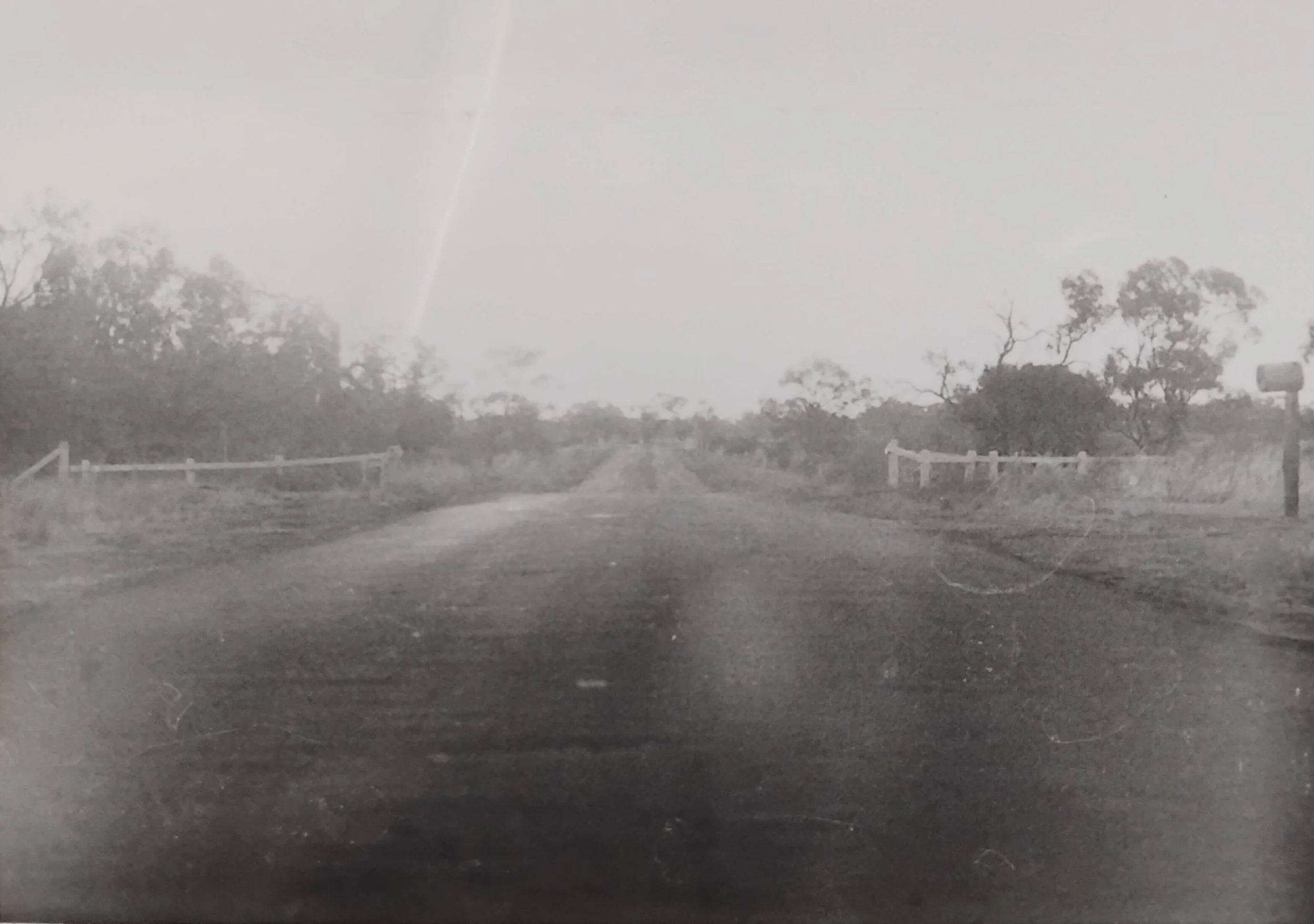
Somewhere between Kerang and Koondrook.
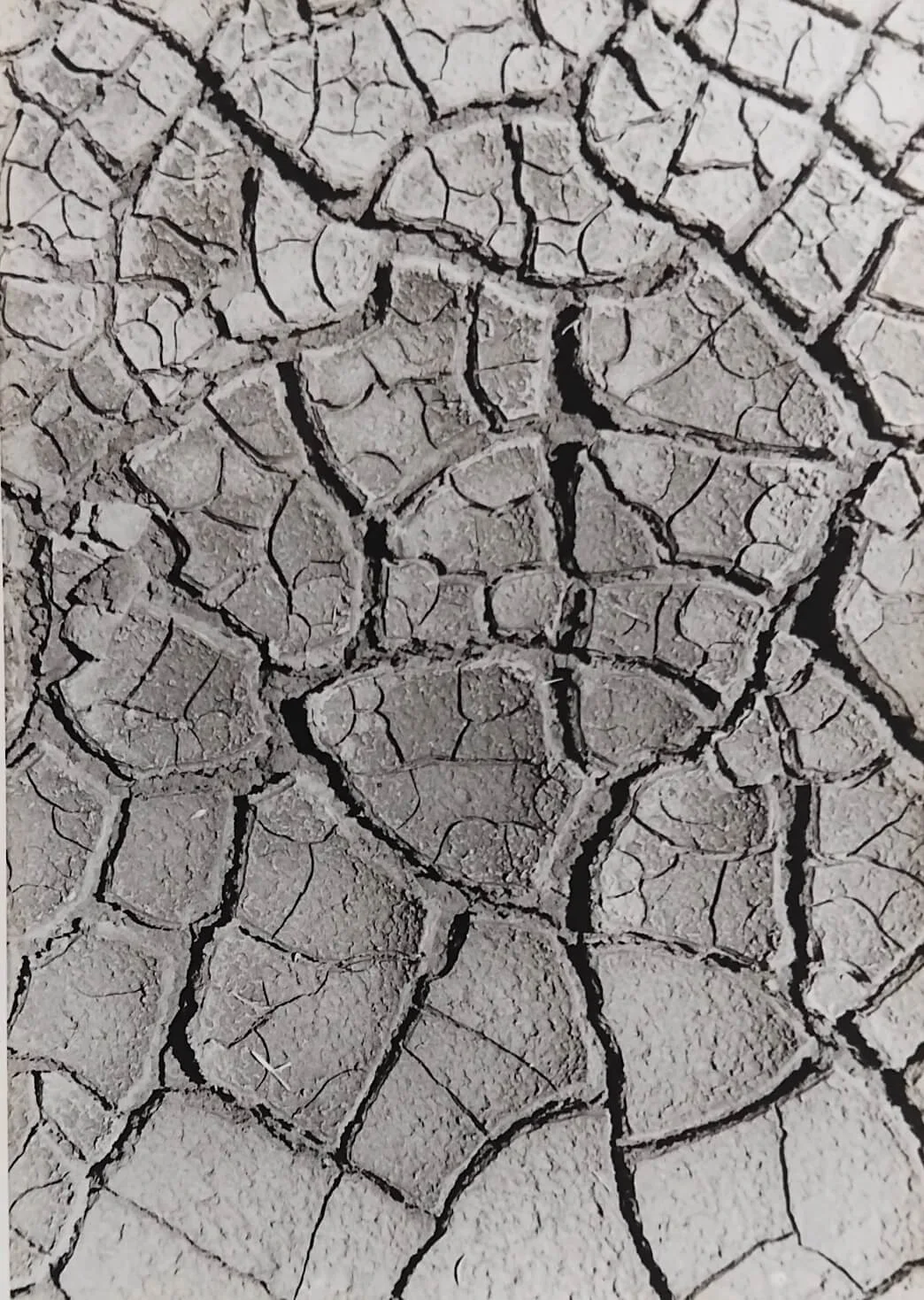
Somewhere in northern Victoria.
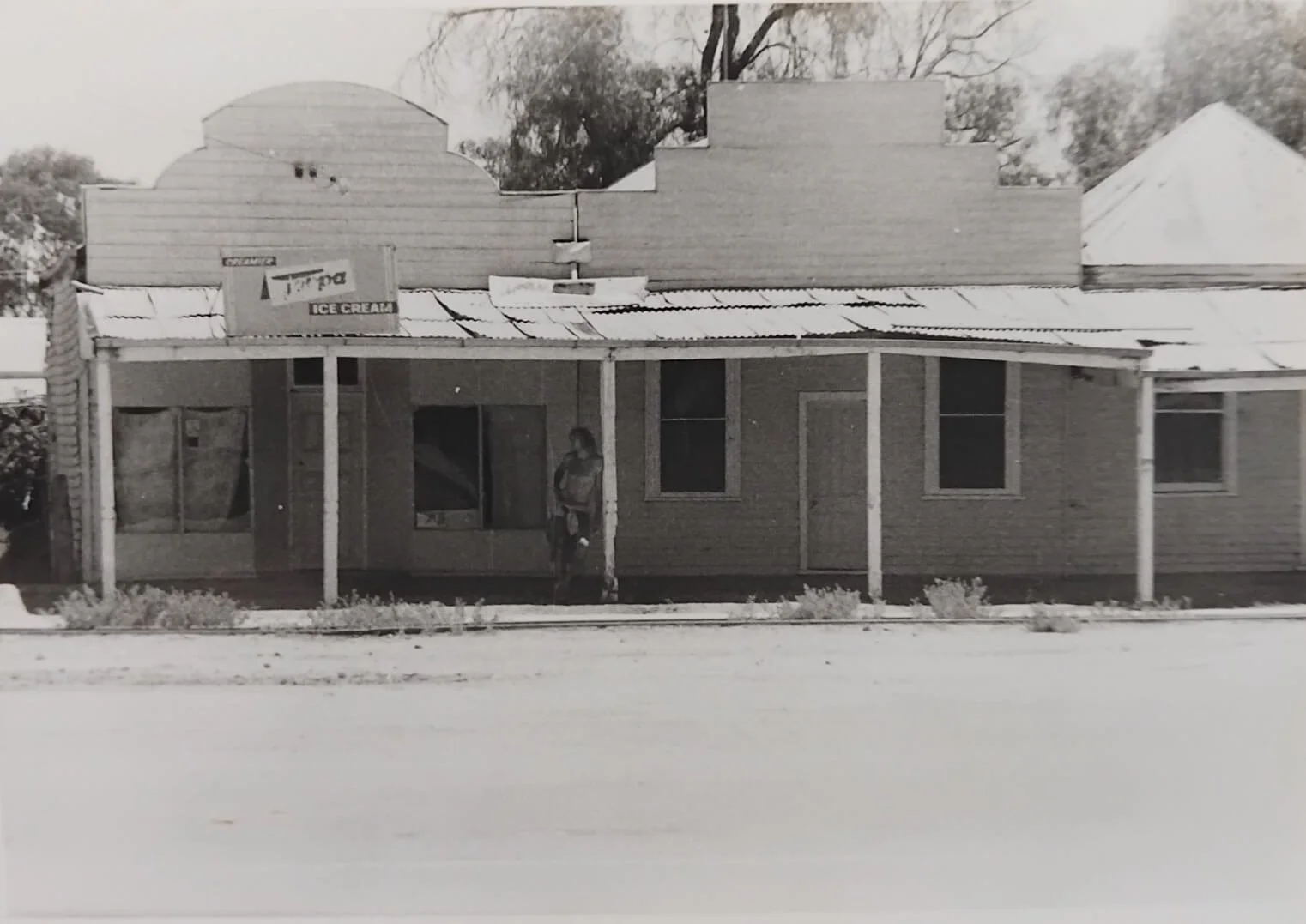
Vacant shops in Koondrook mainstreet.
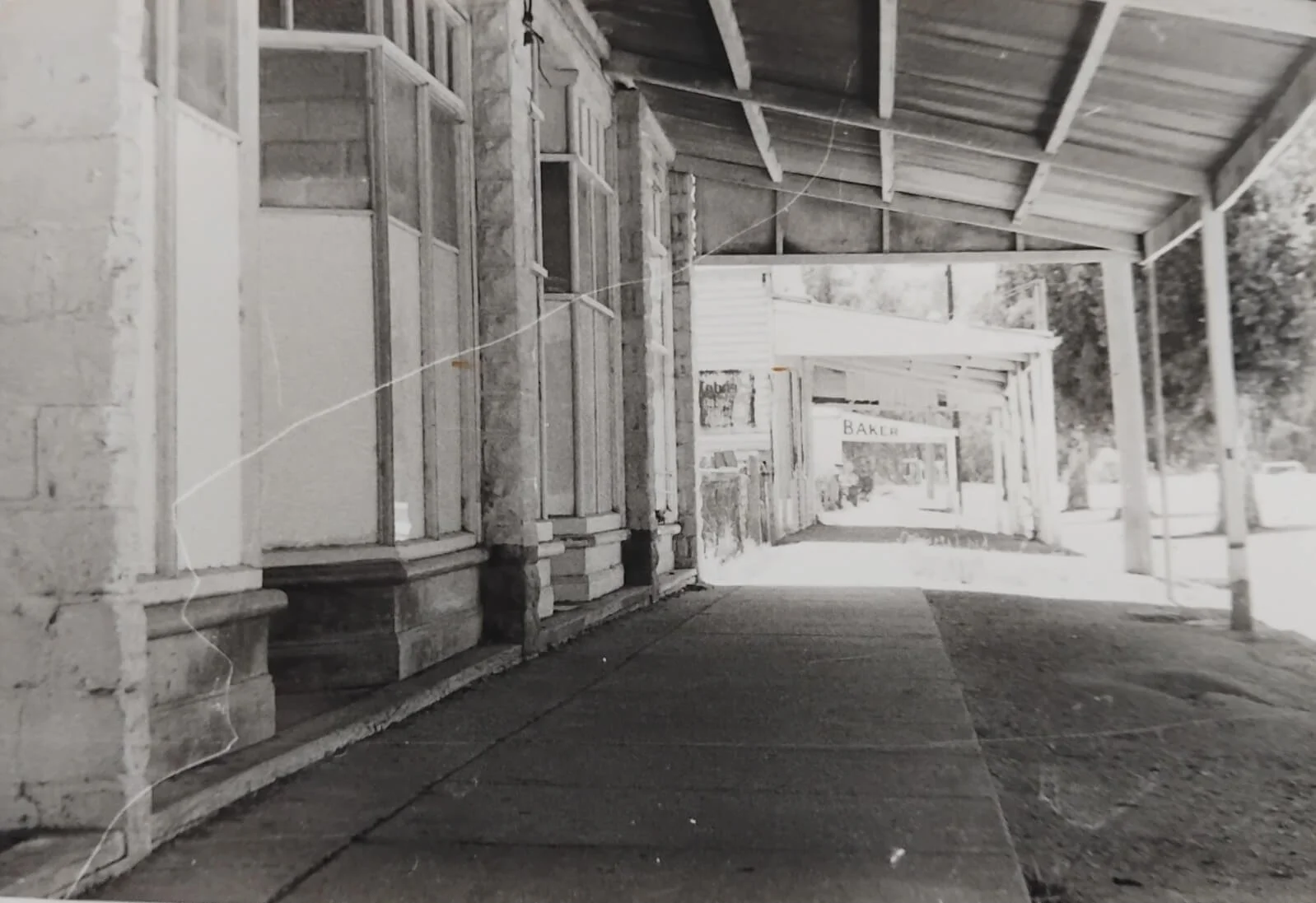
Koondrook.
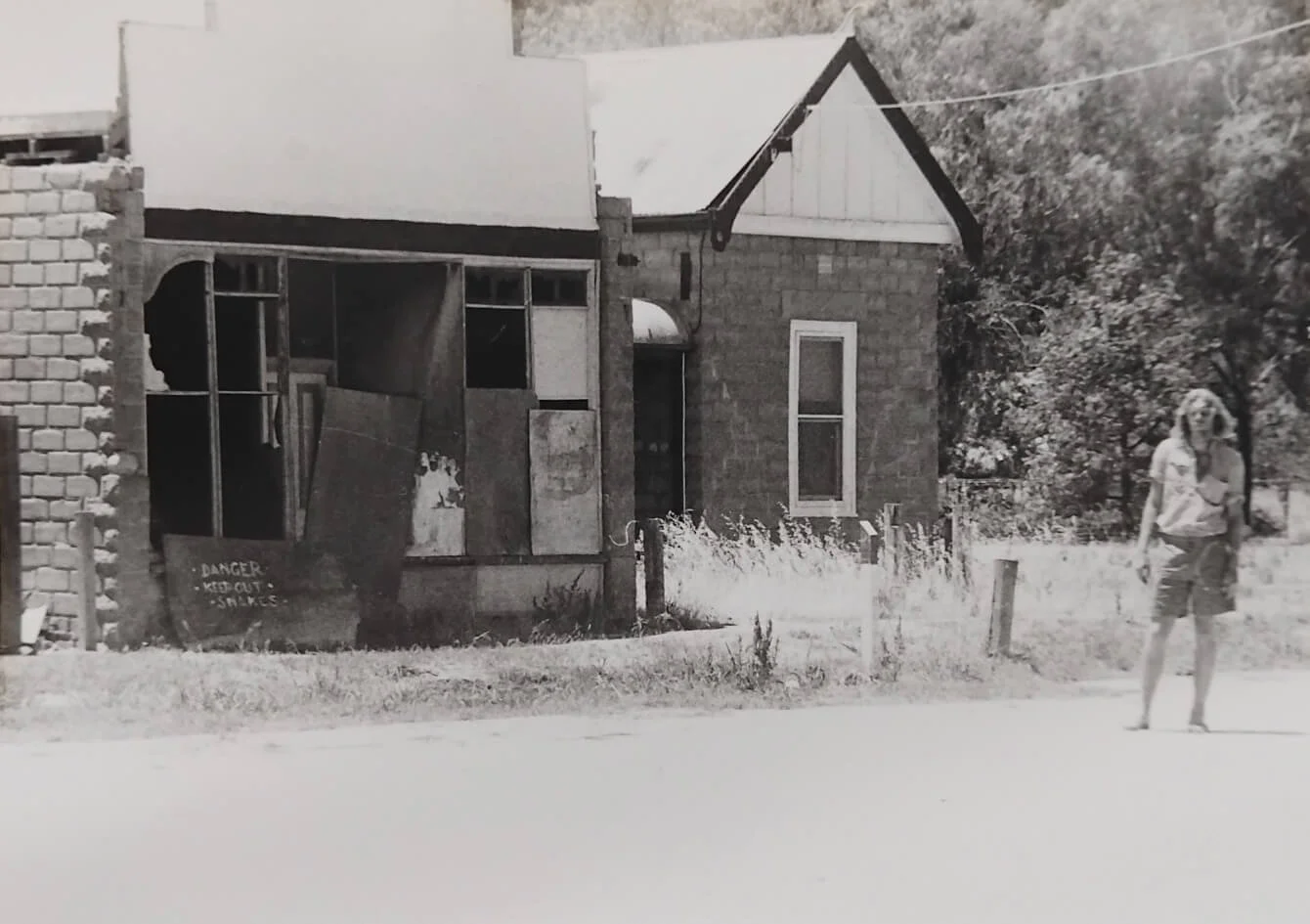
In Koondrook.
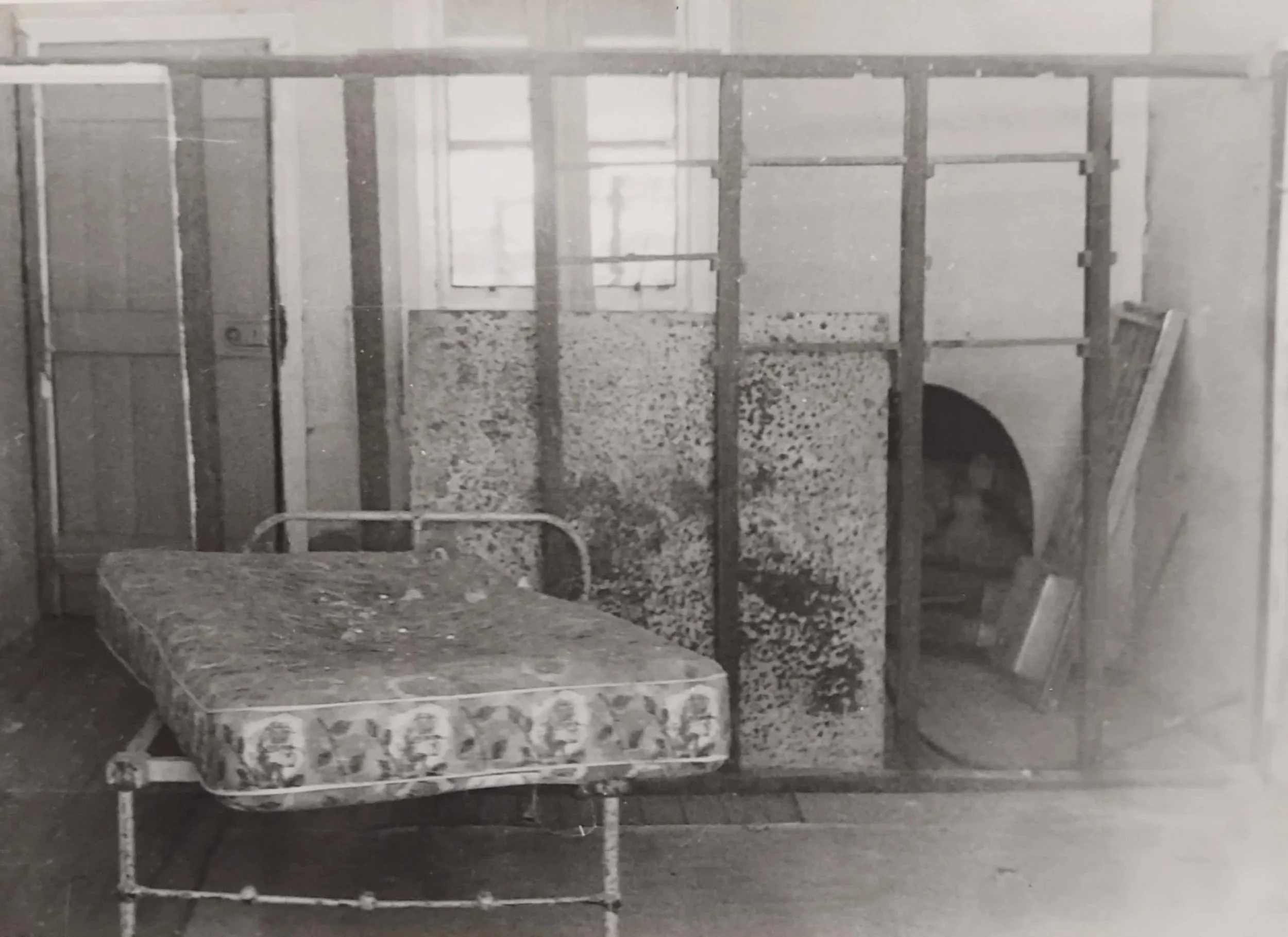
Interior of vacant shop in Koondrook mainstreet.
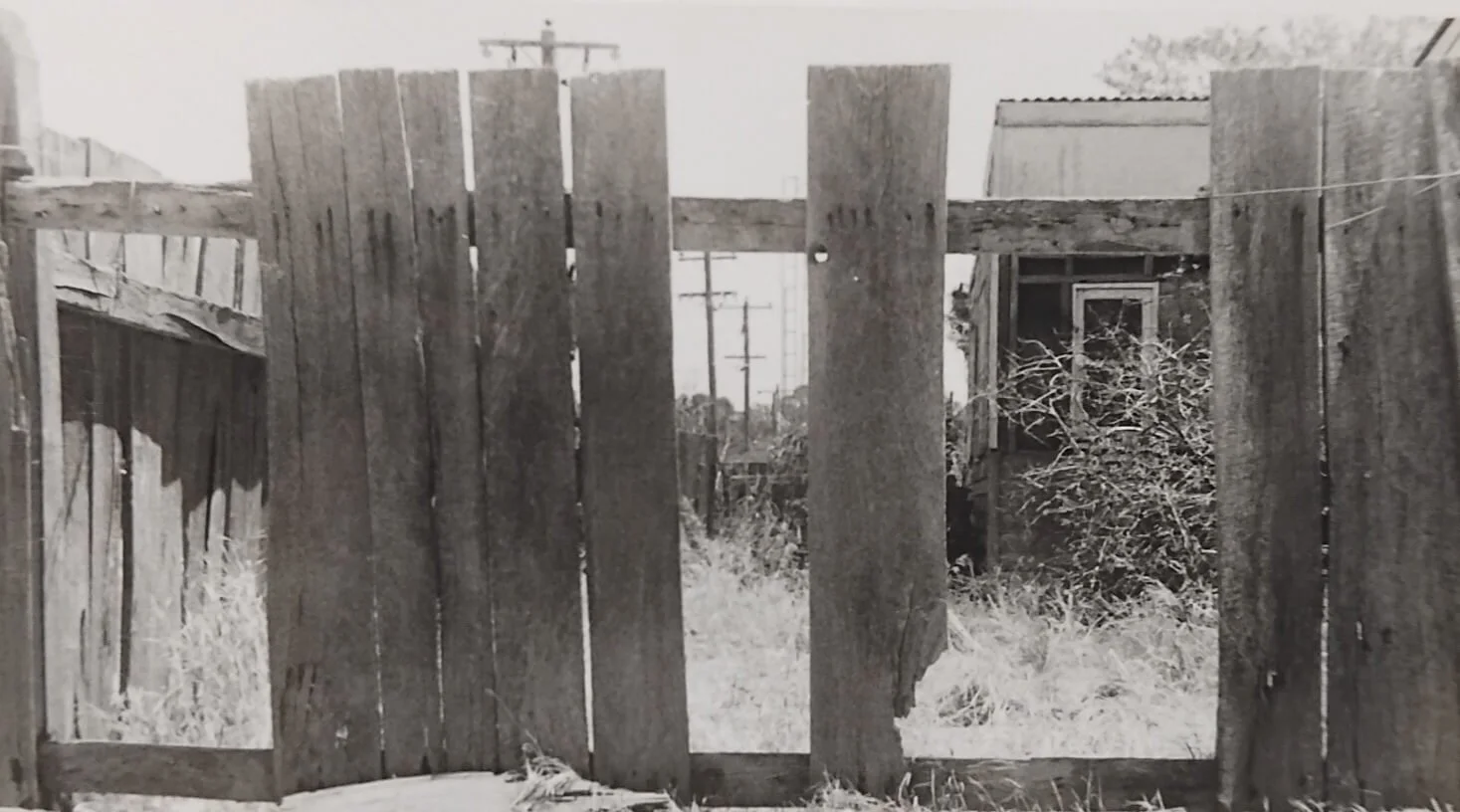
Koondrook
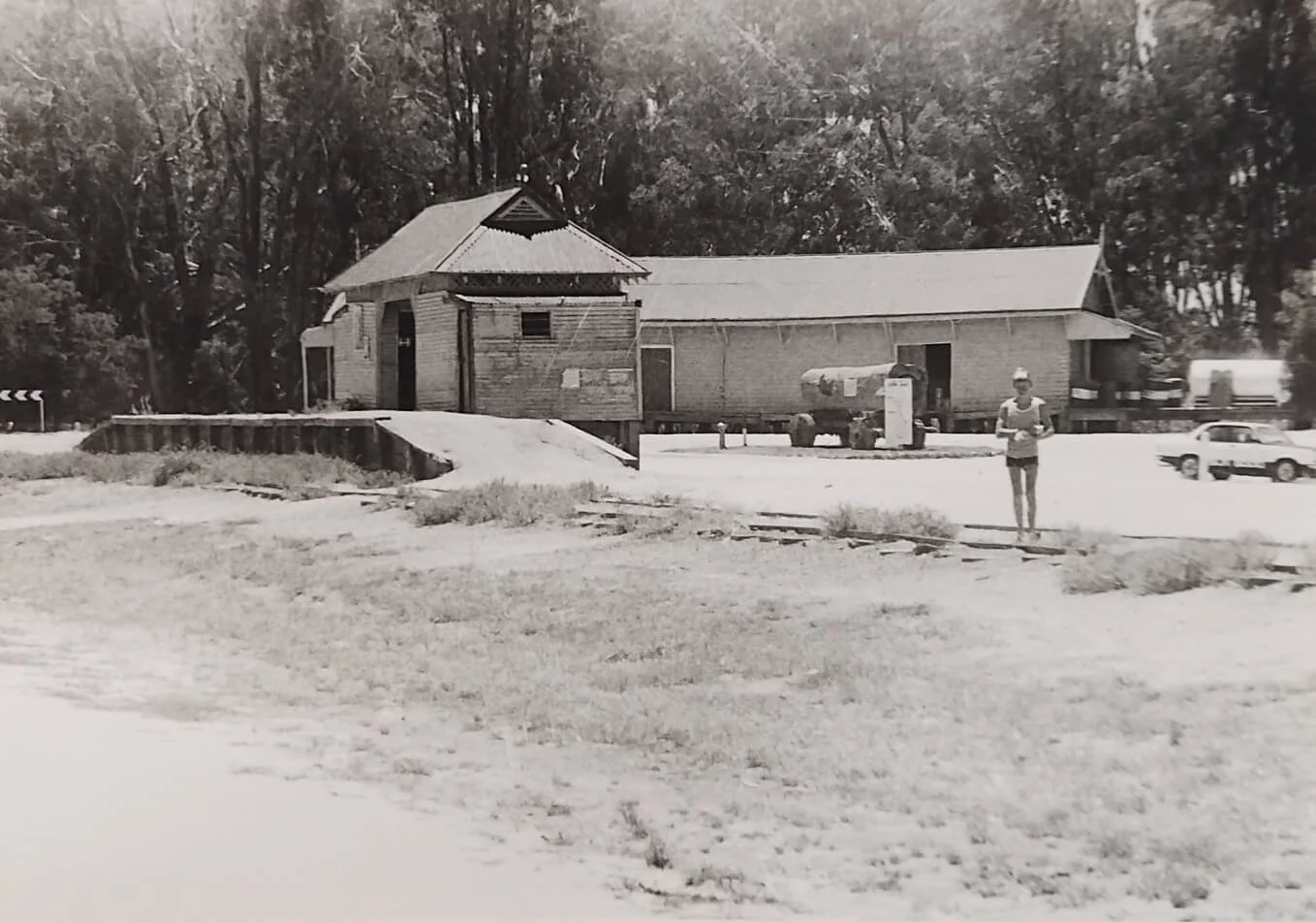
Koondrook Station.
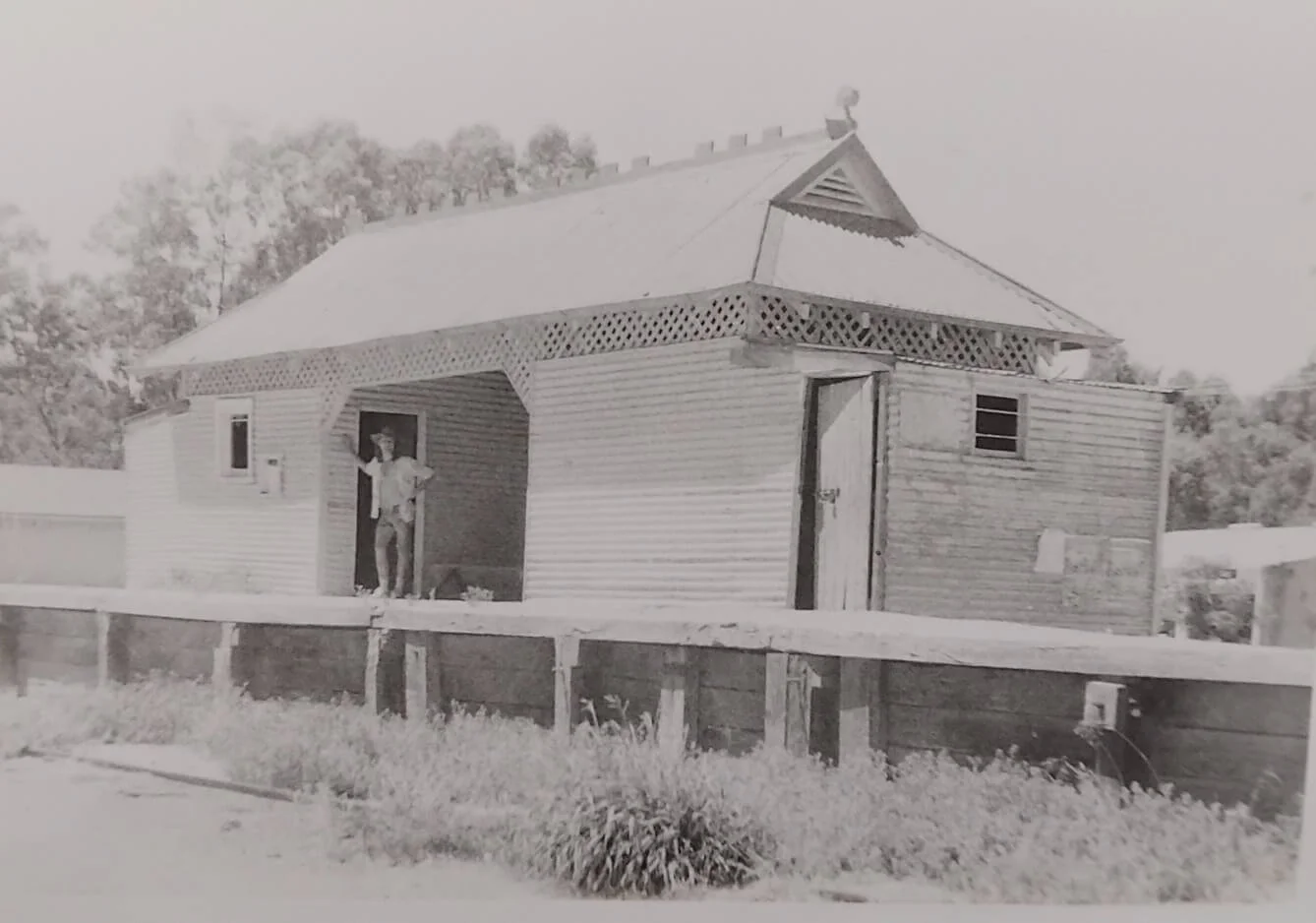
Terry and Koondrook Station.
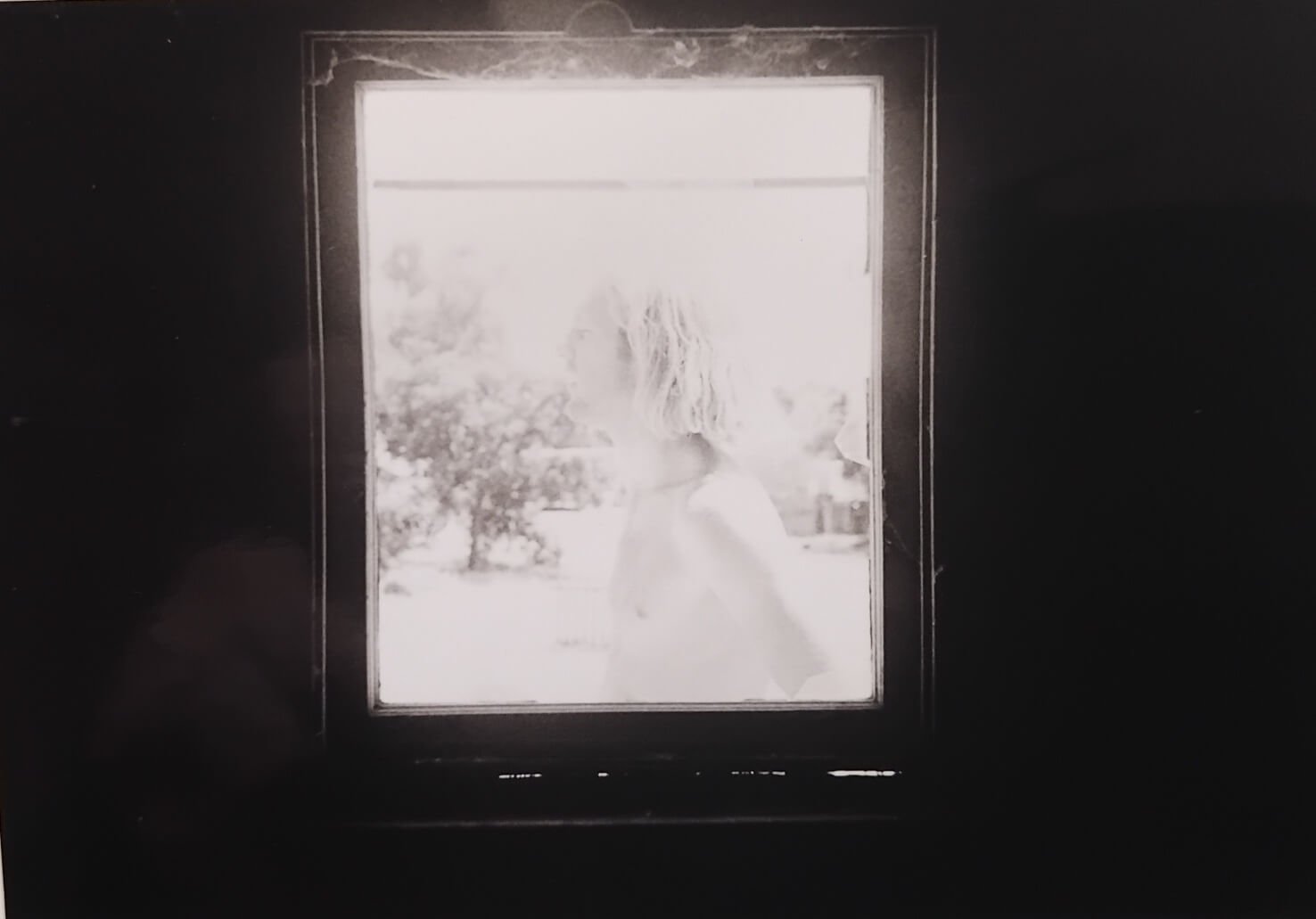
On Koondrook Station.
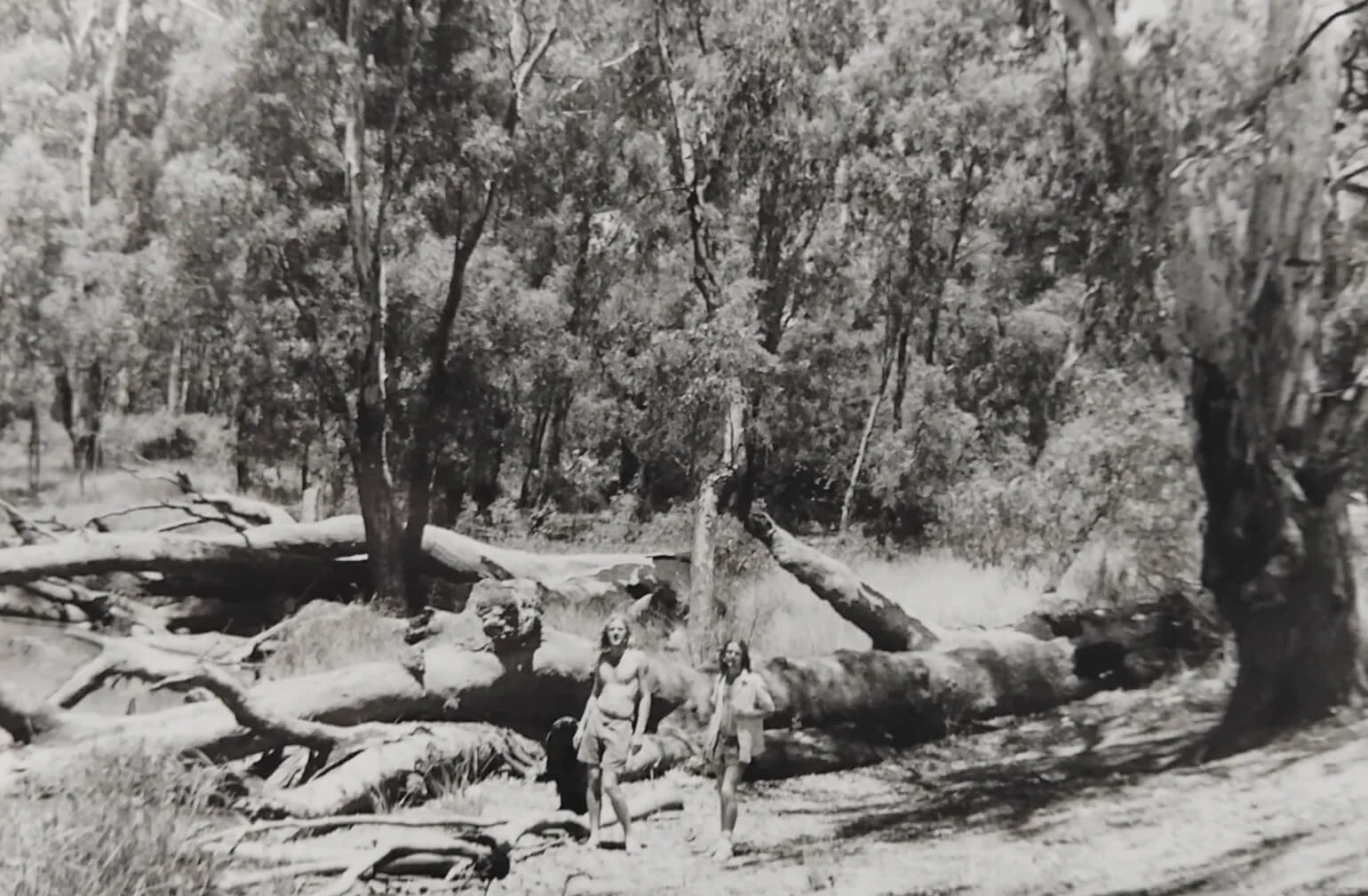
Terry and me on Gunbower Island.
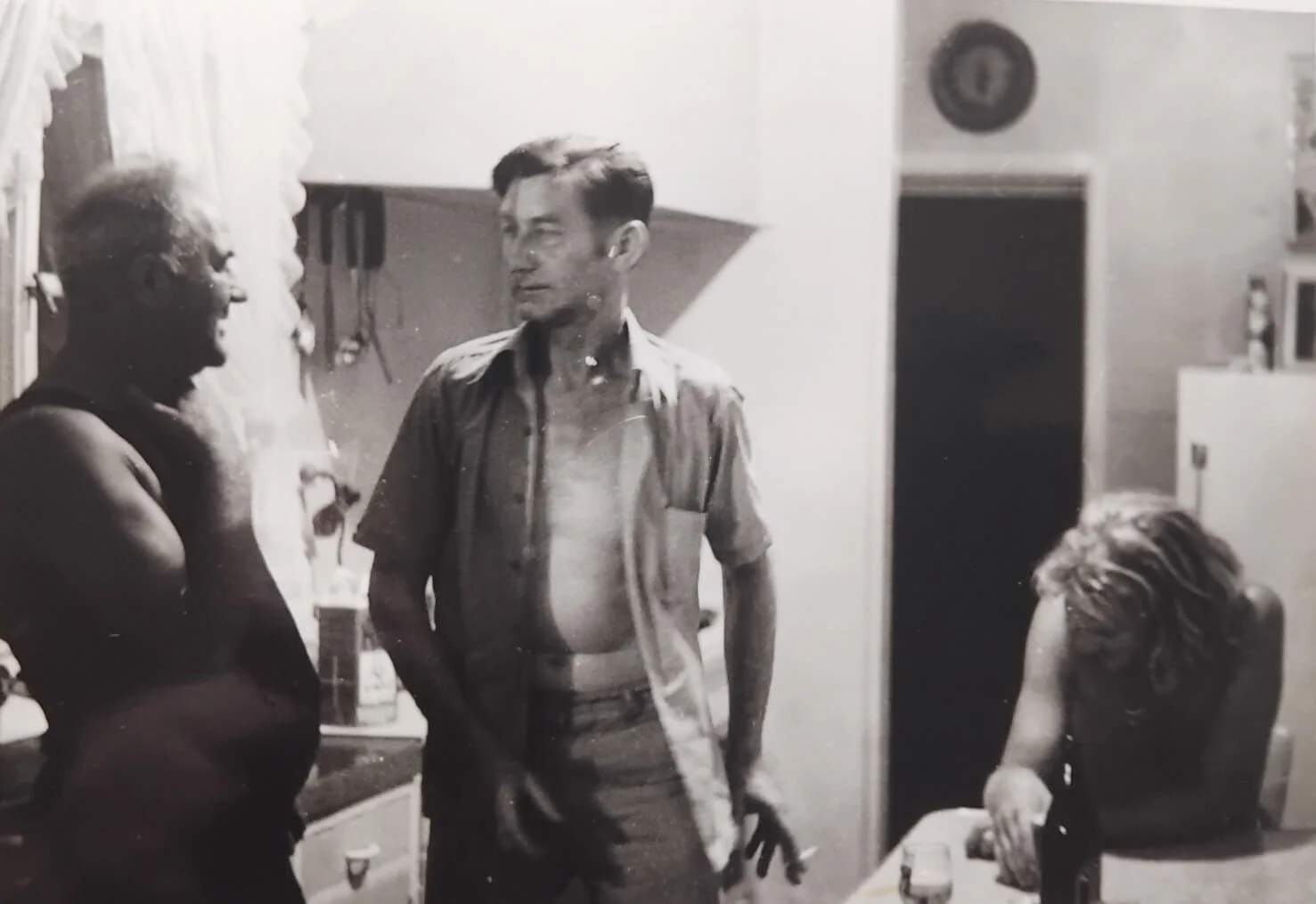
With new friends in Koondrook. The picture says it all.
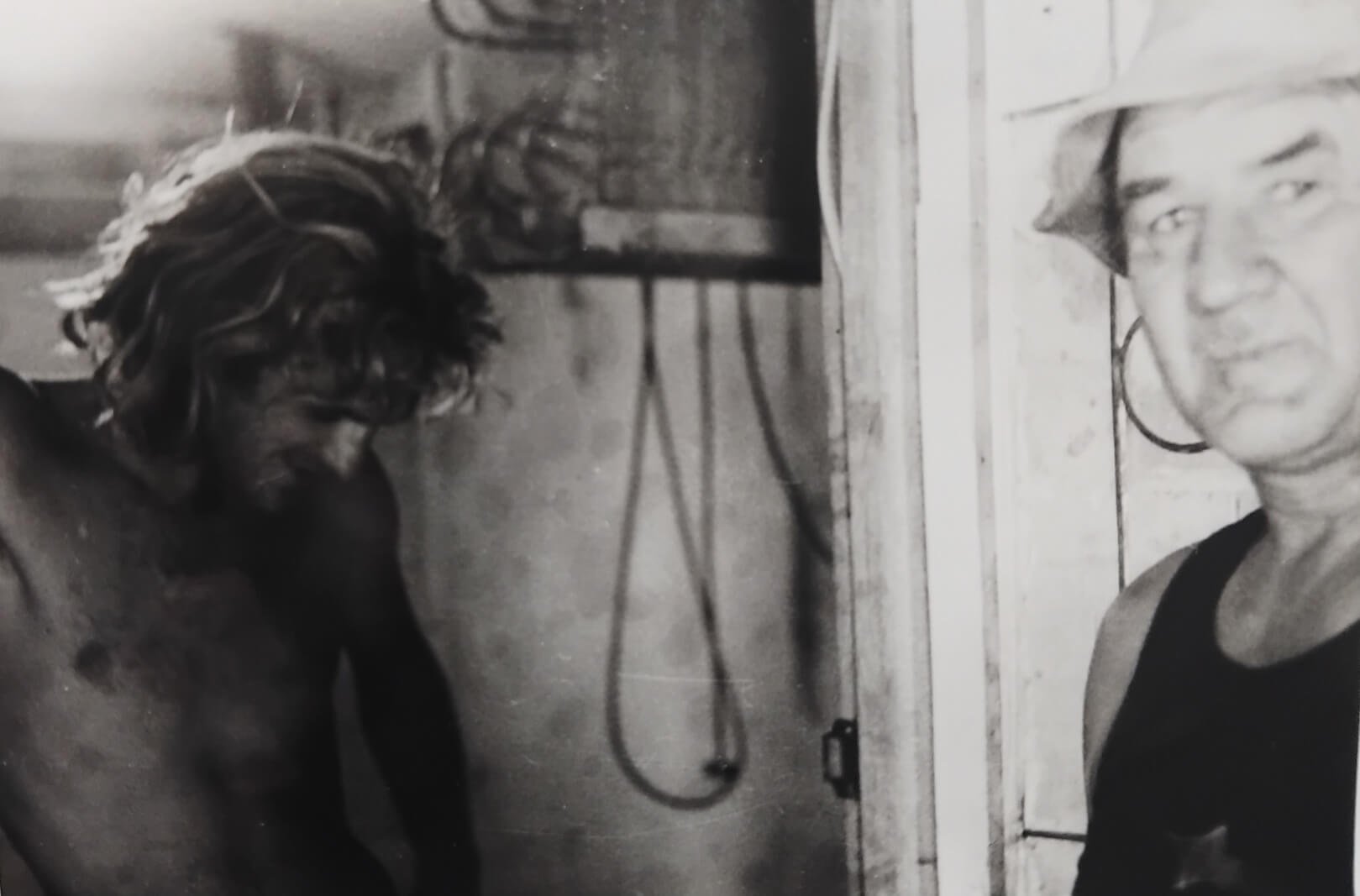
My new friend and me in Koondrook.
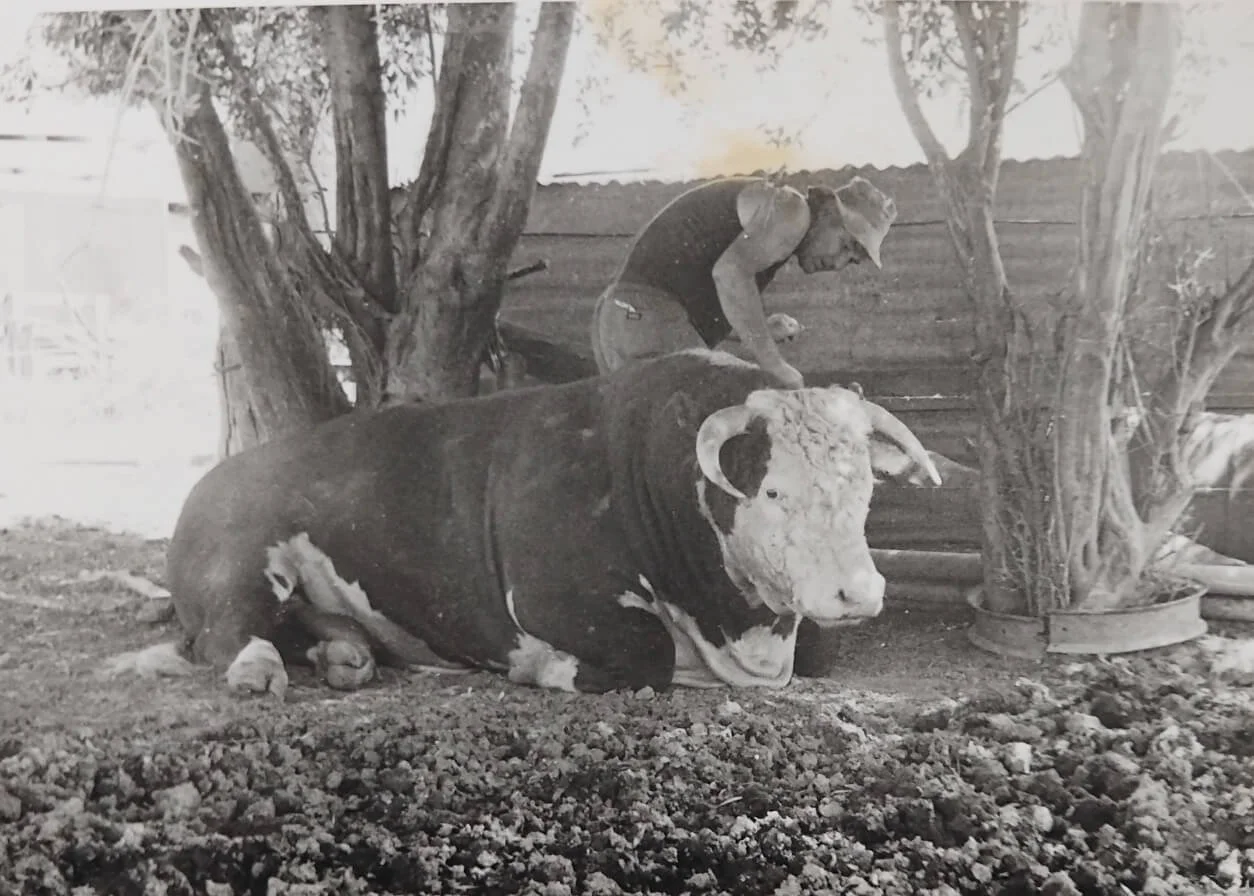
A prize bull and its owner.
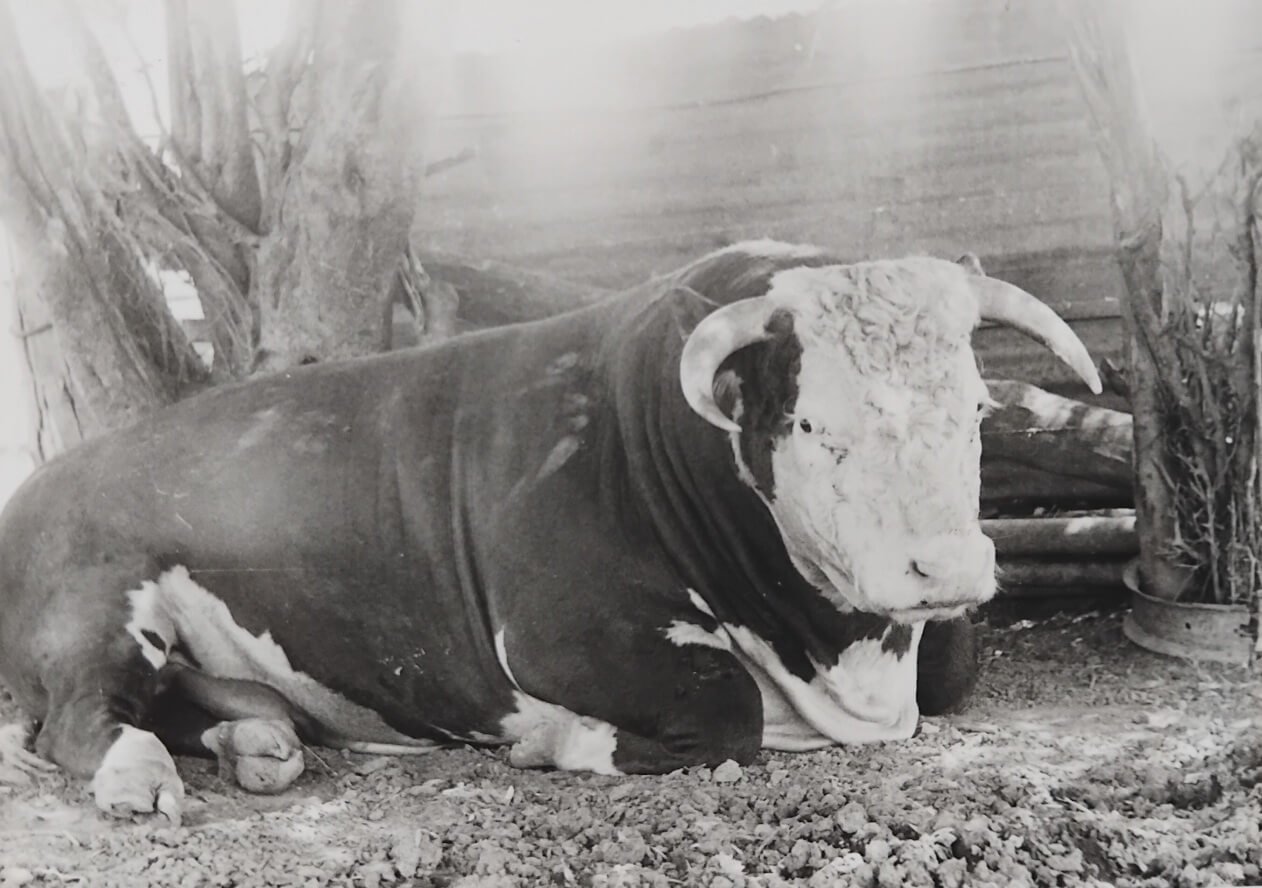
A prize bull.
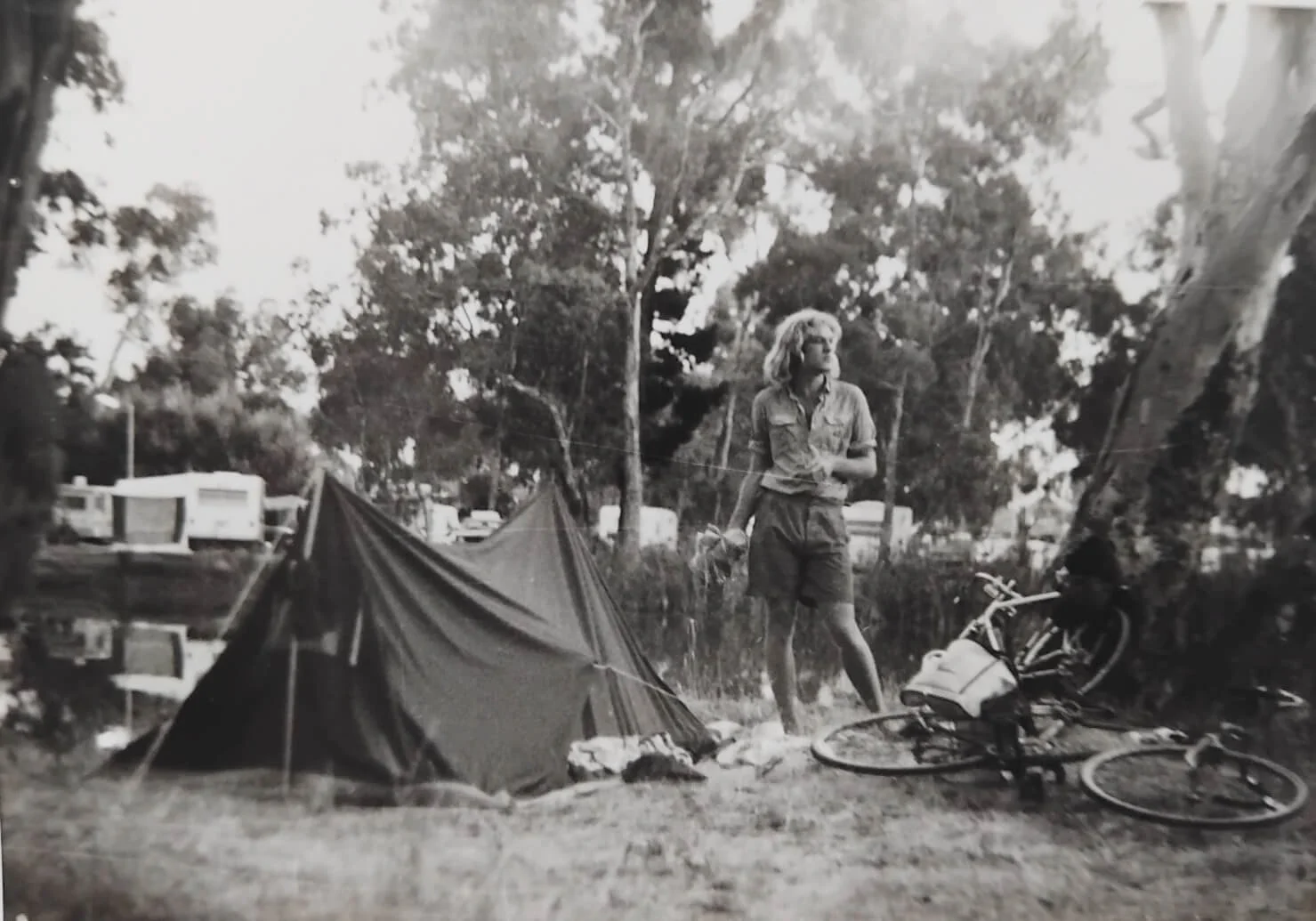
Camping, at Echuca I think.
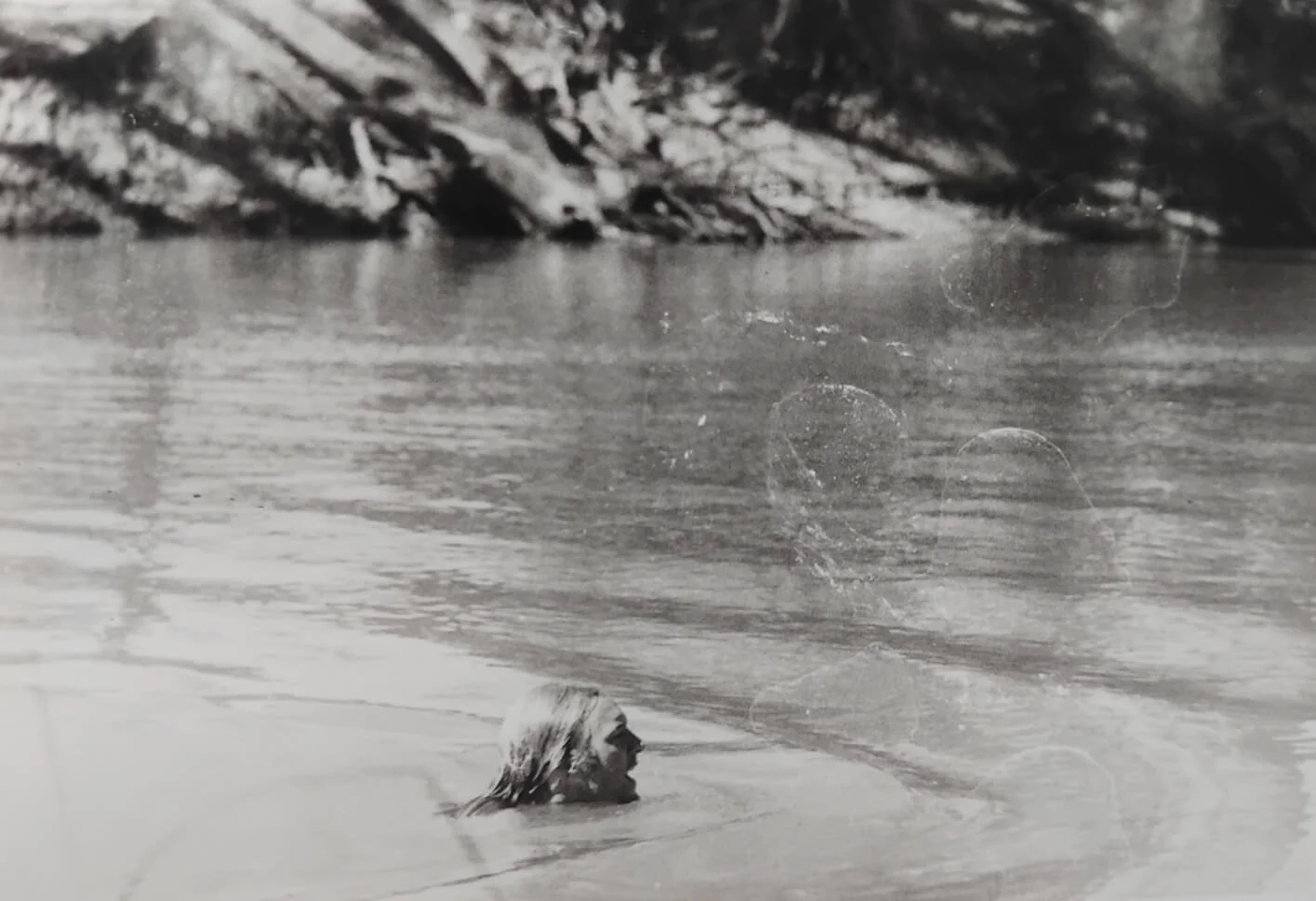
Me swimming in the Murray River.
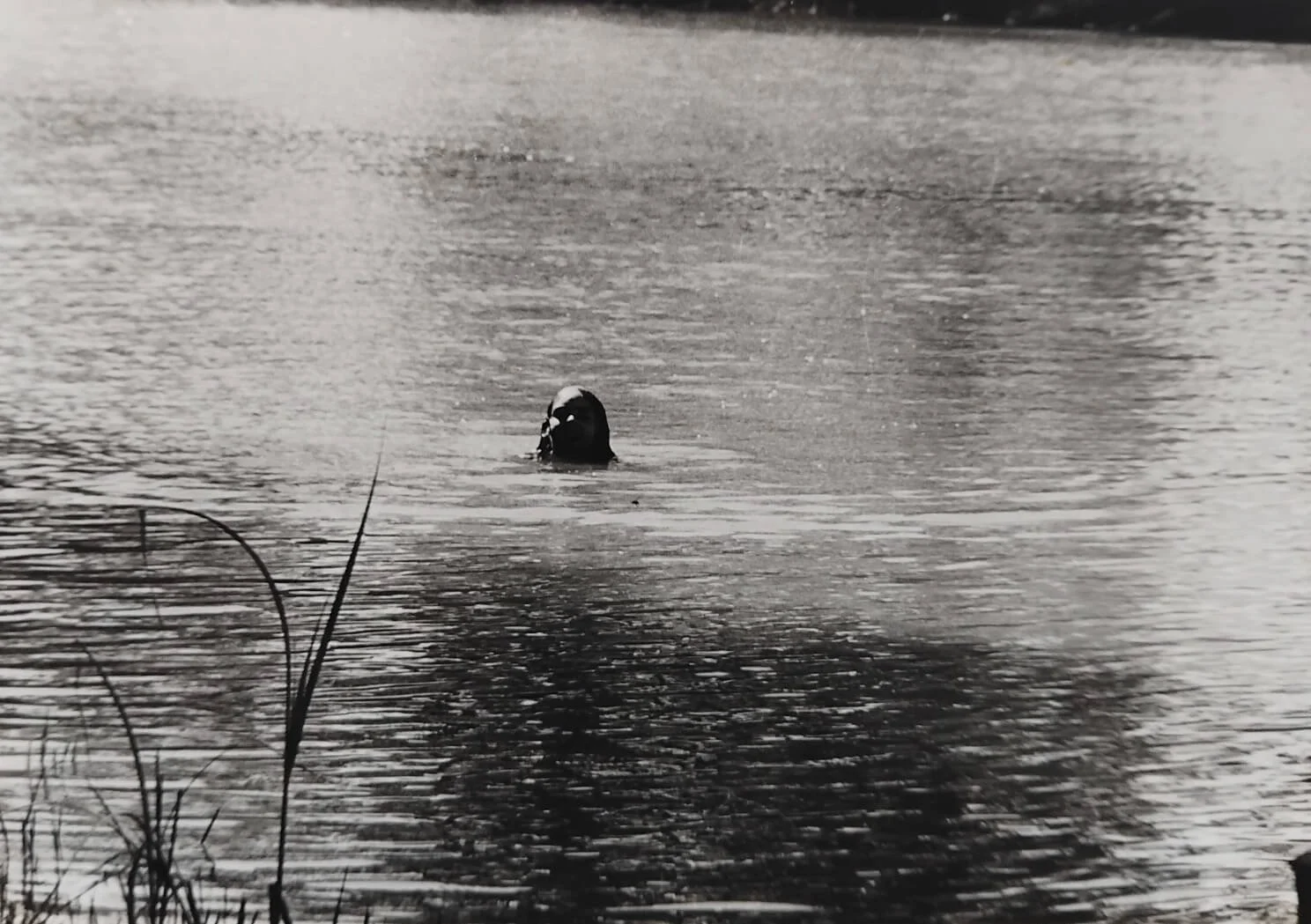
Terry in the Murray River.
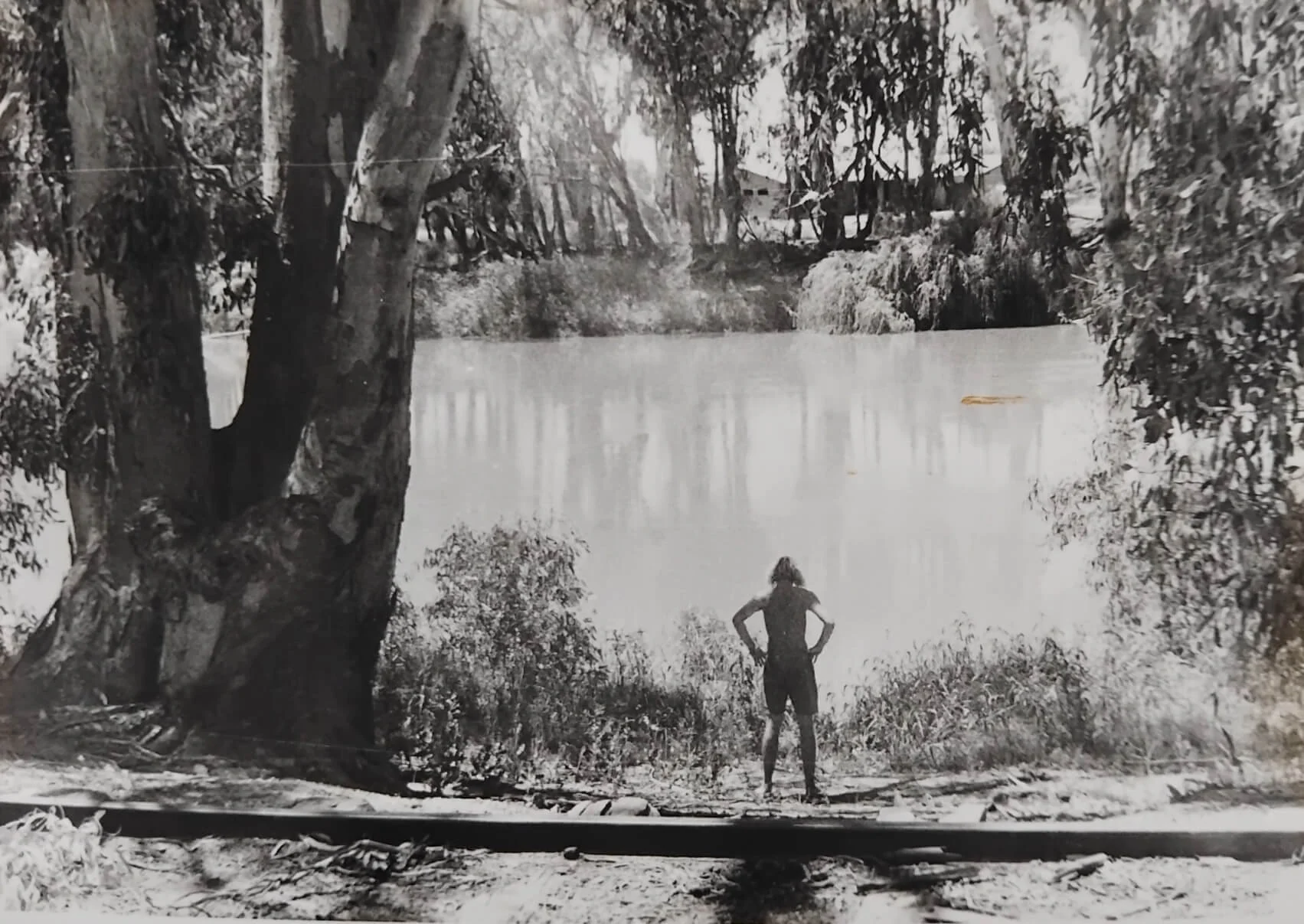
The Murray River and me.