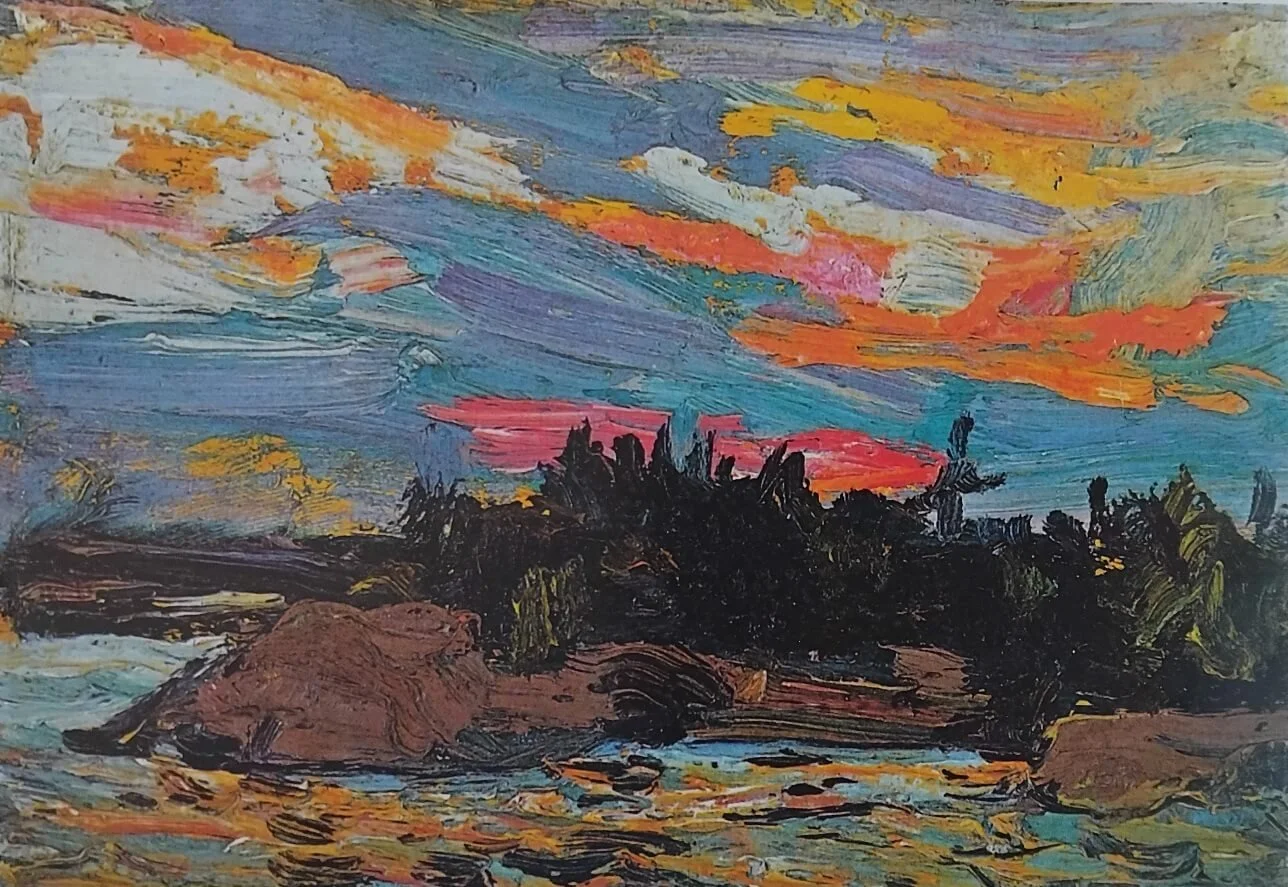
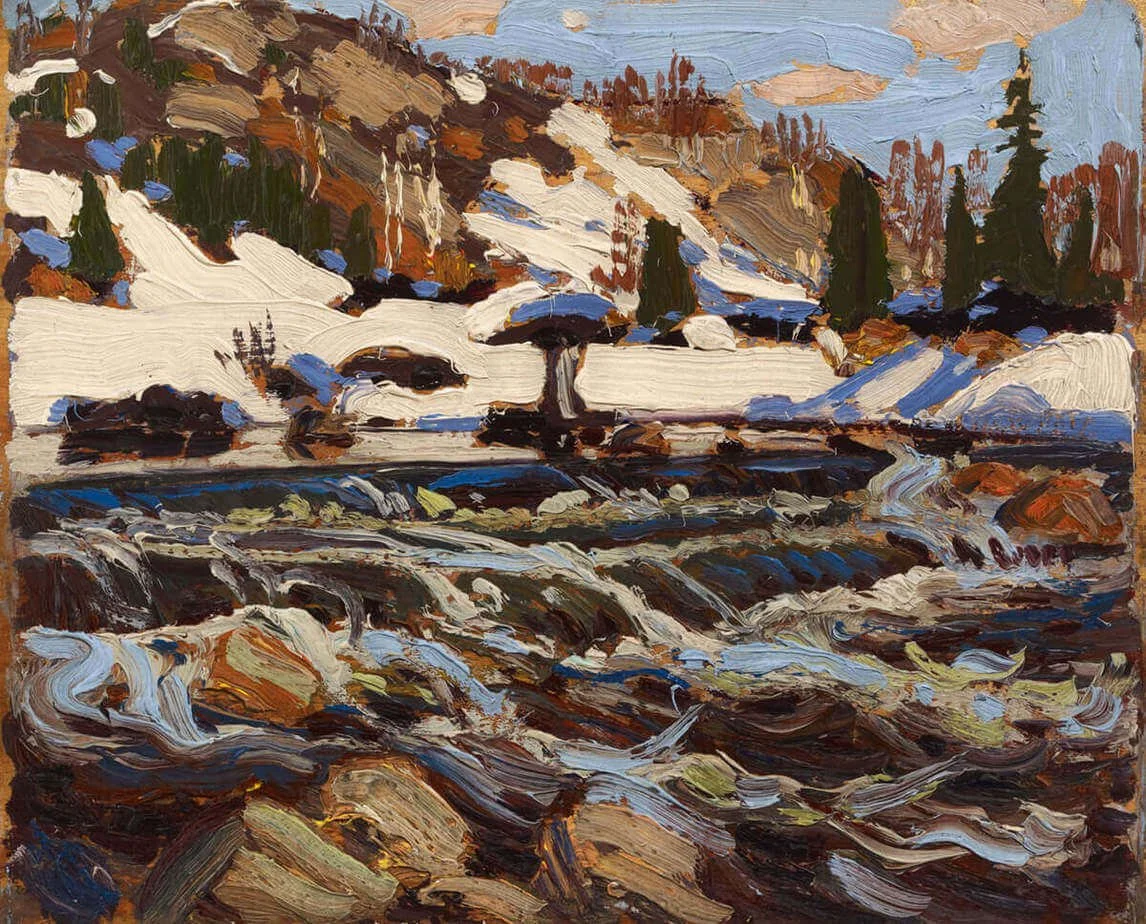
Canadian Landscape Painter, Tom Thomson

There are four seasons in the world, but there are only two in my mindpainting and no-painting. 

(Tom Thomson journal entry, March 18, 1917)

Together with the British Columbian painter Emily Carr, Ontario born Tom Thomson was one of Canada’s most important artists. Largely unknown outside of Canada, his name, like Carr’s, looms large over 20th century Canadian landscape painting. 
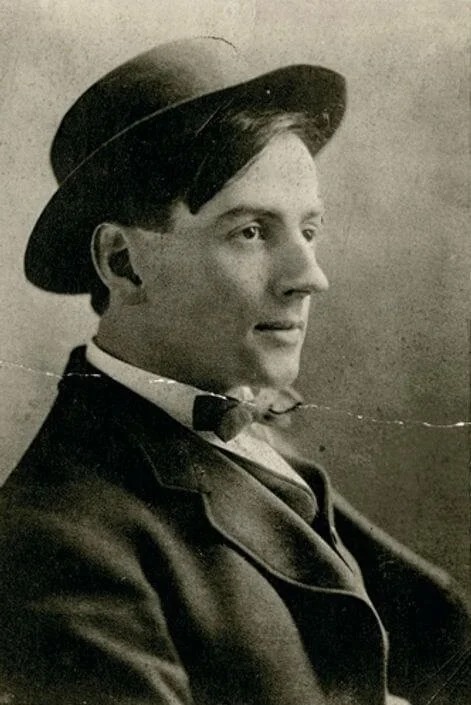
 
Portrait of Tom Thomson, c. 1904 — Canadian landscape painter known for capturing the wild beauty of Algonquin Park in early 20th-century oil sketches.

Tom Thompson c. 1904


In the 1910s, for virtually the entire time Emily Carr had forsaken painting through a lack of support for her work, Tom Thomson was pushing the boundaries of Canadian landscape painting. And yet by the time Carr had begun to paint again in the late 1920s, he had been dead for over 10 years. 

Thomson was born in 1877 near Claremont, Ontario, northeast of Toronto on August 5, 1877 into a large farming family. He died 39 years later in Algonquin Park in southern Ontario. Disappearing during a canoeing trip on July 8, 1917, his overturned canoe was found that day and his body discovered eight days later. The cause of death was recorded as accidental drowning. 
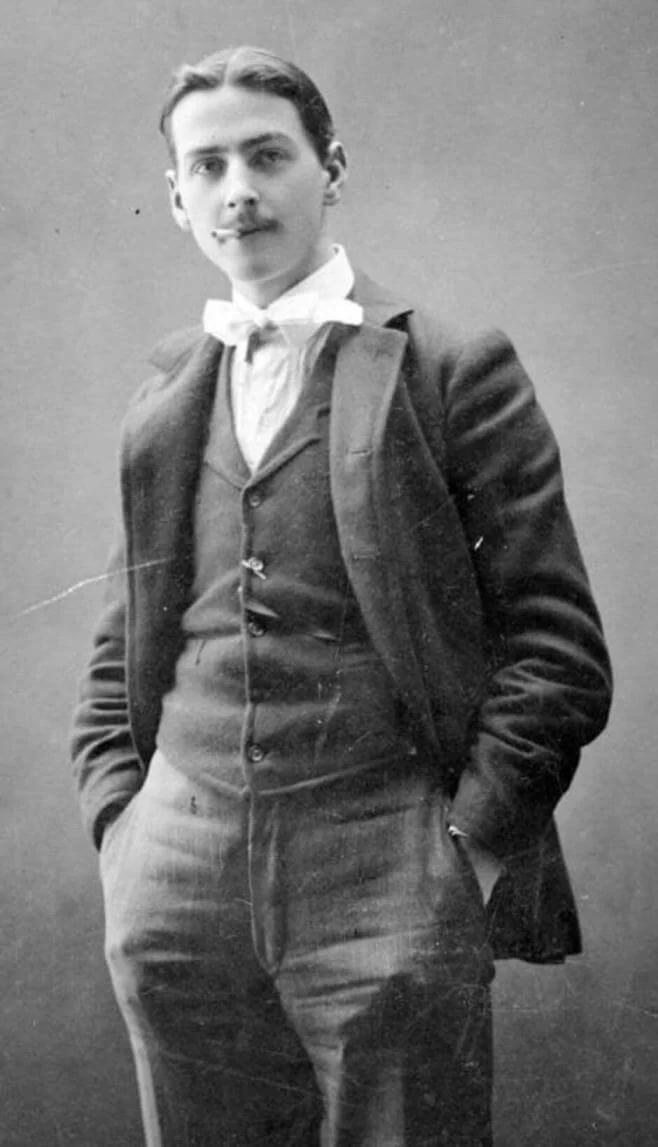
 
Full-length portrait of a young Tom Thomson, c. 1898 — early Canadian artist best known for his powerful depictions of the northern Ontario wilderness.

Tom Thomson c. 1898


Thomson was strong-willed, determined, independent and resilient. Developing a love for the outdoors at a young age, he enjoyed hiking, hunting, fishing and canoeing. This affection for and familiarity with nature and the outdoor life grew as he matured, as did the pleasure its solitude offered him. For Thomson, like Emily Carr, this seems to have been a necessary requirement to find the awareness needed to paint what they did.

He had initially worked as a commercial artist in Seattle and later, Toronto. It was there, in the early 1910s, that he began to paint seriously. It was also in Toronto that he met and became friends with the young, energetic and visionary painters who would form Canada’s most important assemblage of artists, the Group of Seven.  He was to influence their painting as they did his. 
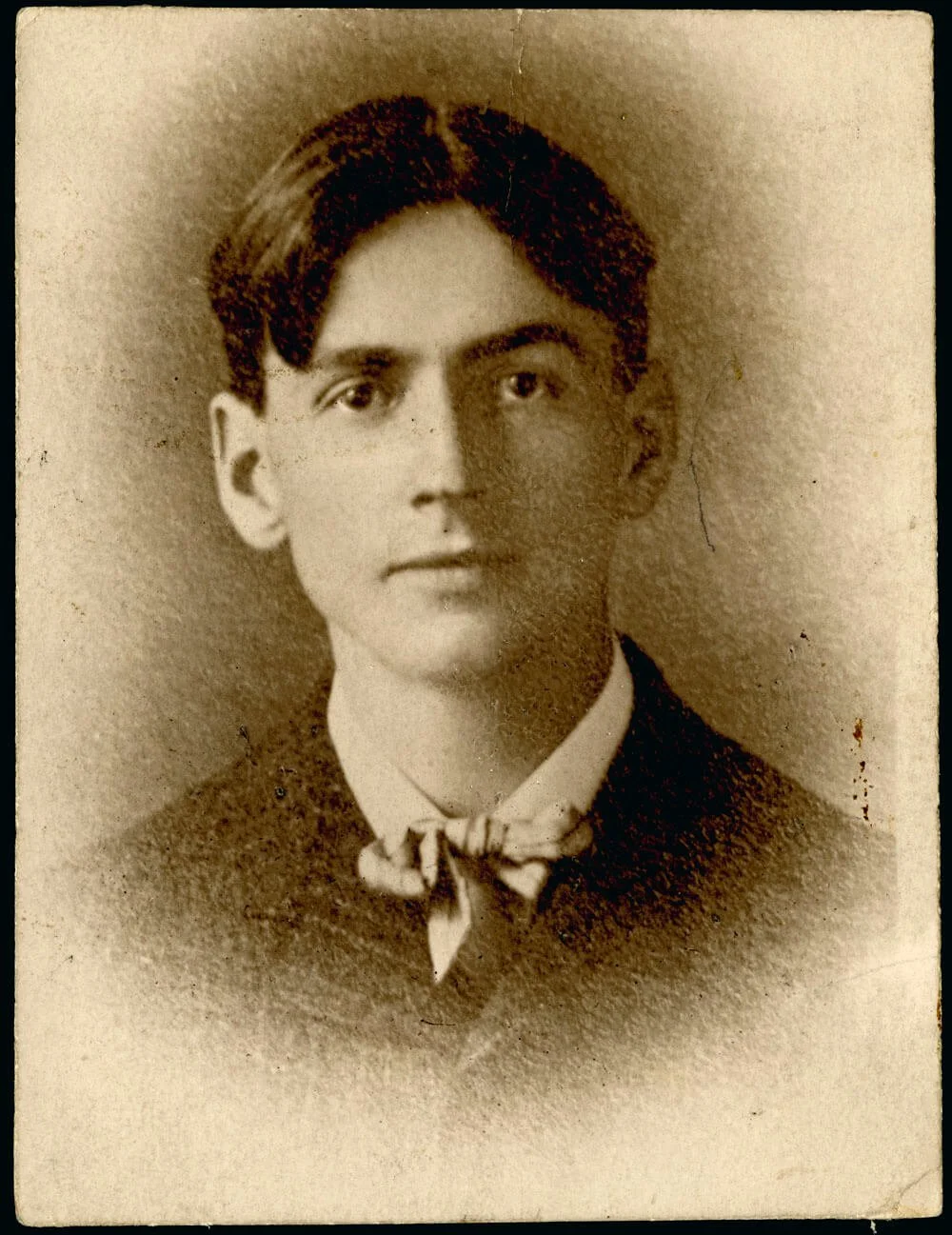
 
Portrait of Tom Thomson, c. 1900 — early Canadian landscape painter whose art and vision later influenced the Group of Seven movement.

c. 1900


Thomson was initially doubtful of his own ability to paint and shy to show his work. Incredibly, it was as late as 1914, just three years prior to his death, that he, with the encouragement of artist friends, became a full-time artist. 

During his short career, Thomson produced about 400 oil sketches on small wood panels and about 50 works on canvas. The smaller sketches were typically done en plein air. The larger canvases were completed in his studio—a shack on the grounds of the Studio Building, a low-rent artists’ enclave in Rosedale, a suburb of central Toronto. Almost all were based on what he saw and felt in Ontario’s sprawling Algonquin Park, about 290 km north of Toronto. 
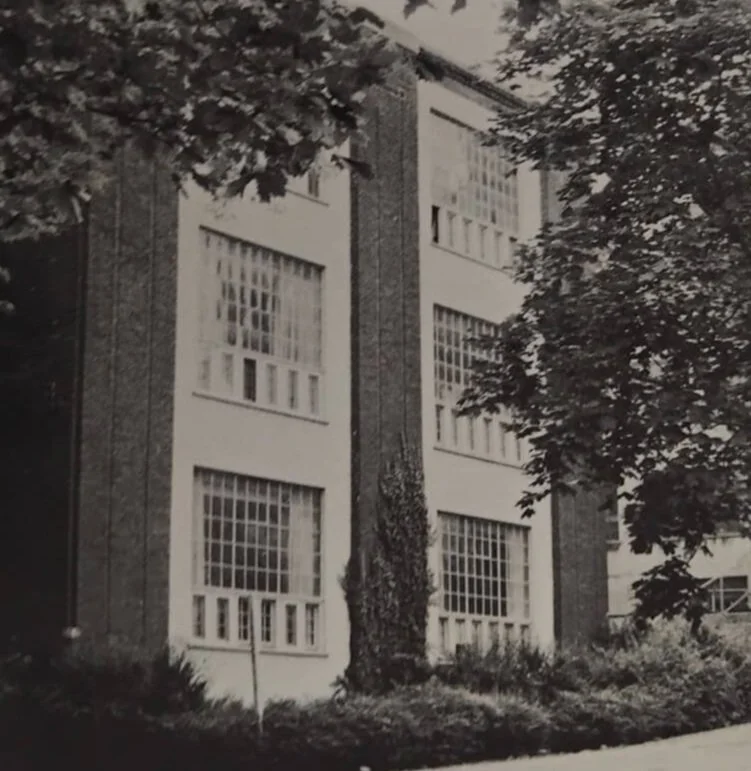
 
Black and white photo of the Studio Building in Toronto, where Tom Thomson worked and painted from a modest shack behind the main structure — a key site in early Canadian art history.

The Studio Building in Severn Street, Toronto.


Tom Thomson’s shack behind the Studio Building in Toronto, c. 1915 — his home and studio from 1914 until his death in 1917, during his most prolific painting years.

Tom Thomson's home at the rear of The Studio Building c. 1915. This was his Toronto home from 1914 until his death.


Established in 1893, Algonquin Park is the oldest provincial park in Canada and in an area of transition between northern coniferous forests and southern deciduous forests. This unique mix of forest types and the wide variety of environments found there allows it to support an enormous diversity of plant and animal species. Thomson first visited Algonquin Park in 1912. Entranced by the beauty of its lakes, skies, rivers, forests and landscapes, he returned to it repeatedly, to fish, camp and paint. 
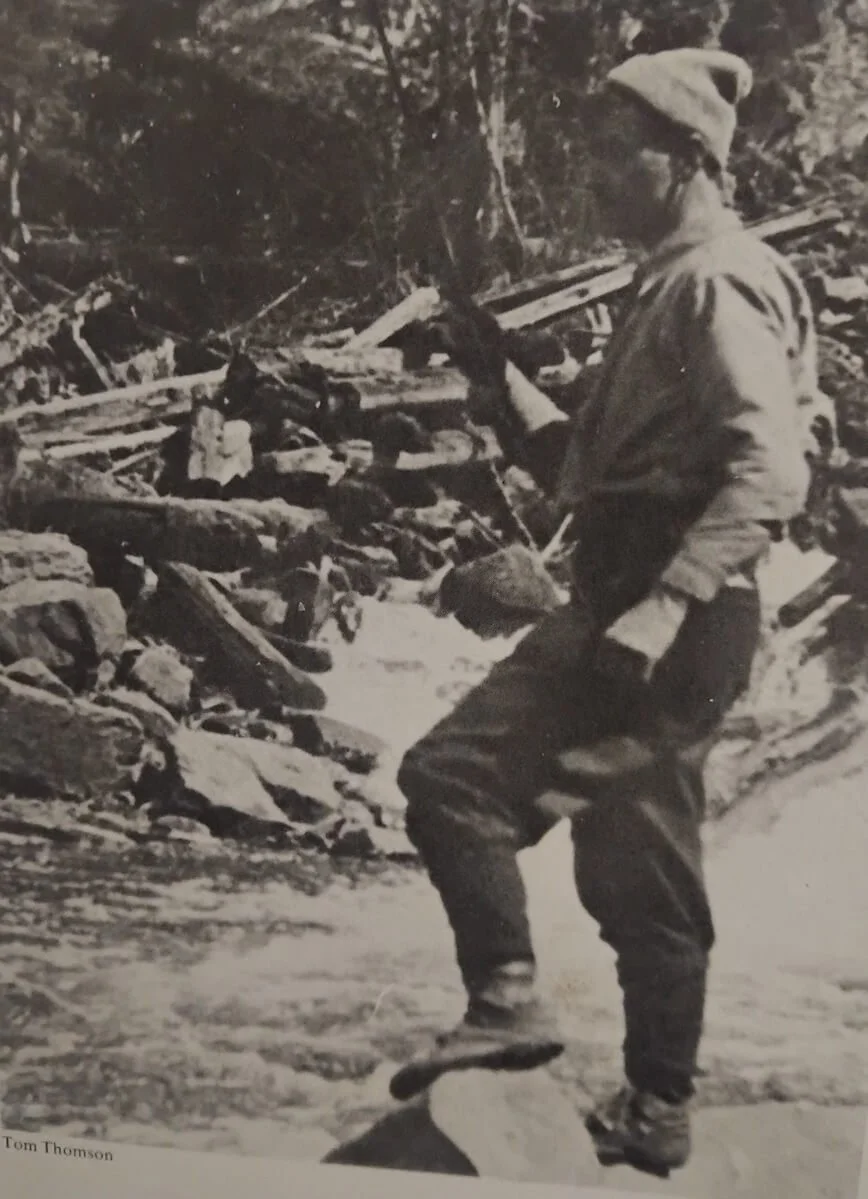
 
Tom Thomson at Tea Lake Dam, c. 1915 — Canadian landscape painter known for his deep connection to Algonquin Park and influence on modern wilderness art.

At Tea Lake Dam c. 1915


Thomson’s use of broad brush-strokes and bold colours, applied with a liberal application of paint, could have been considered audacious had they not been so effective in capturing the rugged beauty of the place he loved. Portraying the moods of changing seasons, he did not hesitate in using colour for contrast and impact in the most dramatic of ways. This is seen in his depiction of the brilliant reds, oranges and yellows of the trees and forests of Algonquin Park in autumn. Yet he was equally able to show the subtle beauty and serenity of the same places when they were not a blaze of colour, highlighted in his portrayal of the lakes that dot the park and the skies above. Some of these are painted with a complex mix of understated colours applied in dots and dabs. Others are represented by long bold lines of paint. All achieve what he was endeavouring to represent; an acknowledgement and celebration of the extraordinary beauty that surrounded and enveloped him.
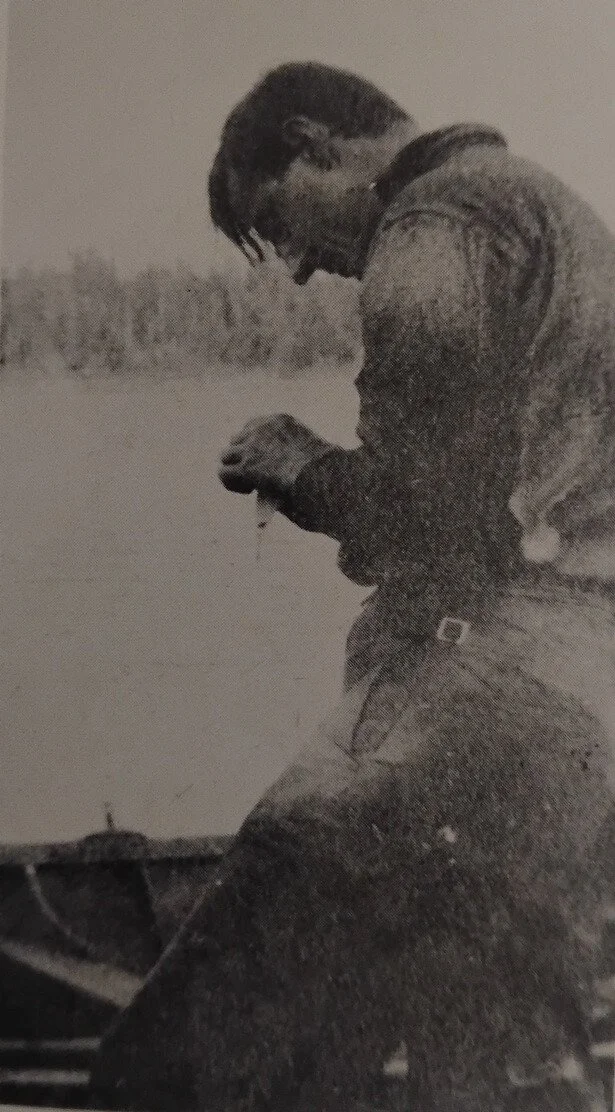
 
Tom Thomson fishing in Algonquin Park, c. 1915 — Canadian landscape painter deeply inspired by the northern wilderness and outdoor life.

c. 1915


Of particular note are his skyscapes. In some works, the sky is the focal point, rather than an accompaniment to a landscape below. He painted the most threatening and violent of storms, skies full of reds and oranges from dynamic sunsets, and others overflowing with of the most beautiful and fully formed clouds of whites, creams and greys. Had he only painted skyscapes, he would still have been lauded for the colour and the composition of his works.

Thomson was able to capture the moods of Canadian landscapes in ways that none before him ever did, and few, if any, have achieved since. By the time of his death, he was painting prolifically, and a master of his craft.
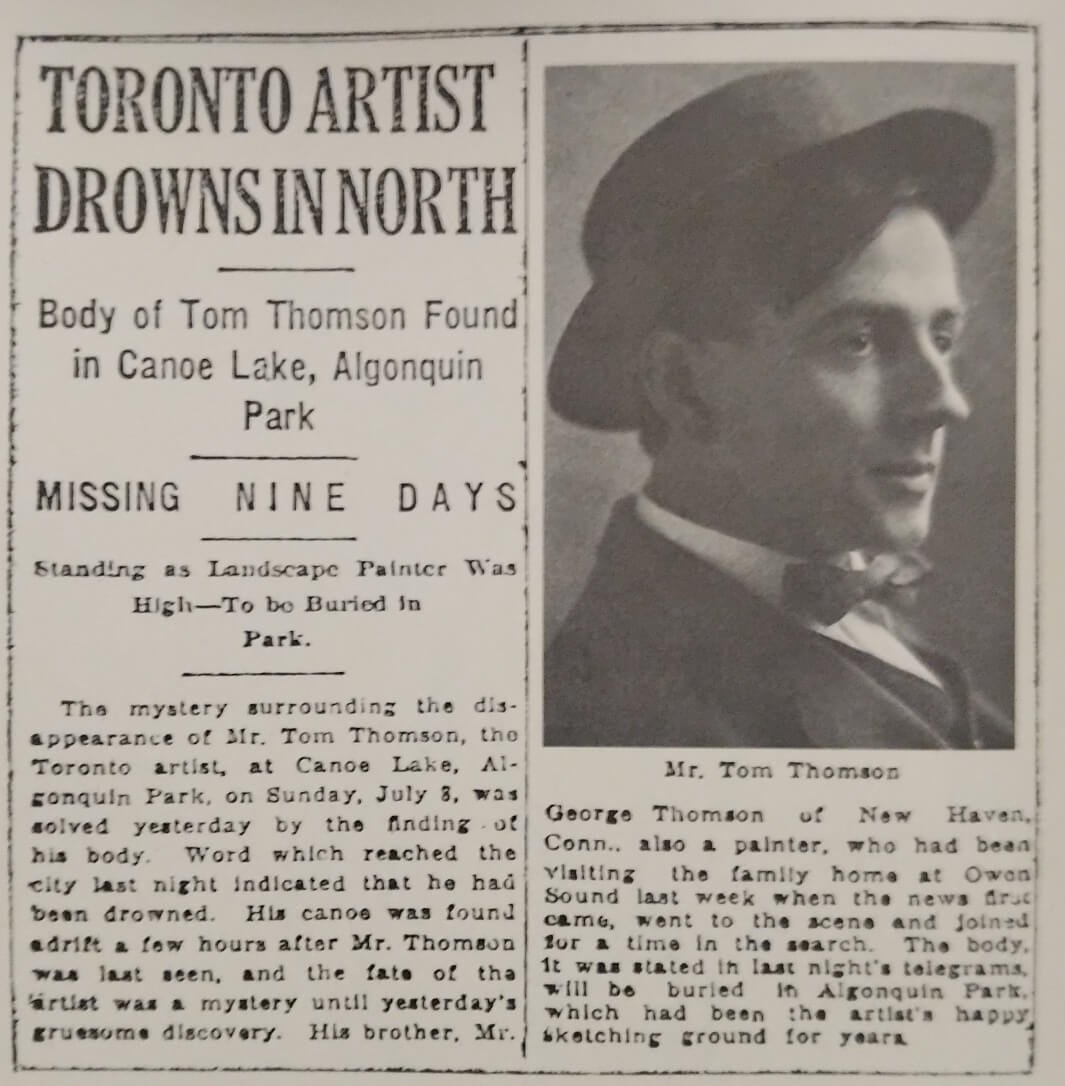
 
Historic newspaper clipping announcing the death of Canadian painter Tom Thomson in Canoe Lake, Algonquin Park, July 1917 — marking the mysterious end of one of Canada’s most influential landscape artists.
 

Thomson died at a time when his art was just beginning to be recognized. Whilst this was prior to the formal establishment of the Group of Seven, he is often considered an unofficial member. His art is typically exhibited with the Group. 

His premature death was a huge loss for Canadian art. He had become such a proficient a painter so quickly; one wonders where his painting would have taken him next.  It was a tragedy for all who knew him, including his fellow artists who lost an inspiring colleague and a great friend. It prompted a clarification of their vision for Canadian art, strengthening their resolve and giving rise to the formation of The Group of Seven. 

Memorial cairn for Tom Thomson at Canoe Lake, Algonquin Park — commemorating the life and legacy of the Canadian landscape painter who died in 1917.

Memorial cairn at Canoe Lake in Algonquin Park, Ontario.

 
Illustrated memorial plaque honoring Tom Thomson, Canadian landscape painter, who drowned in Canoe Lake on July 8, 1917 — celebrating his deep connection to the wild and enduring artistic legacy.
 

The art of Tom Thomson, along with that of Emily Carr and the Group of Seven, propelled Canadian landscape painting into the modern era. Their paintings are a celebration of that landscape, rather than being just a reflection of it, as was the case prior to them. They are diverse in their composition, style, use of colour and the like, but what they share is the artists’ delight in the landforms of Canada and the nature they support, and an overwhelming desire to represent them. The art those painters created is a gift to all Canadians, and to those everywhere who enjoy fine landscape painting.


Art by Tom Thomson
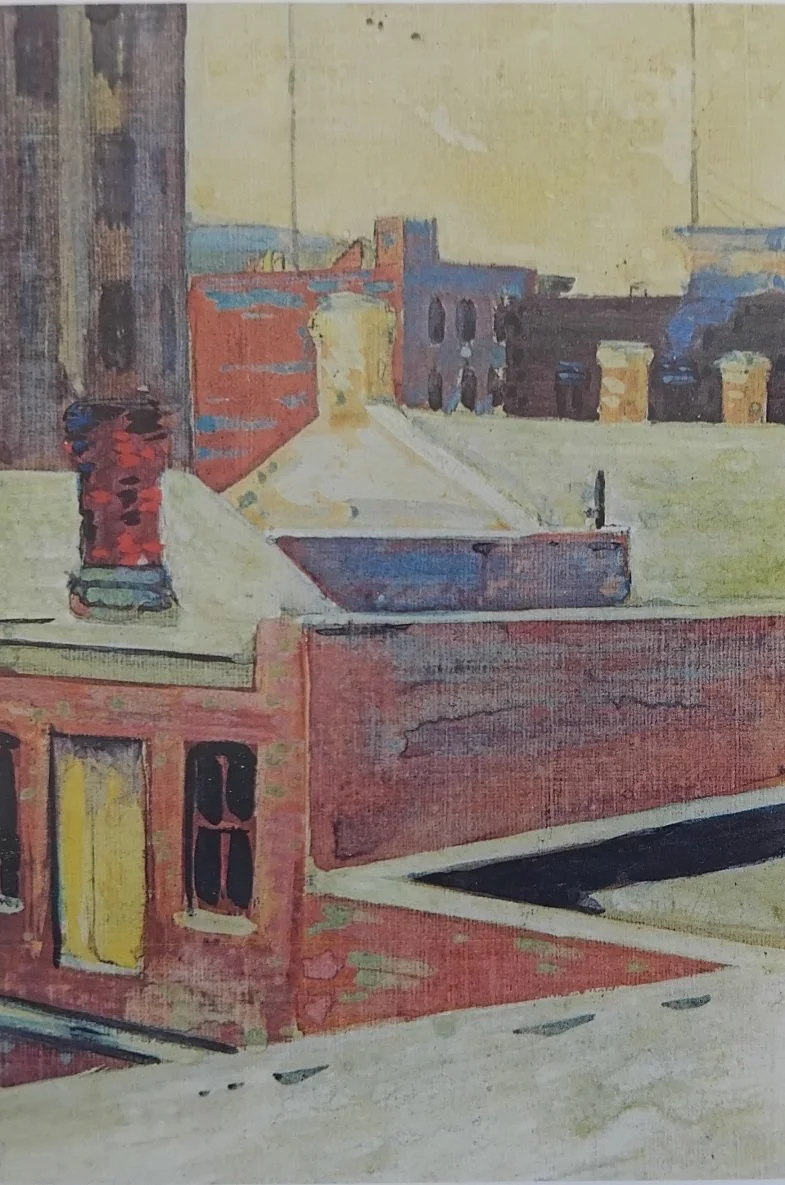
 
View from the Window of Grip Ltd, c. 1908 by Tom Thomson – an early urban landscape showing rooftops and chimneys in Toronto, painted during his time as a commercial designer before becoming known for his iconic Canadian wilderness artworks.
View from the Window of Grip Ltd, c. 1908

 
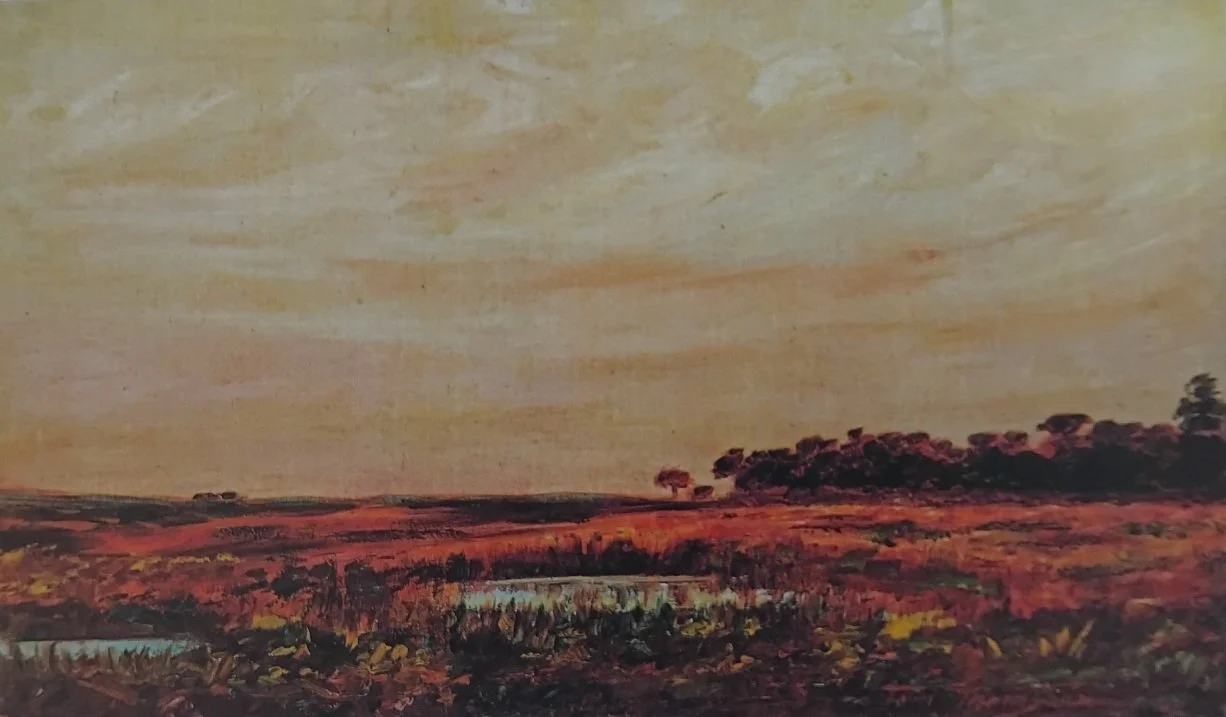
Marsh, Lake Scugog, c. 1911 by Tom Thomson – an early landscape painting with golden skies and warm red-brown wetlands, capturing the quiet atmosphere of the Ontario marshlands before Thomson’s transition into his iconic Algonquin wilderness scenes.

Marsh, Iake Skugog, c 1911

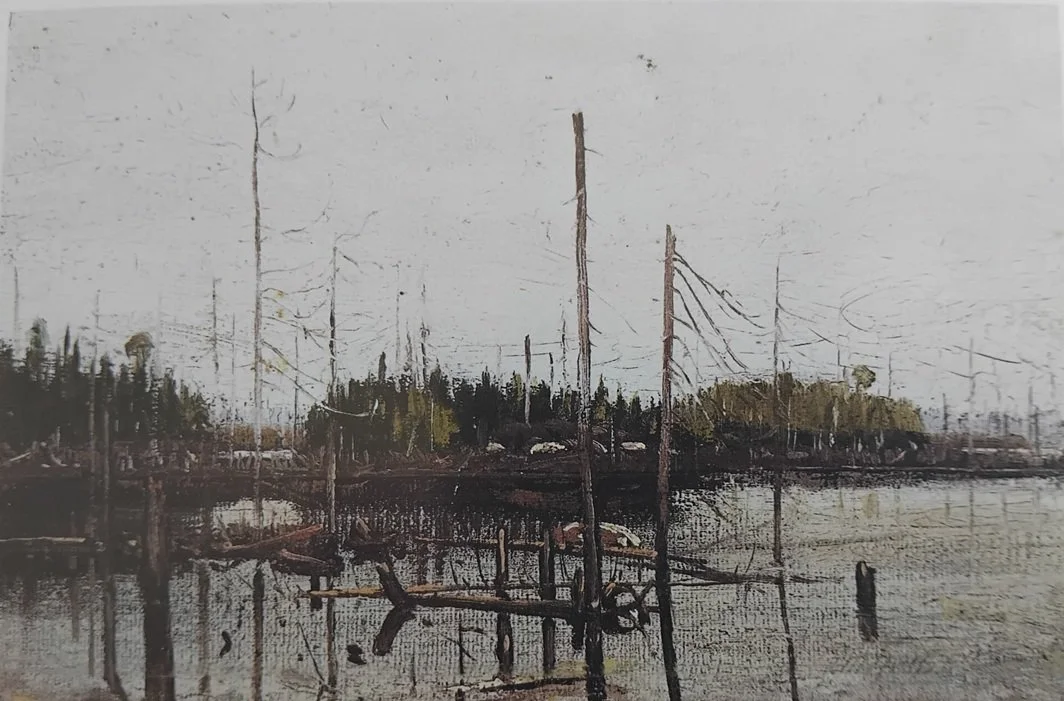
Drowned Land, 1912 by Tom Thomson – a stark and atmospheric painting of bare trees in flooded water, reflecting early explorations of Canadian wilderness themes and the moodiness that would define the Group of Seven landscape style.

Drowned Lake, 1912

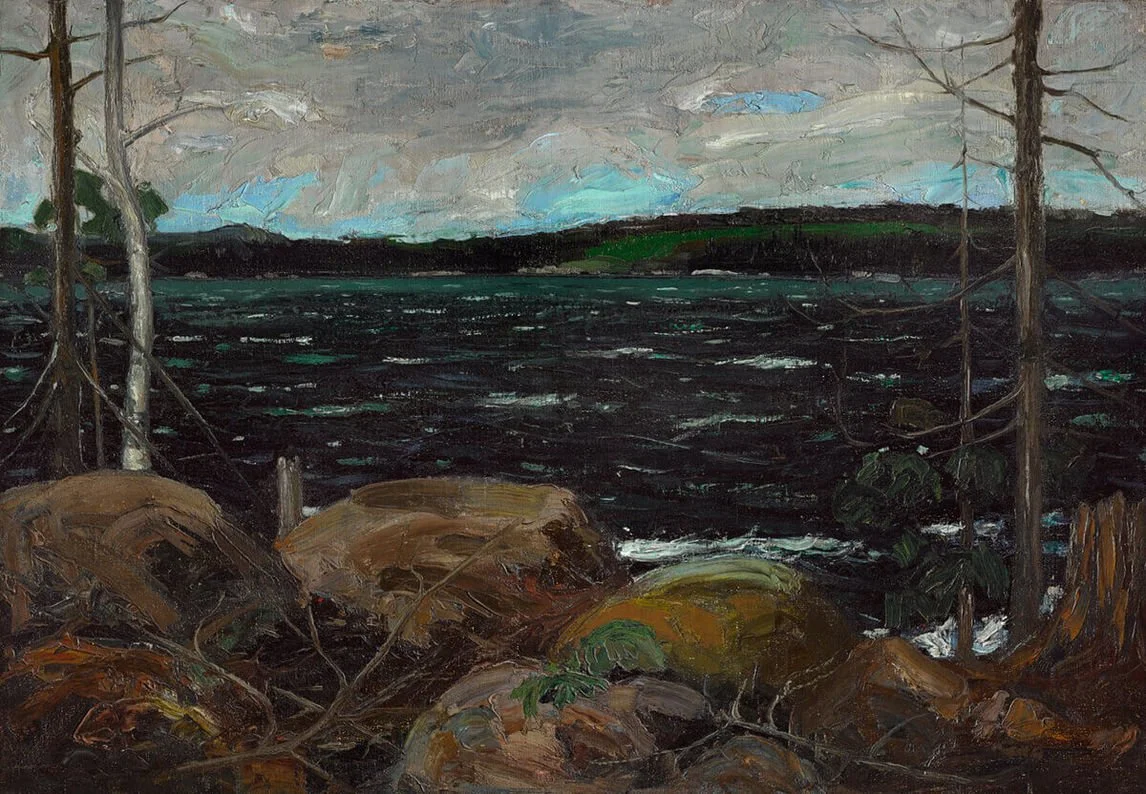
Northern Lake, 1912–13 by Tom Thomson – a dramatic landscape of dark waters, rocky shoreline, and stormy skies, painted in Algonquin Park. This work reveals the bold brushwork and emotional tone that shaped Canadian landscape painting.

Northern Lake, 1912-13

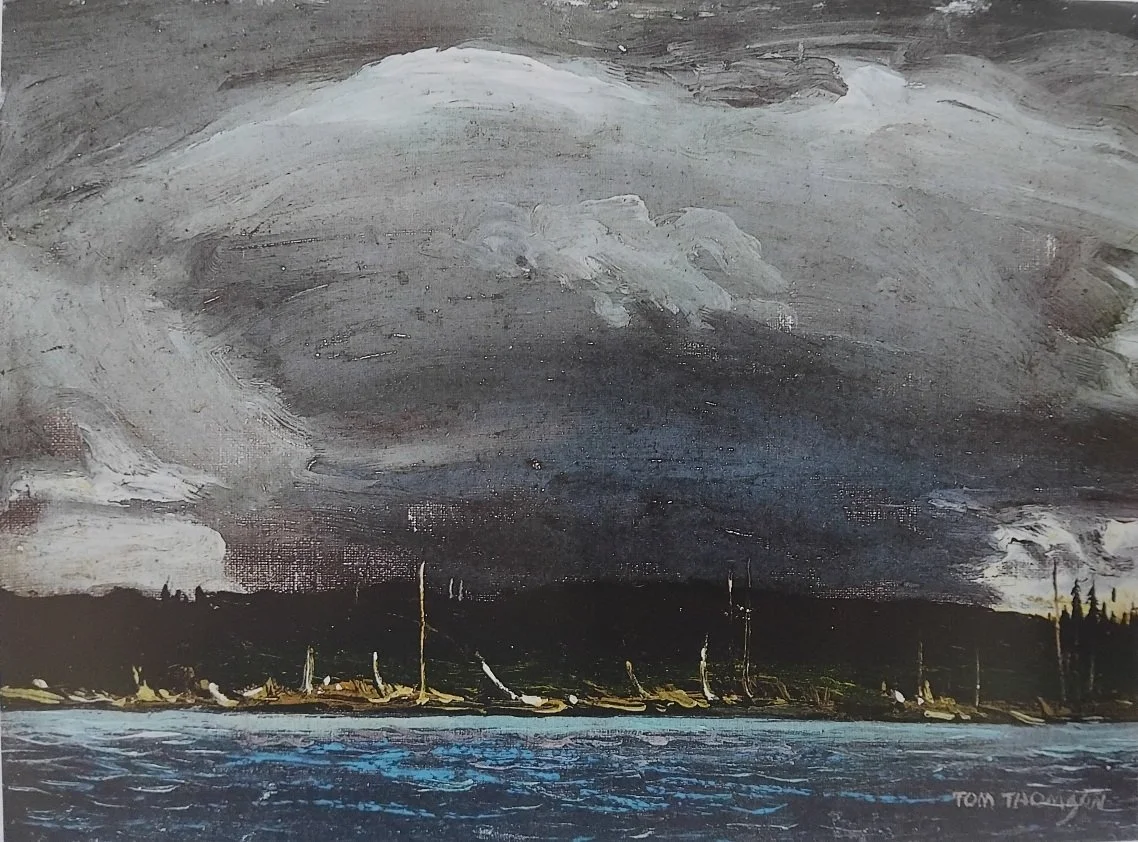
Thunderhead, 1912–13 by Tom Thomson – a dramatic Canadian landscape with storm clouds rolling over a dark forest and lake, painted in bold strokes and contrasting tones that show Thomson’s emerging expressionist style and feel for northern weather.

Thunderhead, 1912-13

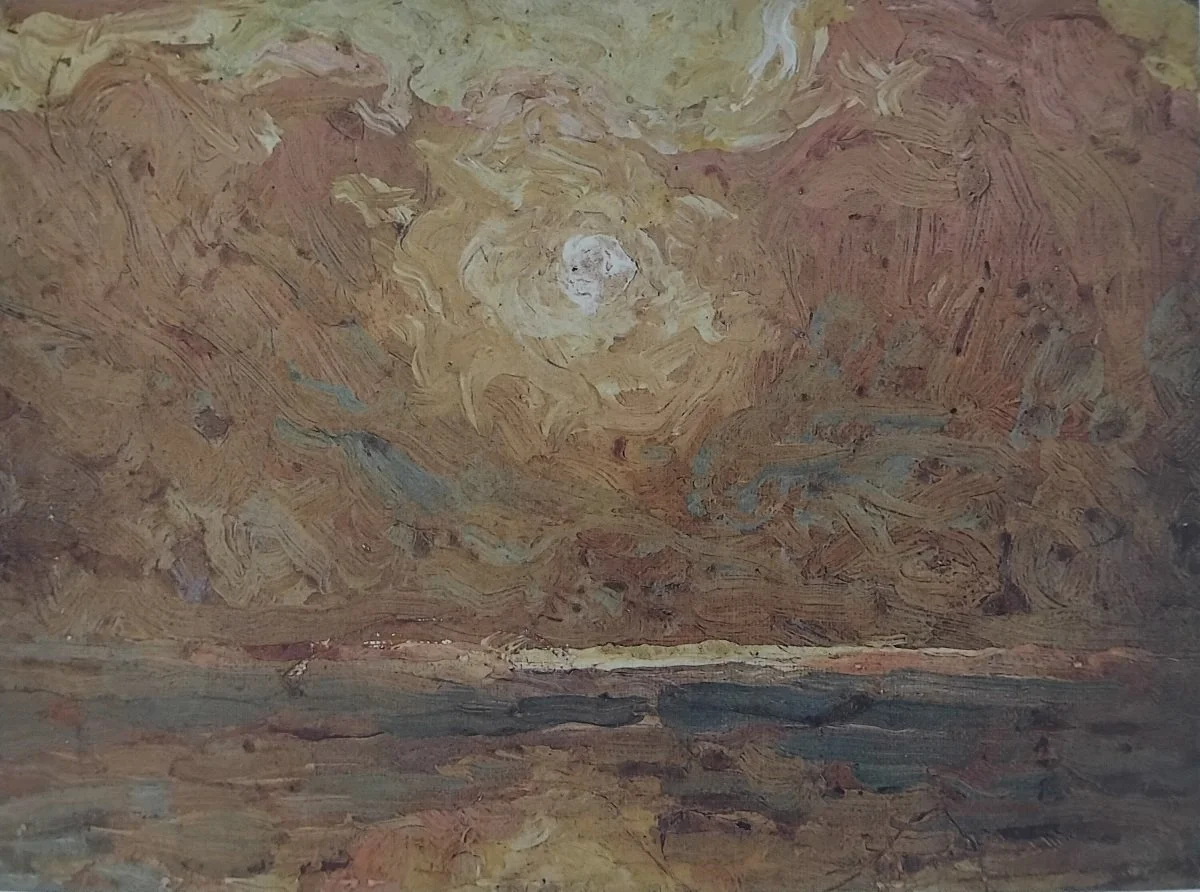
Sky (The Light That Never Was), 1913 by Tom Thomson – a swirling, abstracted sunset study with thick brushwork and glowing golden tones, capturing the emotional intensity and imaginative quality of Canadian skies in a uniquely expressive style.

Sky; The Light that never was, 1913

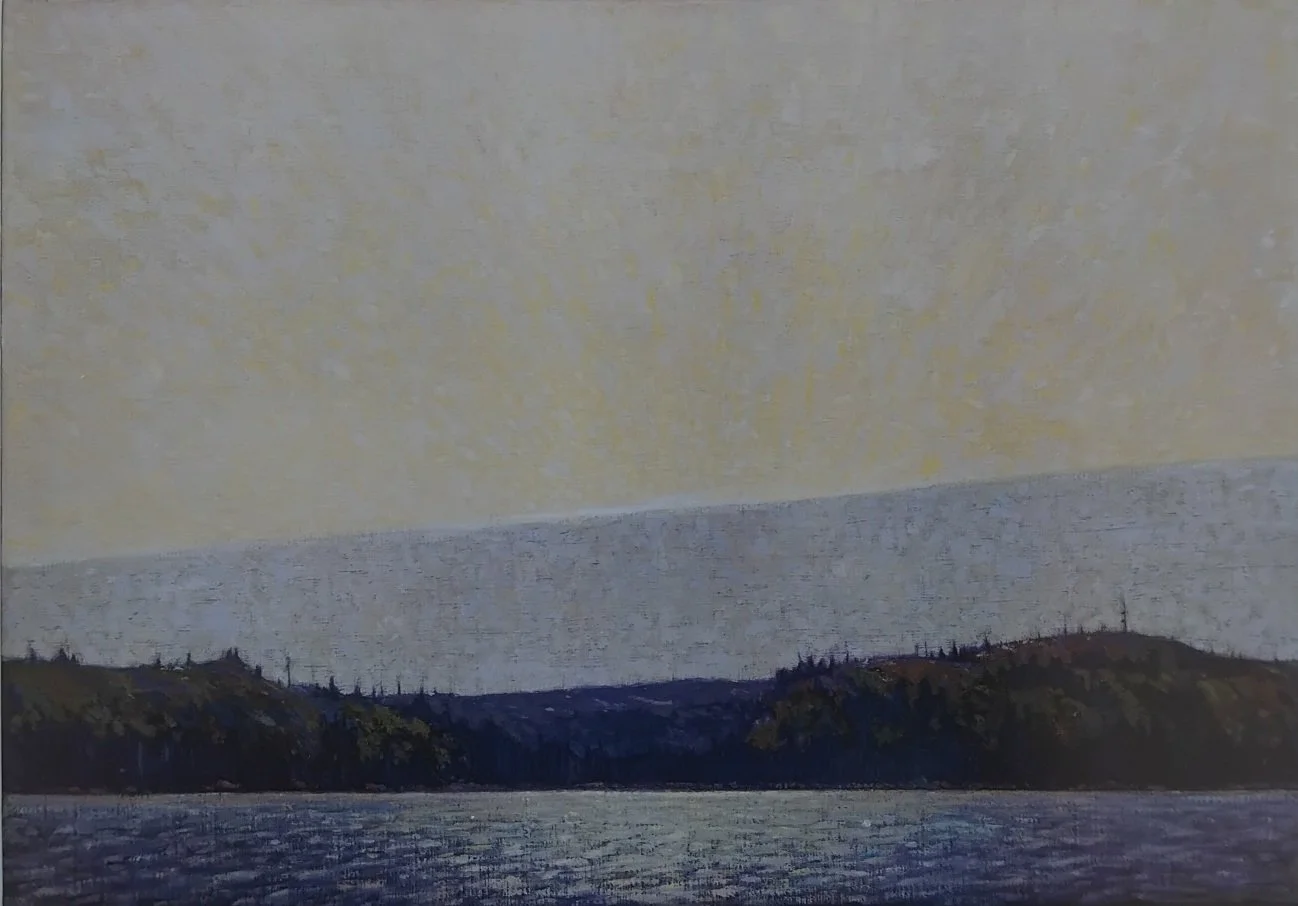
Morning Cloud, 1913–14 by Tom Thomson – a peaceful Canadian lake scene with pale skies and distant tree-lined hills, reflecting early Group of Seven ideals of light, atmosphere, and connection to the northern wilderness.

Morning Cloud, 1913-14

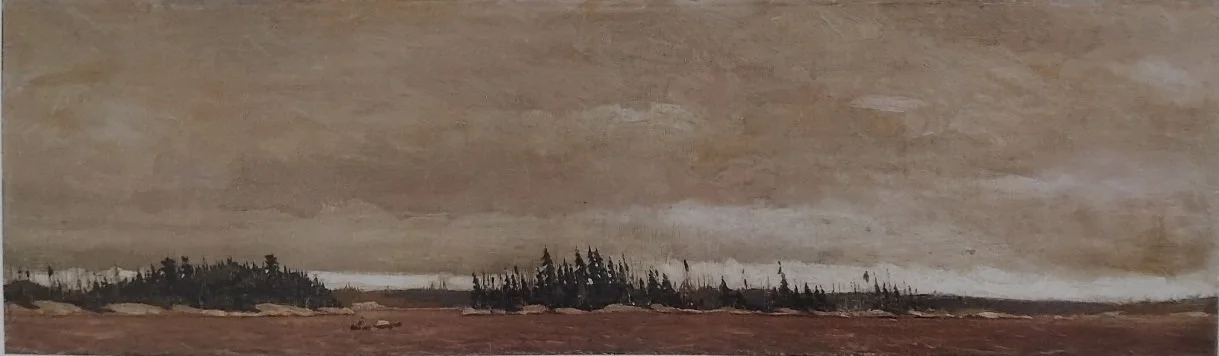
Grey Day in the North, 1913–14 by Tom Thomson – a subdued landscape with moody skies and a low forested shoreline, evoking the stillness and solitude of northern Ontario and marking Thomson’s deepening connection to natural wilderness.

Grey Day in the North, 1913-14

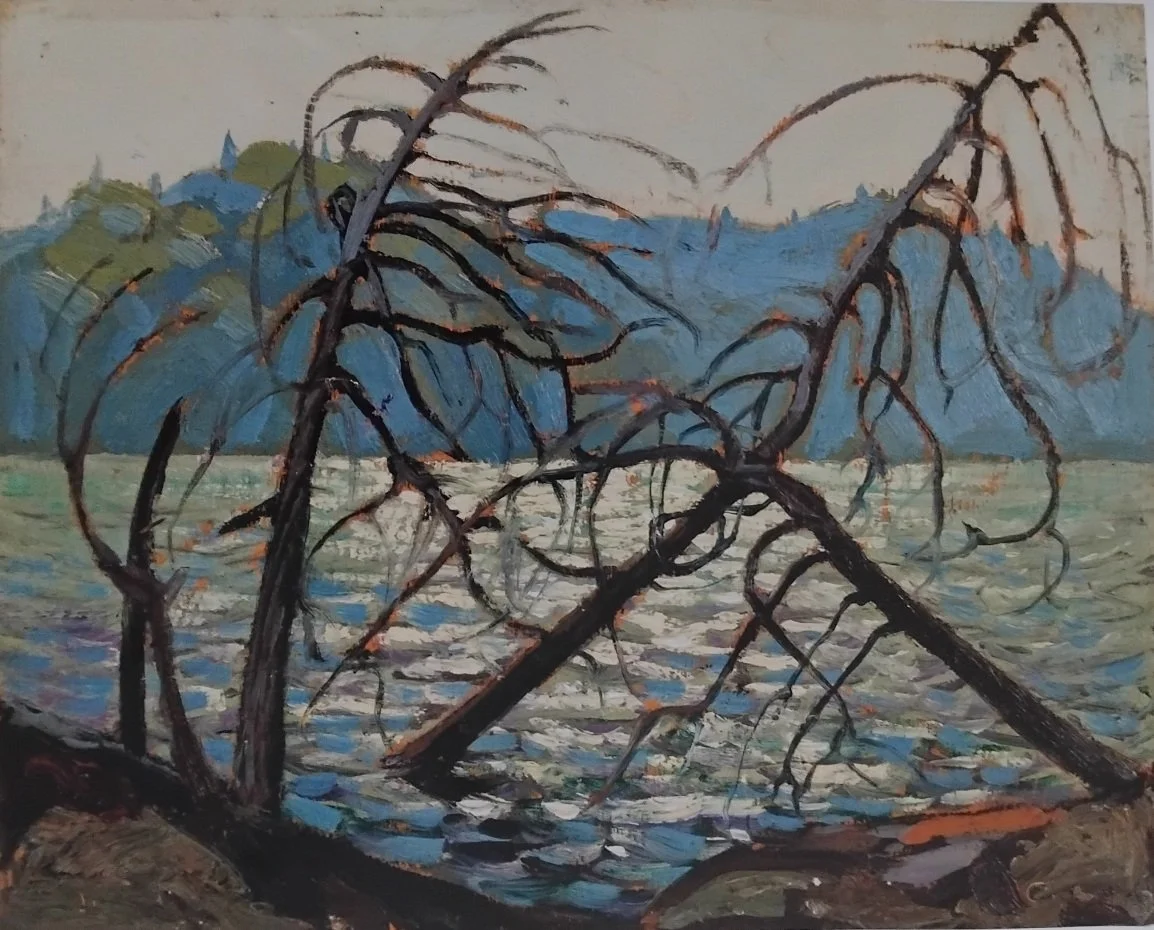
Canoe Lake, 1914 by Tom Thomson – a dynamic view through dead trees onto rippling northern waters, painted in Algonquin Park. This work reflects the solitude, rhythm, and iconic landscape style that would define Thomson’s career.
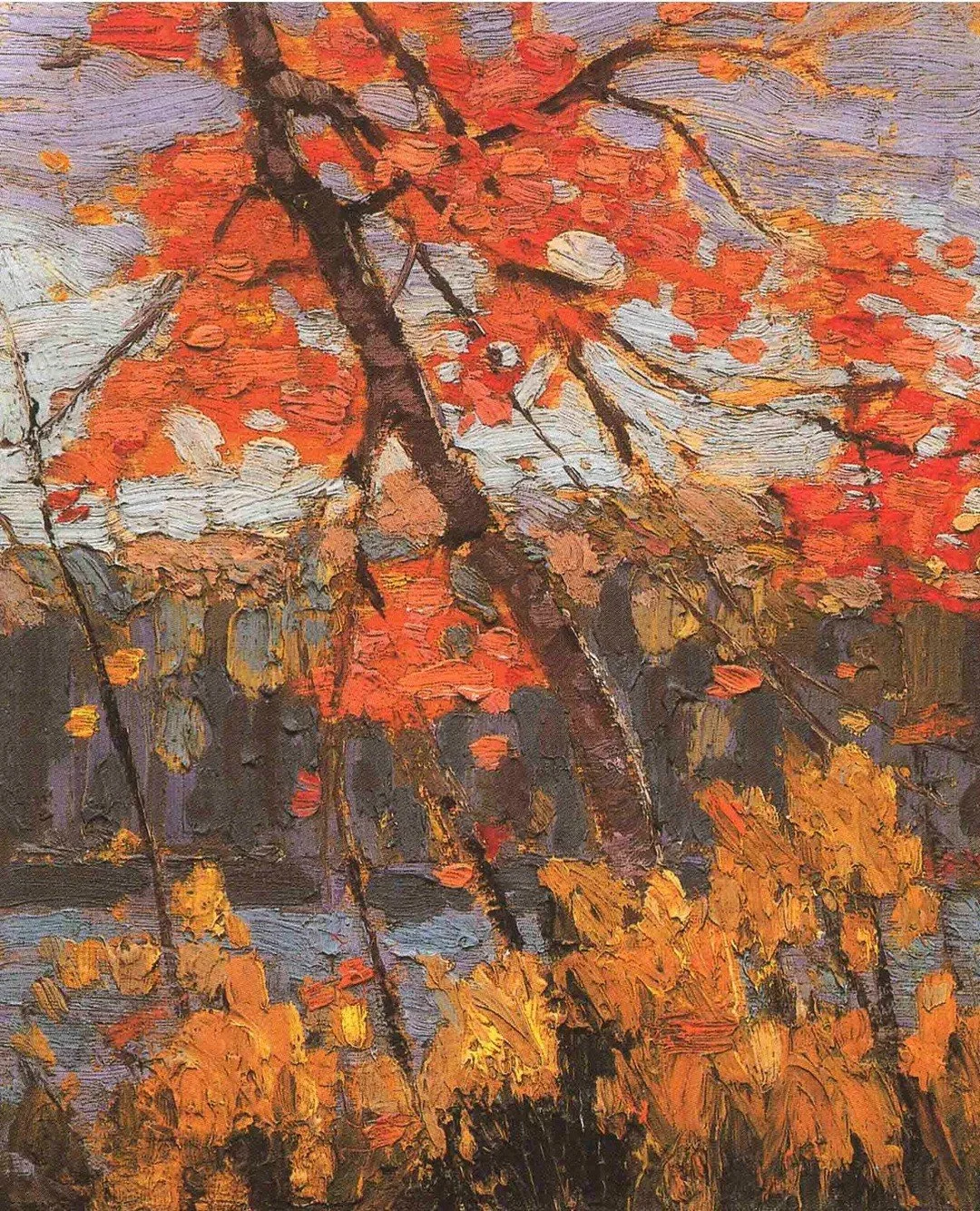
Canoe Lake, 1914

 
Twisted Maple, 1914 by Tom Thomson – a richly coloured autumn landscape of fiery red and golden foliage, painted in thick, expressive strokes that highlight the raw beauty of Canadian forests and Thomson’s love for the season’s energy.
Twisted Maple, 1914

 
Windy Evening, 1914 by Tom Thomson – a moody Canadian sunset with swirling pastel clouds above silhouetted treetops and a calm lake, painted in bold, textured strokes that capture the fleeting beauty of dusk in the northern wilderness.
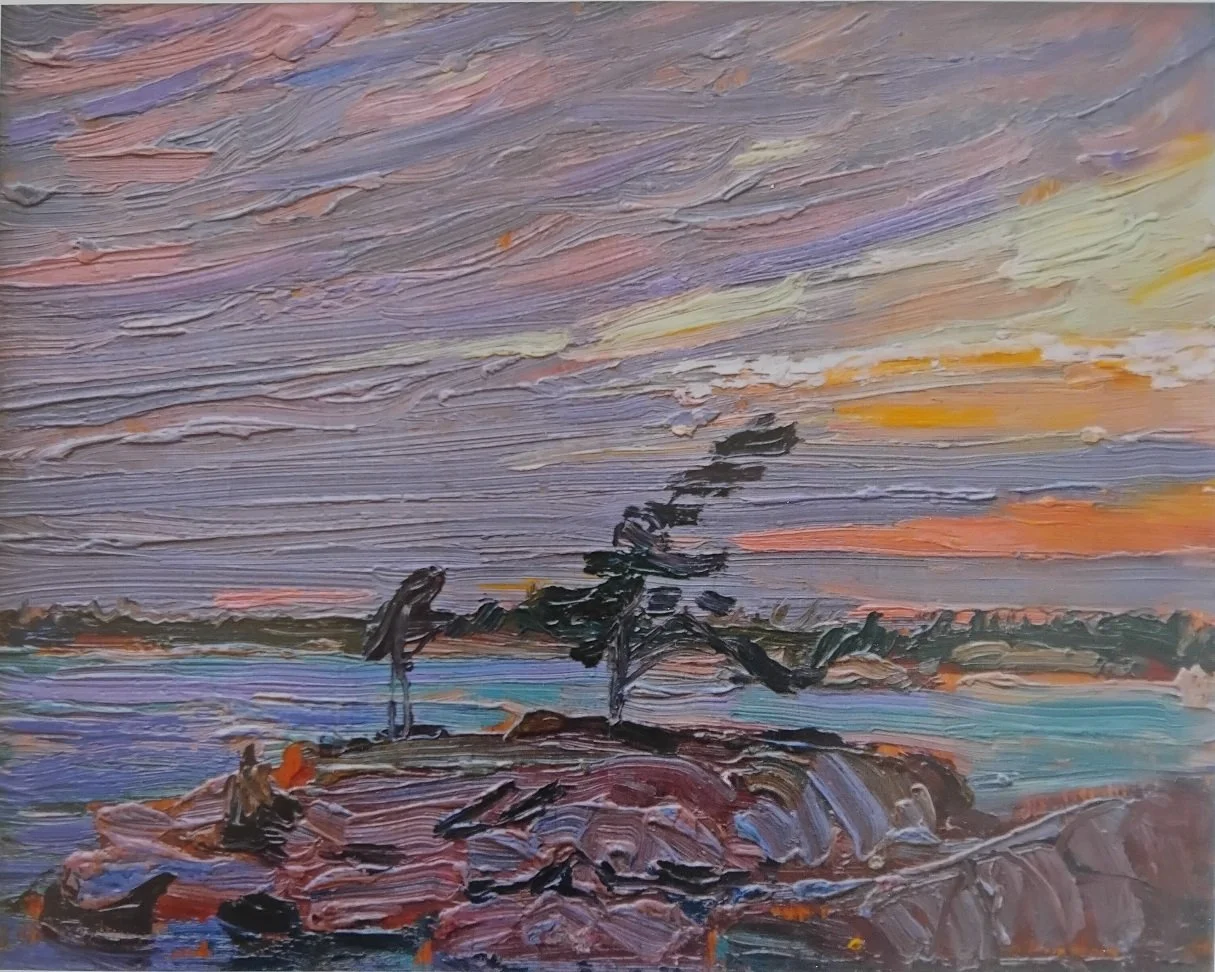
Windy Evening, 1914

Split Rock Gap, c. 1914 by Tom Thomson – a vibrant, expressive painting of a rocky Canadian shoreline with windswept trees and glowing water, capturing the raw energy and colour of Georgian Bay at sunset with Thomson’s signature brushwork.
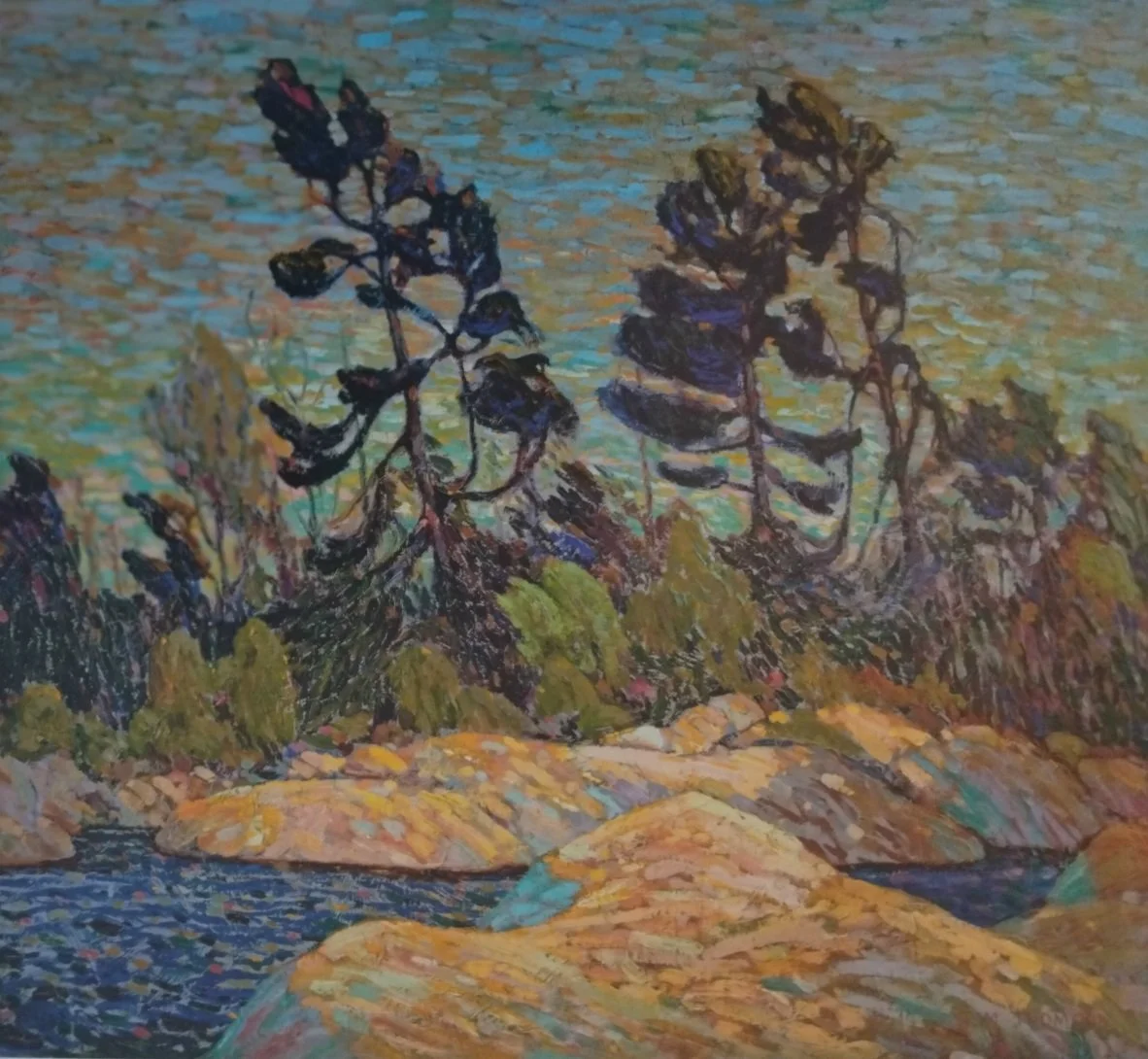
Split Rock Gap, c. 1914

Byng Inlet, Georgian Bay, 1914–15 by Tom Thomson – a colourful, impressionistic scene of tall pines and sculpted granite in late light, celebrating the rugged landscape of Ontario’s north in one of Thomson’s early Georgian Bay studies.

Byng Inet, Georgian Bay, 1914-15

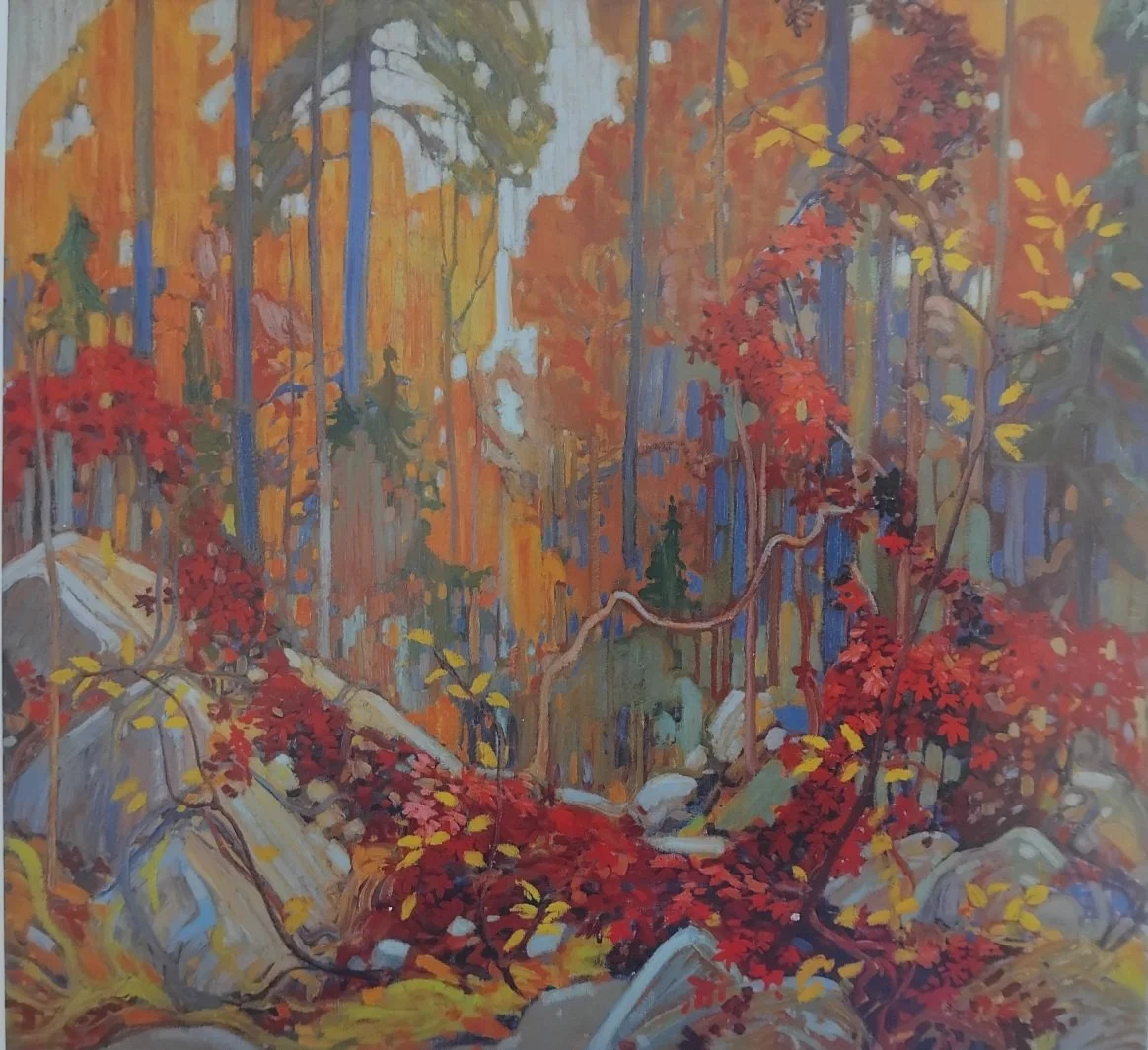
Autumn's Garland, 1915–16 by Tom Thomson – a vibrant forest painting with rich reds, oranges, and yellows wrapping around rocky terrain, capturing the height of Canadian fall in bold colour and design inspired by the Group of Seven’s ideals.

Autumn's Garland, 1915-16

Canoe Lake, 1915 by Tom Thomson – a dusky northern landscape with violet clouds and glowing sky reflected in water, painted in Algonquin Park with expressive brushwork and emotional depth typical of Thomson’s signature lake scenes.
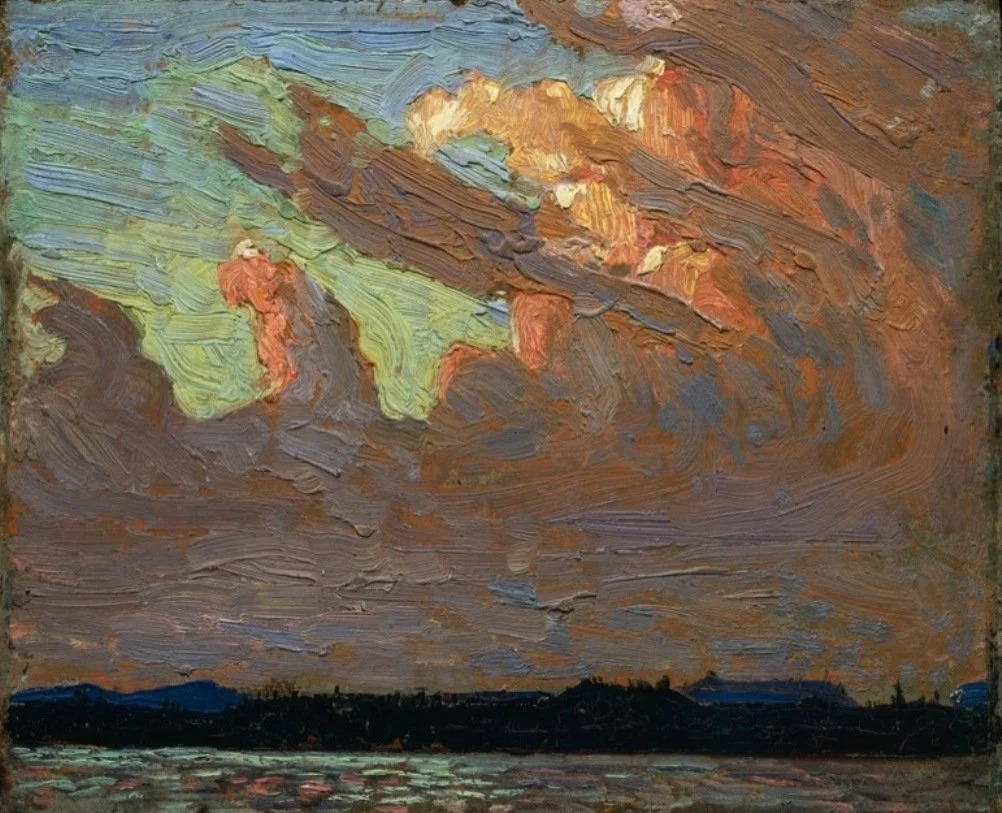
Canoe Lake, 1915

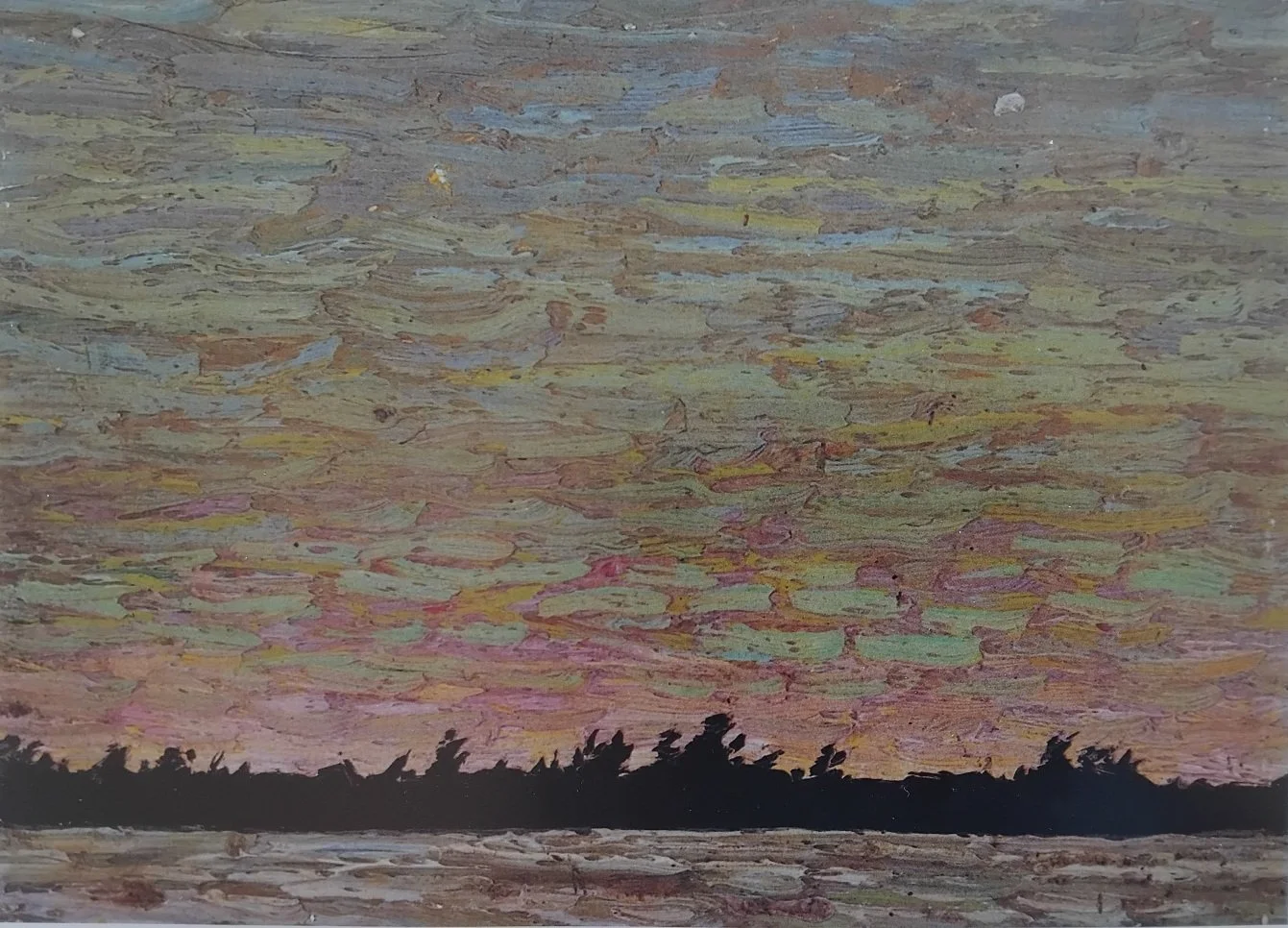
Evening, 1915 by Tom Thomson – a moody cloudscape painted in thick, expressive strokes, with flashes of orange and green light dancing over a silhouetted tree line and quiet lake, showing Thomson’s mastery of colour and atmosphere.

Evening, 1915

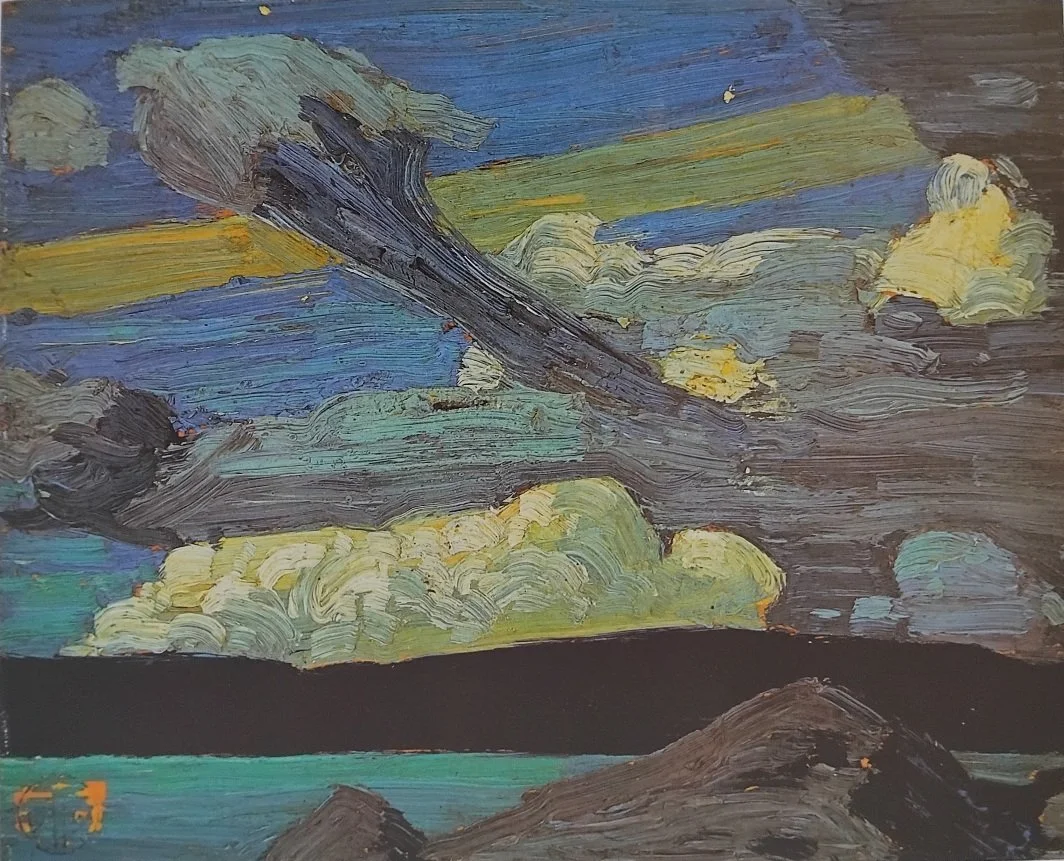
Clouds; The Zeppelins, 1915 by Tom Thomson – a bold, abstracted sky study with sweeping black clouds and bursts of blue and yellow, painted during WWI and hinting at the tension of the time through surreal, expressive form.

CIouds; The Zeppelins, 1915

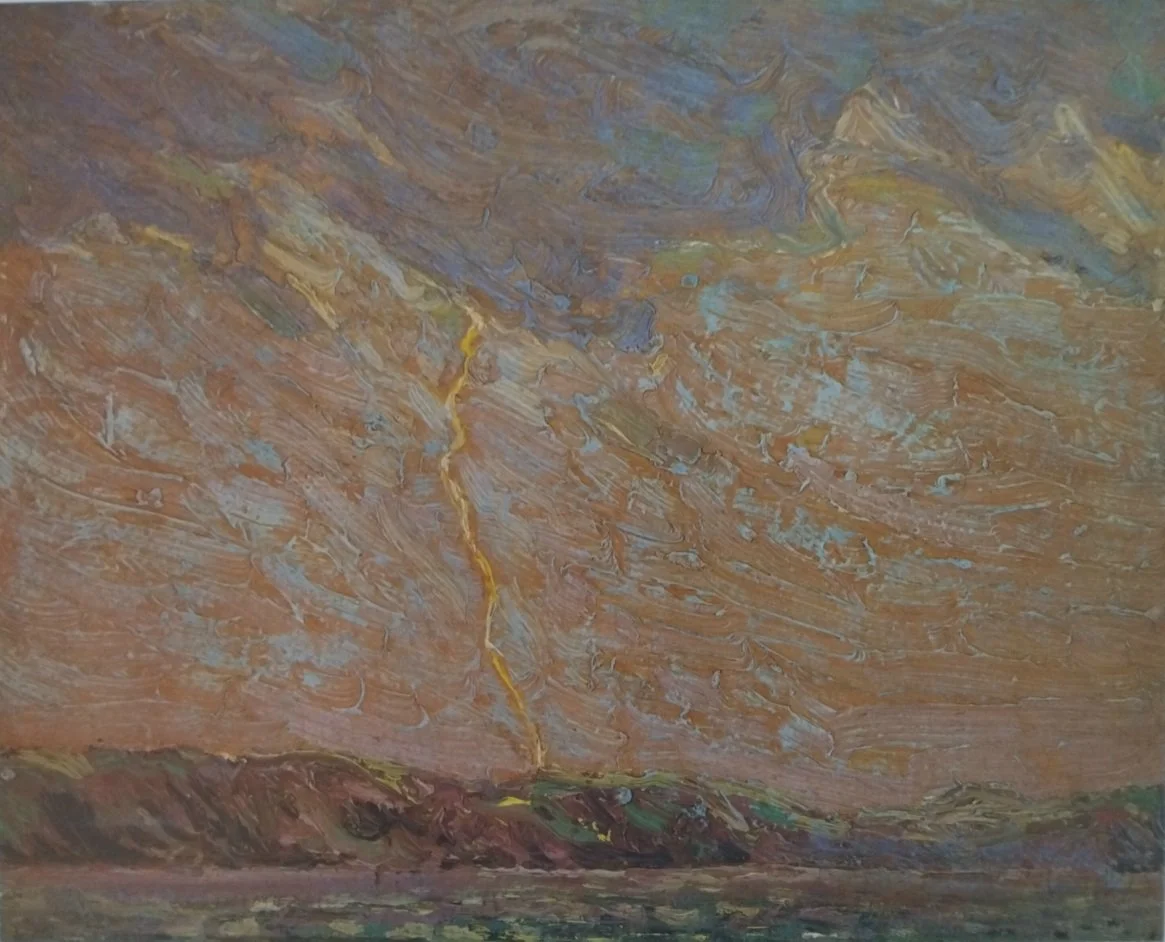
Lightning, Canoe Lake, 1915 by Tom Thomson – a dramatic Algonquin scene with a vivid yellow lightning bolt striking against a swirling orange sky, painted in textured strokes that capture the raw power of northern weather.

Lightning Canoe Iake, 1915

 
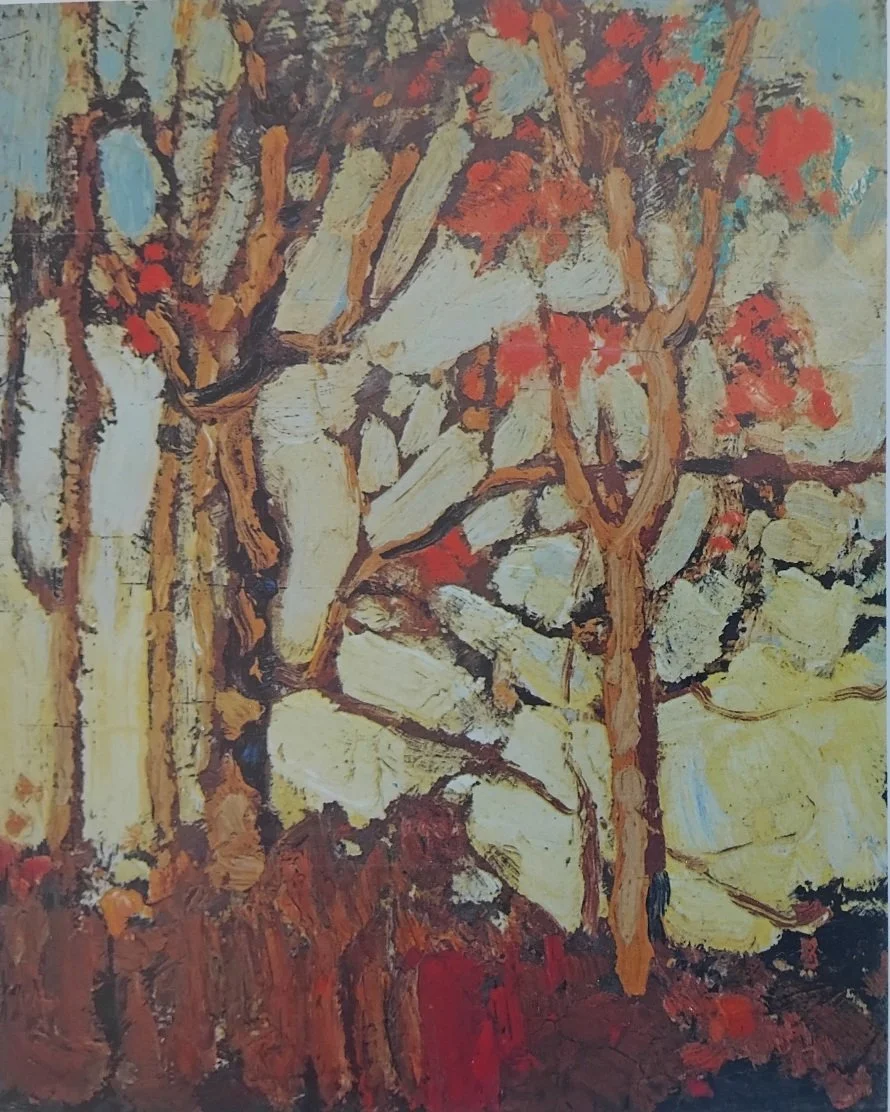
Late Autumn, 1915 by Tom Thomson – a bold abstracted forest scene with warm ochres, reds, and pale cream foliage, expressing the skeletal beauty of bare trees and the rich colours of the Canadian landscape as it transitions into winter.
Late Autumn, 1915

 
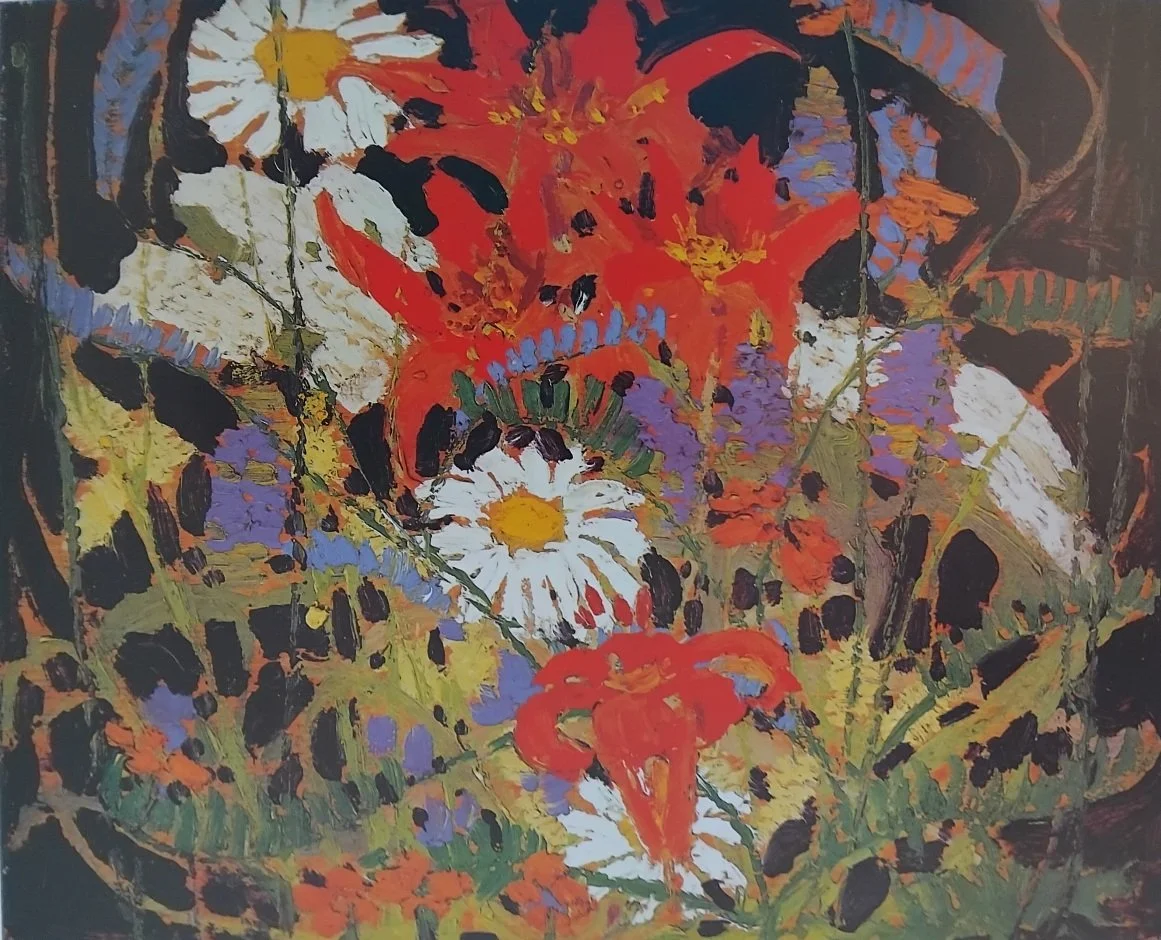
Marguerites, Wood Lilies and Vetch, 1915 by Tom Thomson – a vivid wildflower study bursting with red, white, and purple blossoms, showcasing Thomson’s love of native flora and decorative design within the Canadian wilderness.

Marguerites, Wood IiIies and Vetch, 1915
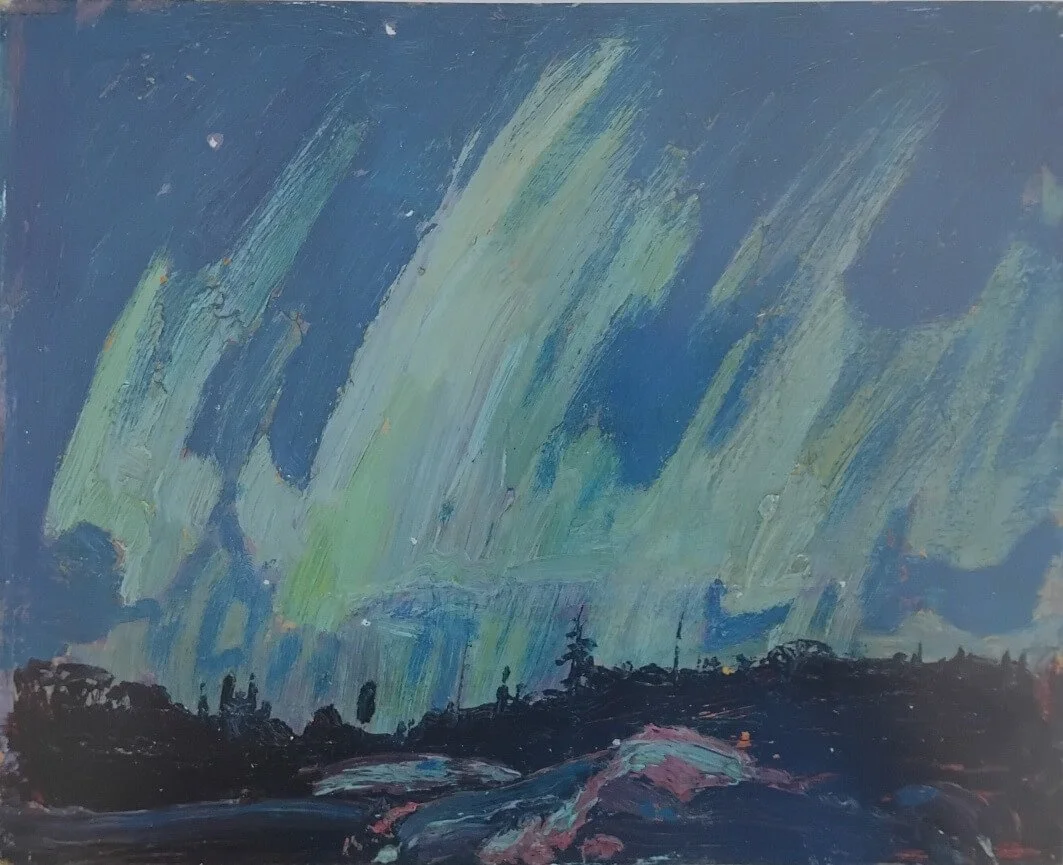
Northern Lights, 1915 by Tom Thomson – a dramatic night sky painting with streaks of glowing green and blue aurora over dark rocks and silhouetted trees, capturing the magic and mystery of the Canadian north.
Northern Lights, 1915

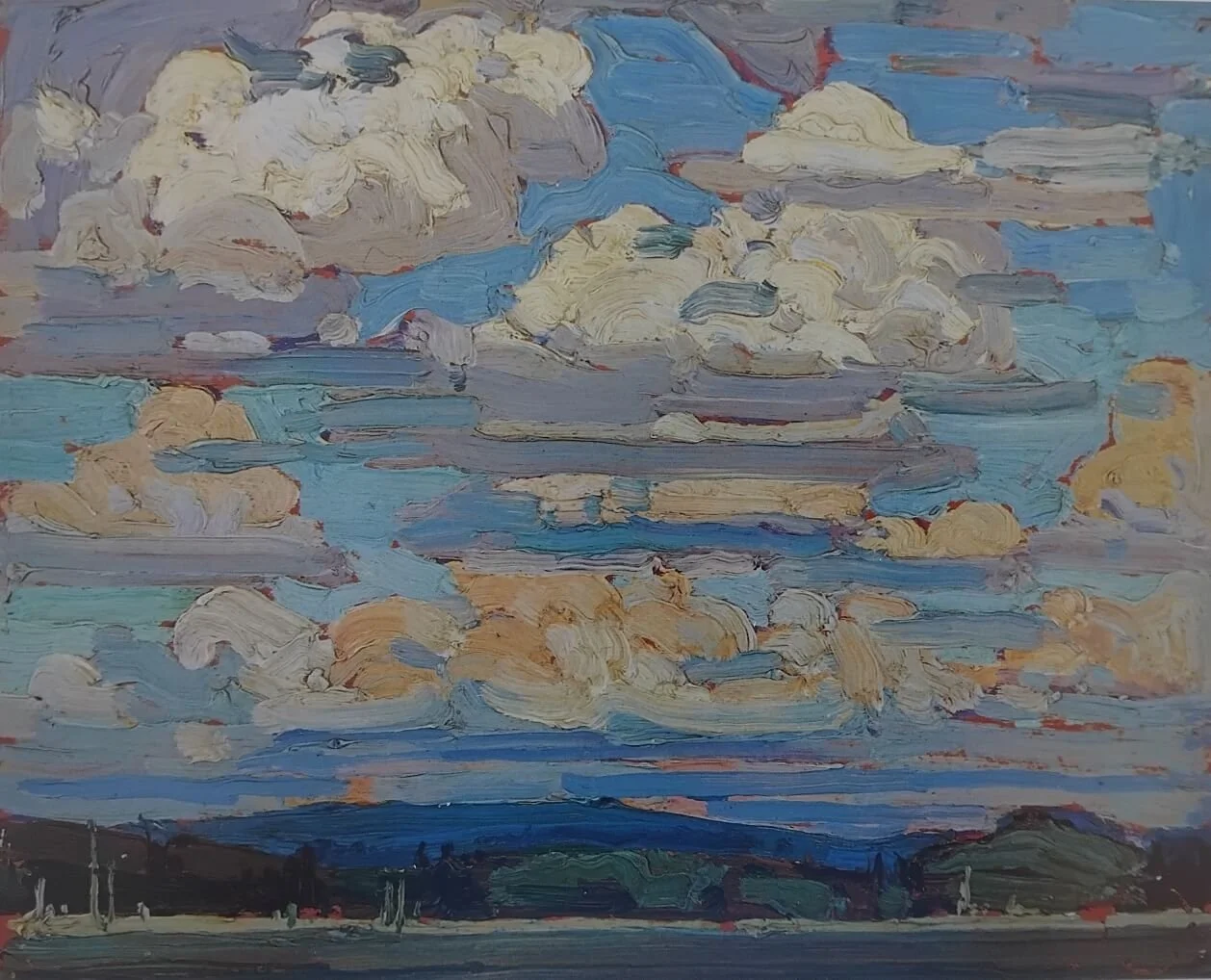
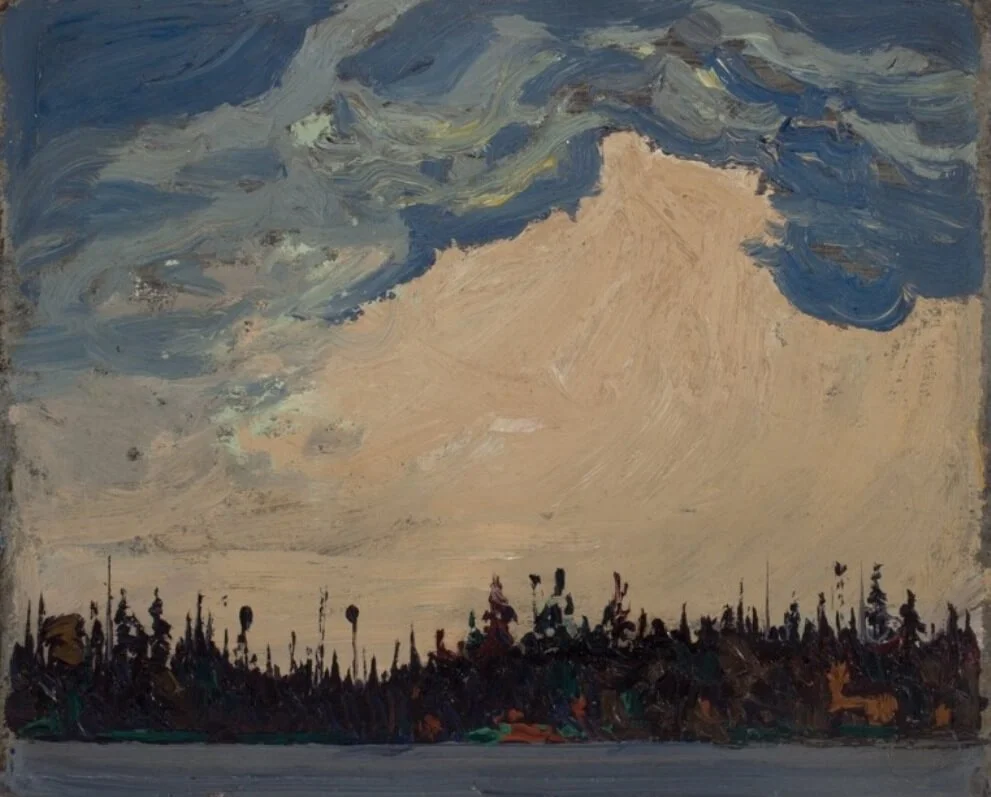
A November Day, 1915 by Tom Thomson – a moody Algonquin landscape with towering clouds and dark forest line, using cool blues and creamy tones to capture the stillness and atmospheric power of late autumn in the Canadian wilderness.
A November Day, 1915

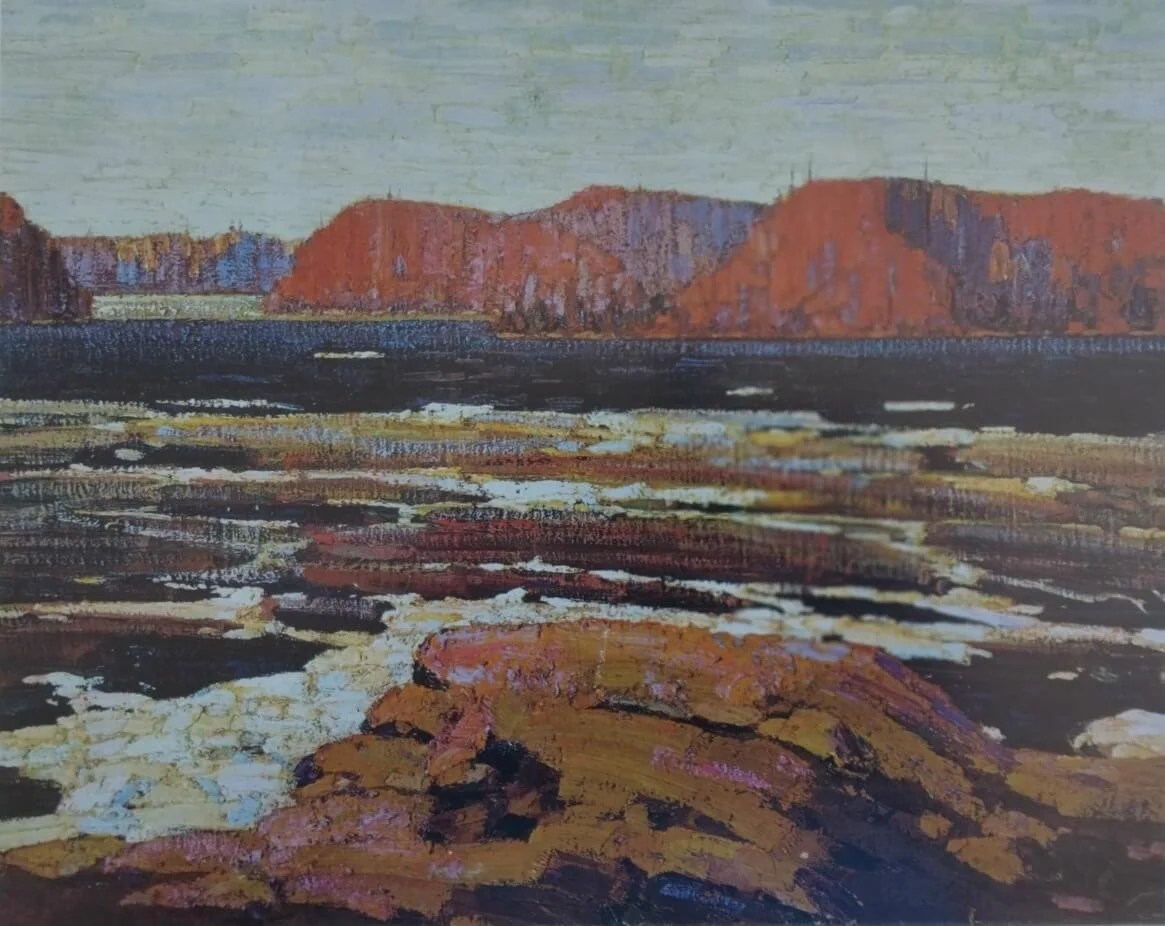
Petawawa Gorges, 1914–15 by Tom Thomson – a textured landscape of icy riverbanks and distant red cliffs, painted with expressive colour and line, showing the rugged terrain of Ontario’s north in early spring thaw.

Petawawa Gorges, 1914-15

Spring Ice, 1915 by Tom Thomson – a striking Canadian landscape with melting ice, layered water, and early colour in the trees, marking the seasonal transition with thick paint and rhythmic movement.
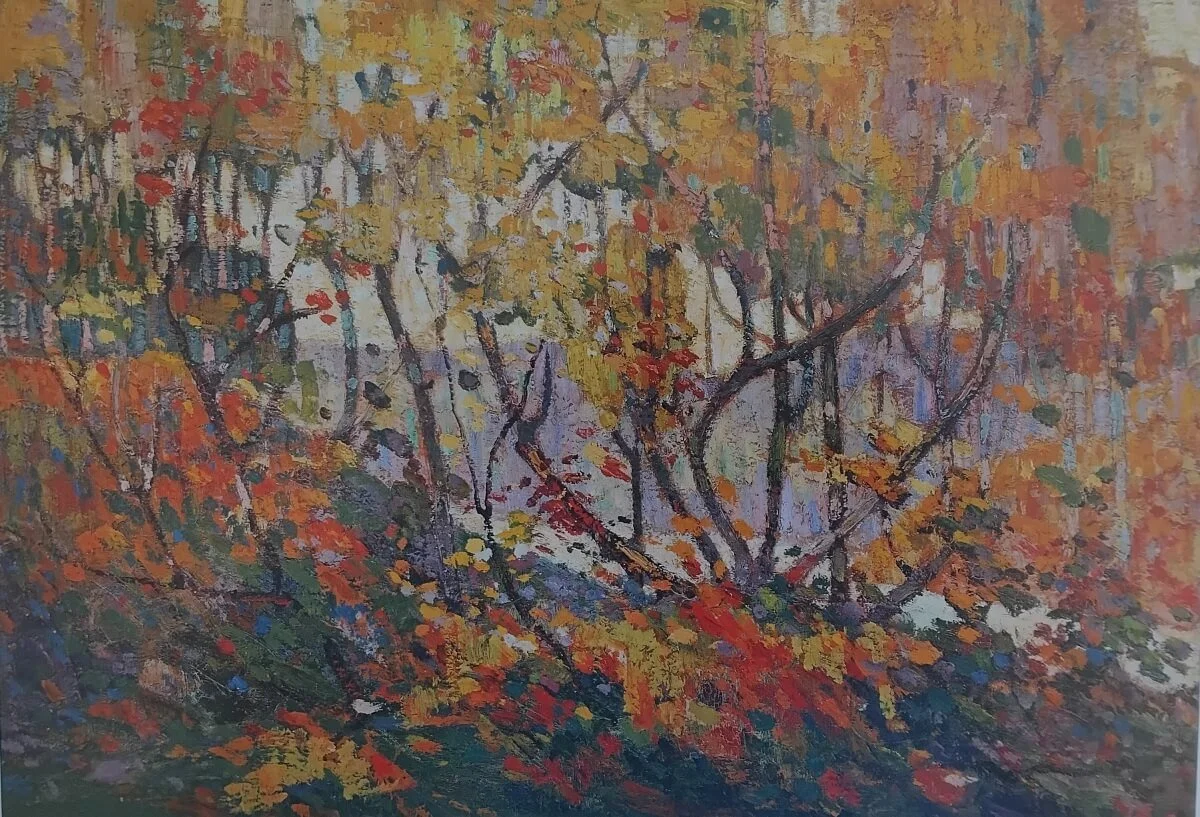
Spring Ice, 1915

Opulent October, 1915 by Tom Thomson – a vibrant woodland landscape with golden birch trees and blazing orange ground cover, painted in bold autumn tones that celebrate the richness of the Canadian forest in peak season.

OpuIant October, 1915

Red and Gold, 1915 by Tom Thomson – an energetic impression of Canadian autumn foliage, with dappled light, fiery reds, and deep golds layered across a forest floor in expressive, rhythmic brushstrokes.
Red and Gold, 1915

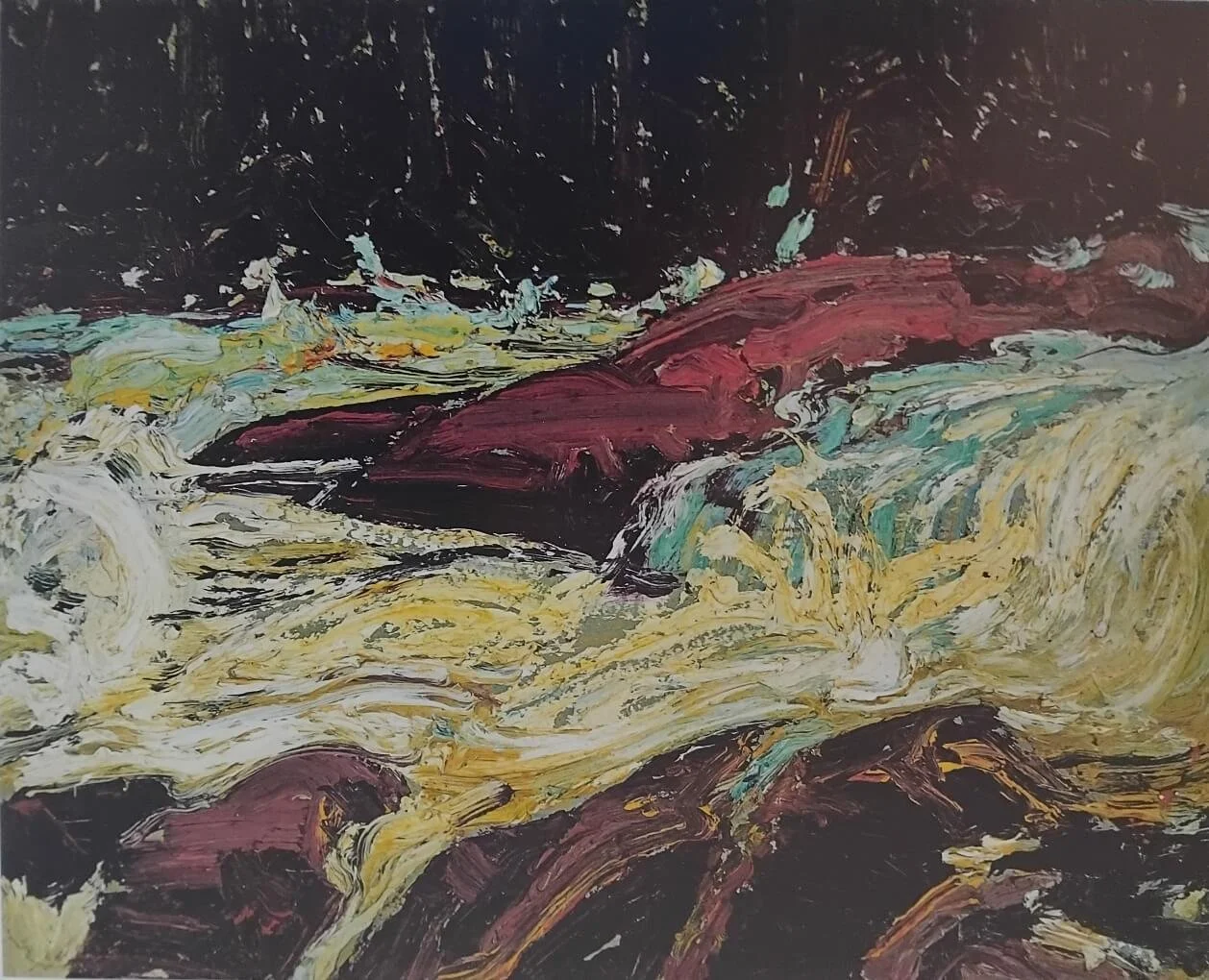
“The Rapids, 1915” by Tom Thomson depicts foaming white water over dark rocks, painted with thick, swirling strokes and contrasting tones in a dynamic river landscape.

The Rapids, 1915

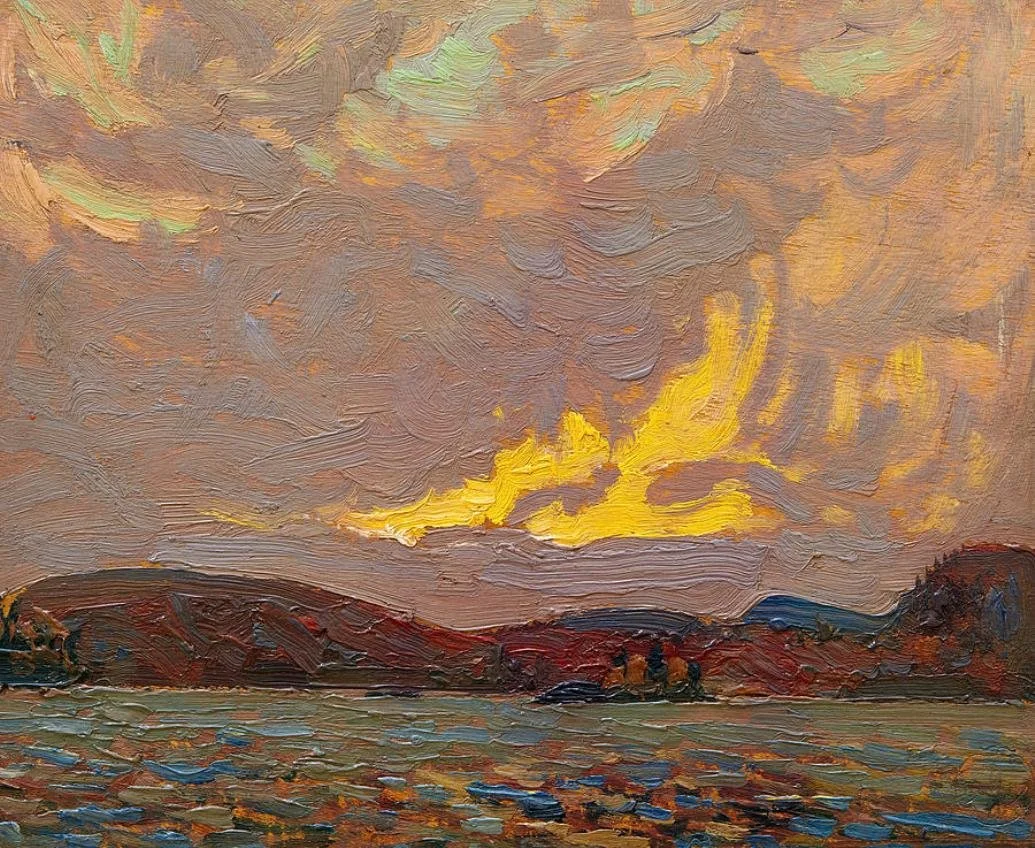
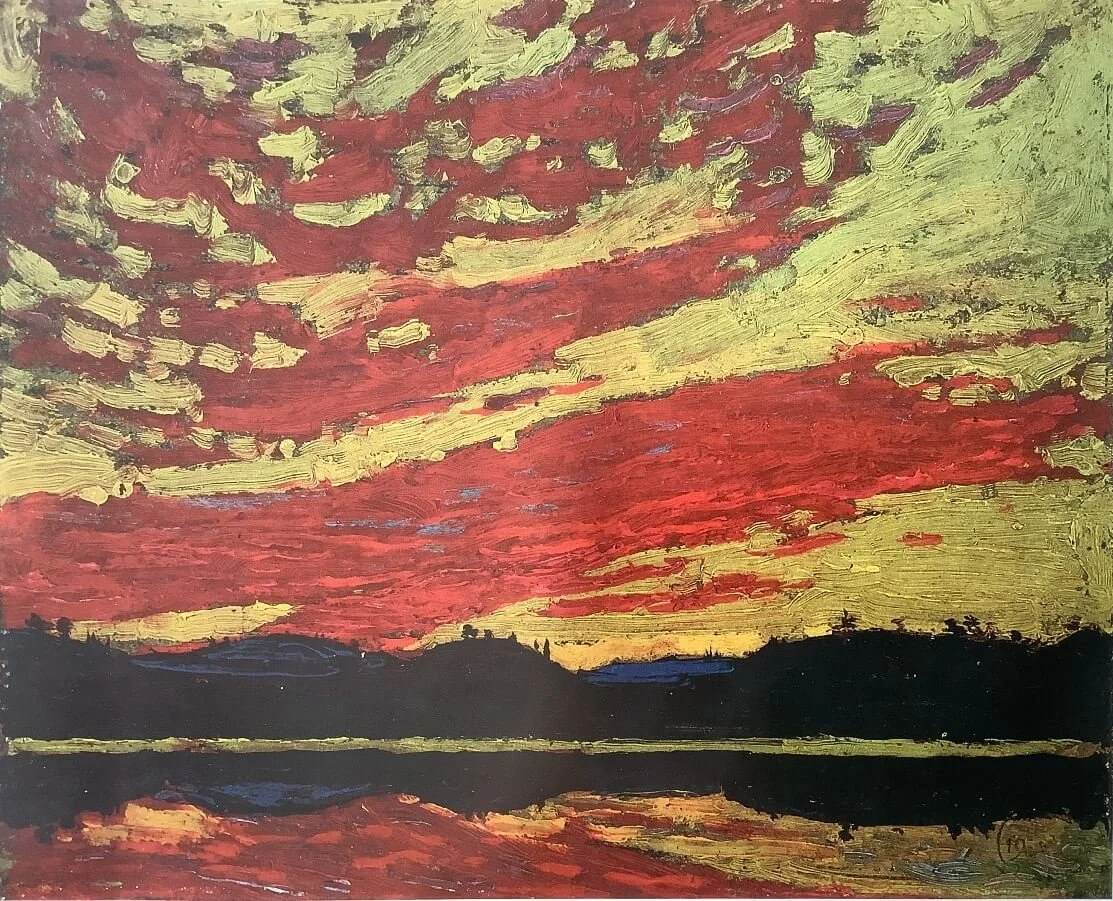
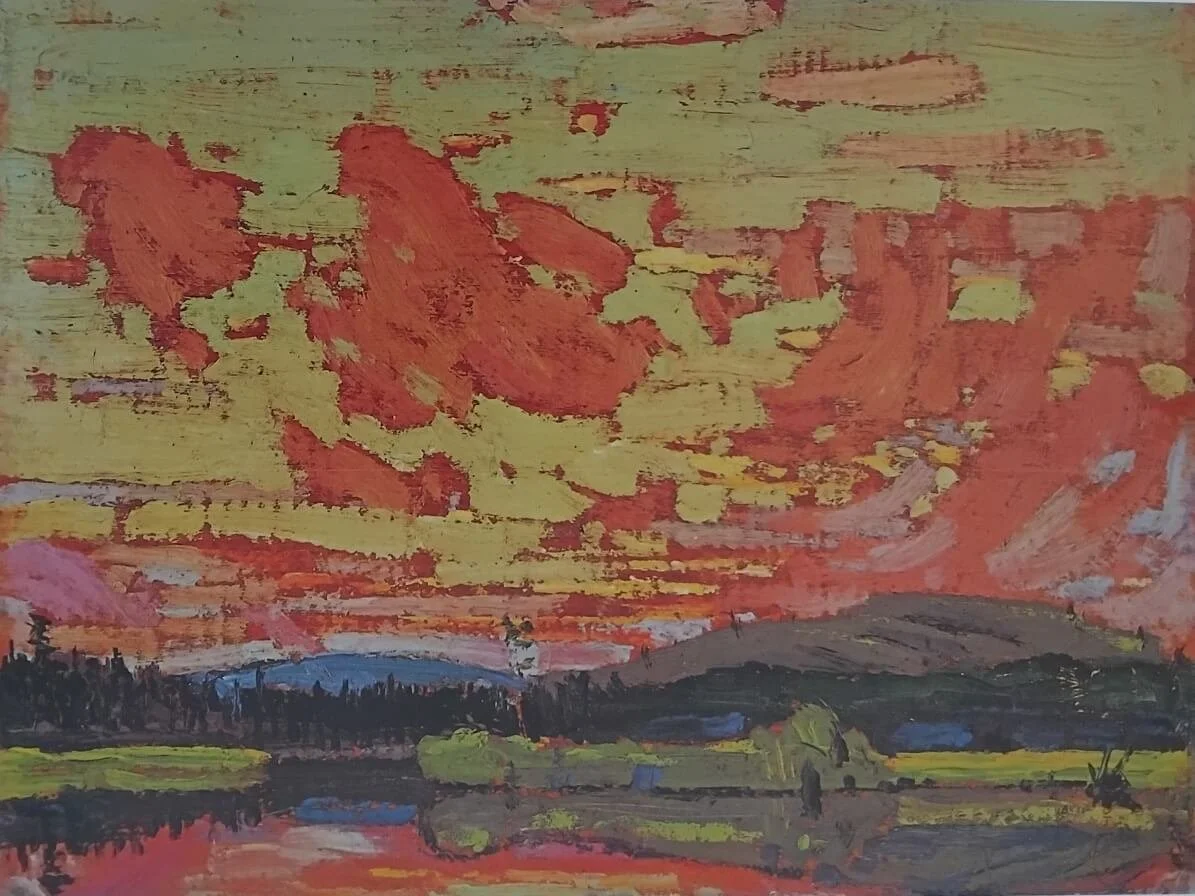
Sunset, 1915 by Tom Thomson – a vivid painting of red and yellow clouds streaking across a northern lake sky, silhouetting the tree line and reflecting intense colour in the still water below.

Sunset, 1915

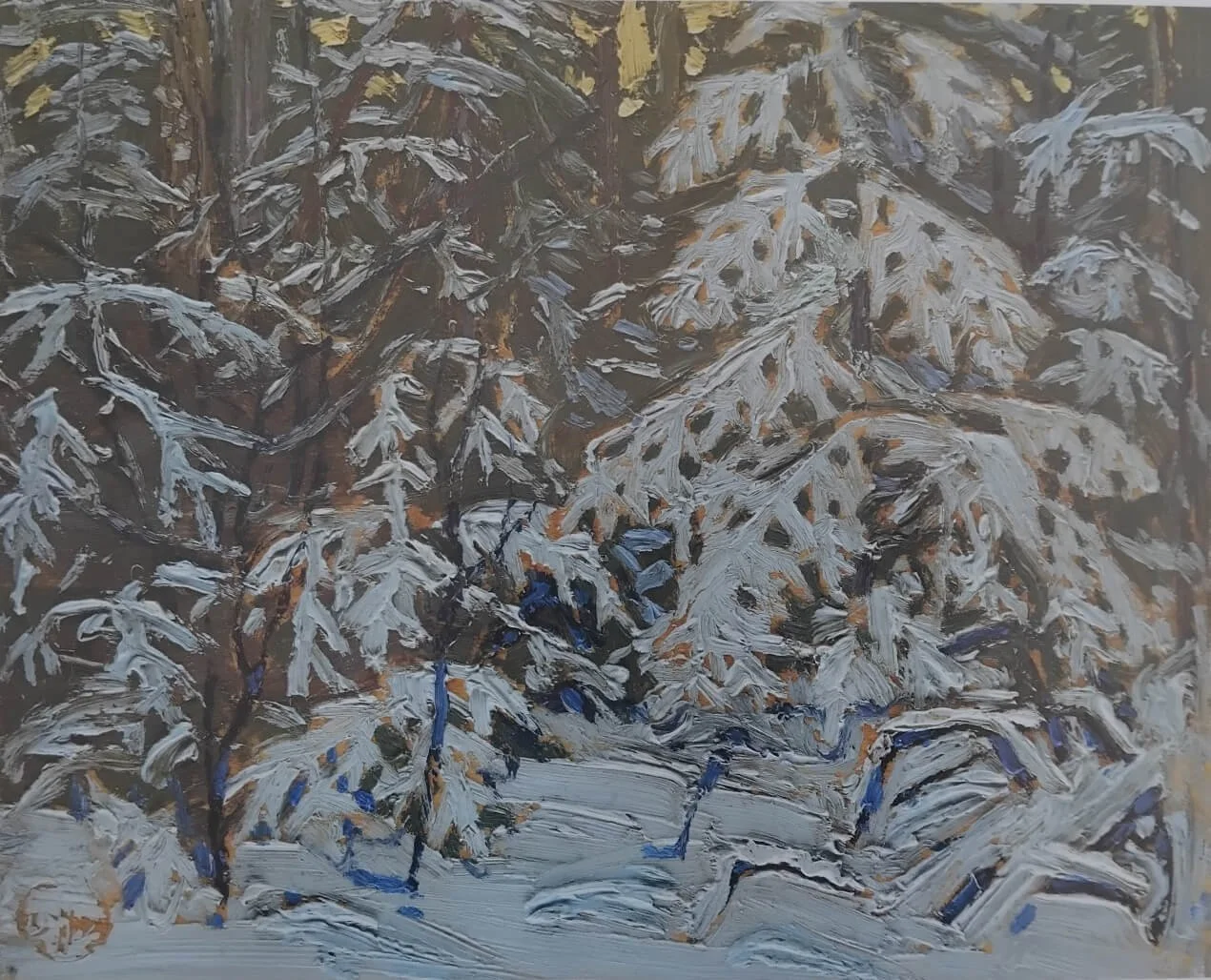
Winter Morning, 1915 by Tom Thomson – a quiet forest scene with snow-covered pines painted in cool whites and muted browns, evoking the softness and stillness of a crisp Canadian morning.

Winter Morning, 1915

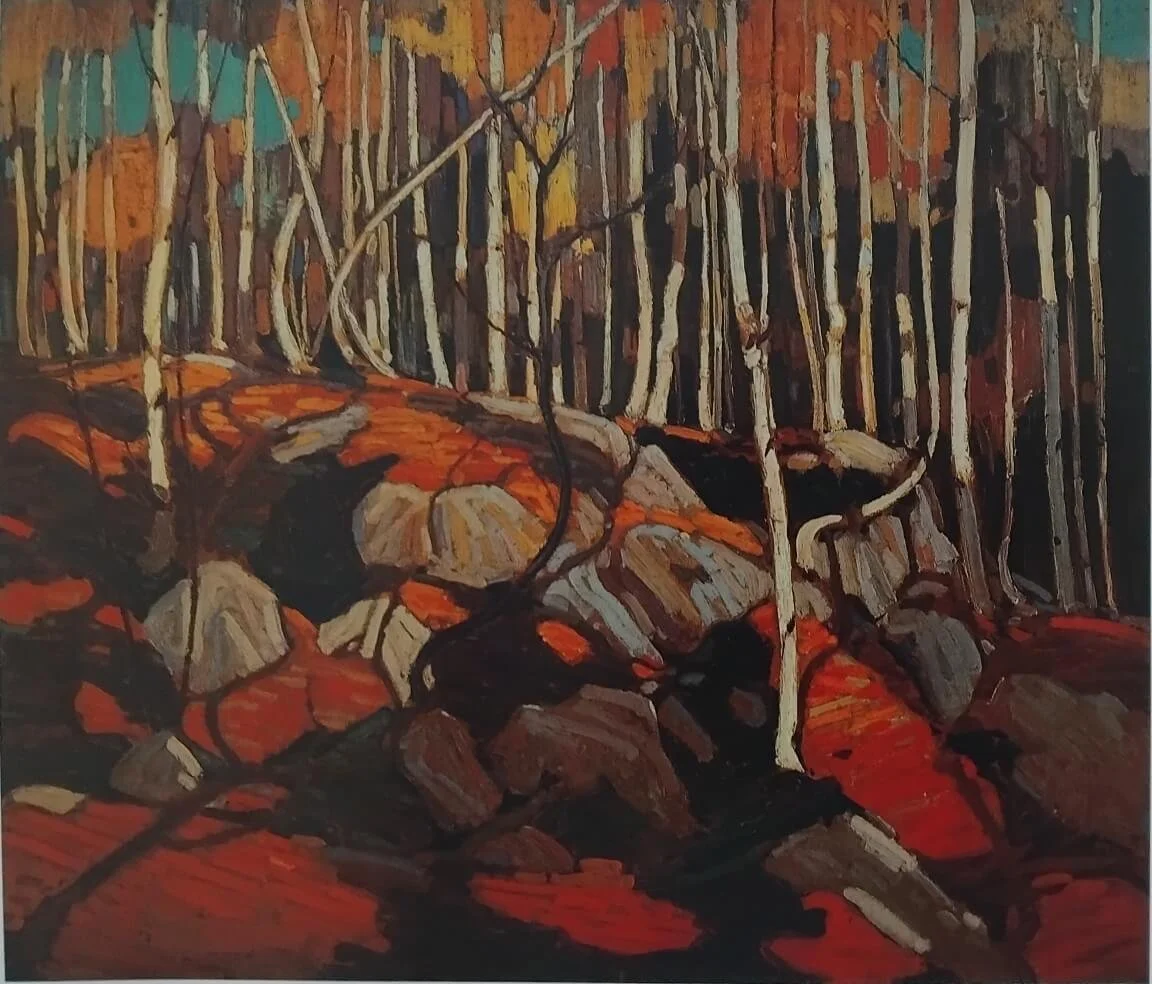
The Birch Grove, Autumn, 1915–16 by Tom Thomson – a dramatic forest interior filled with white birch trunks and shadows on orange foliage, painted in bold contrast and simplified forms typical of Thomson’s fall scenes.

The Birch Grove, Autumn 1915-16

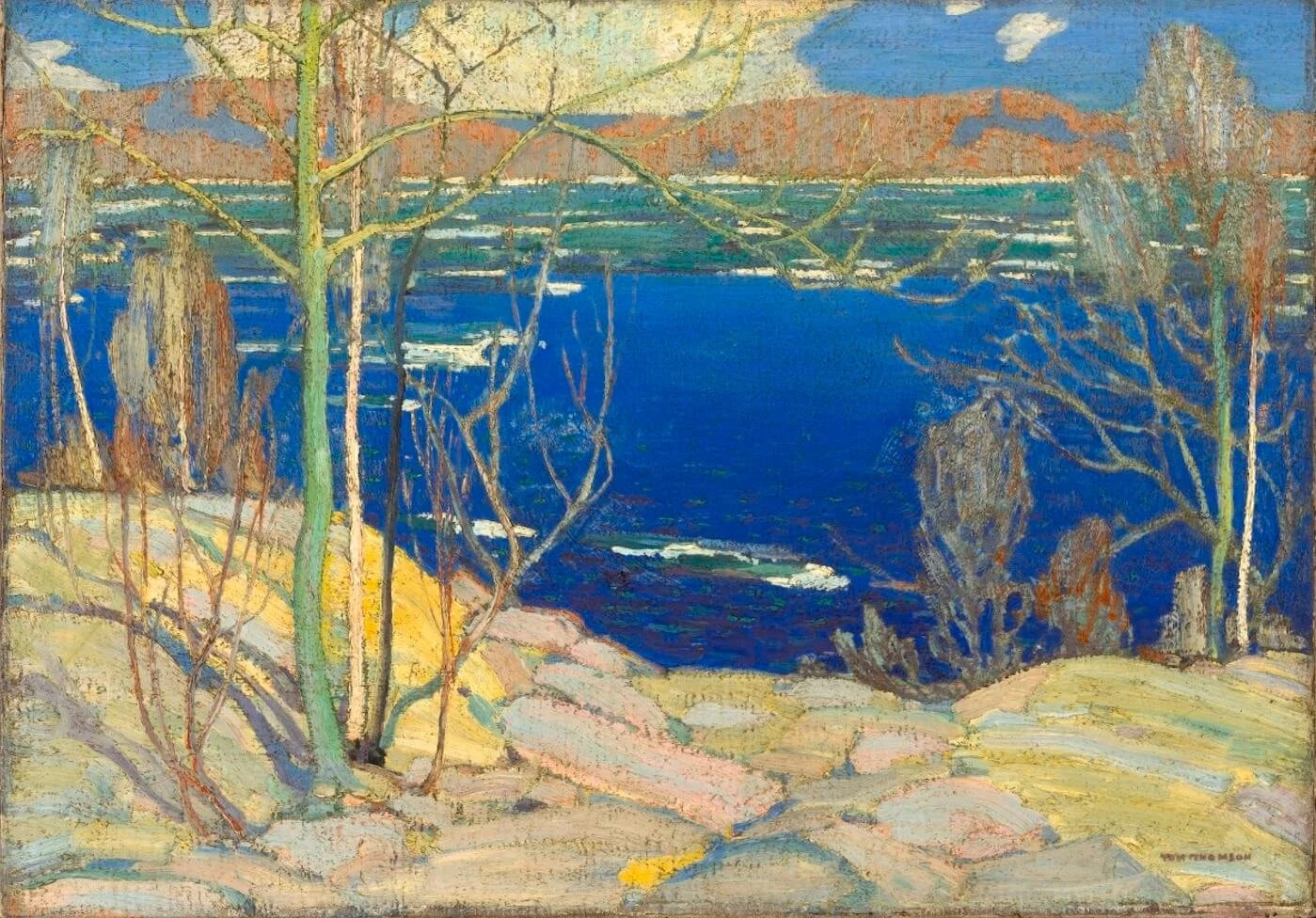
Tom Thomson painting “Spring Ice, 1915–16” shows early spring melt on a rocky shoreline with bright blue water, melting ice sheets, and budding trees, capturing the crisp light and colour shift of seasonal change in northern Ontario.

Spring Ice, 1915-16

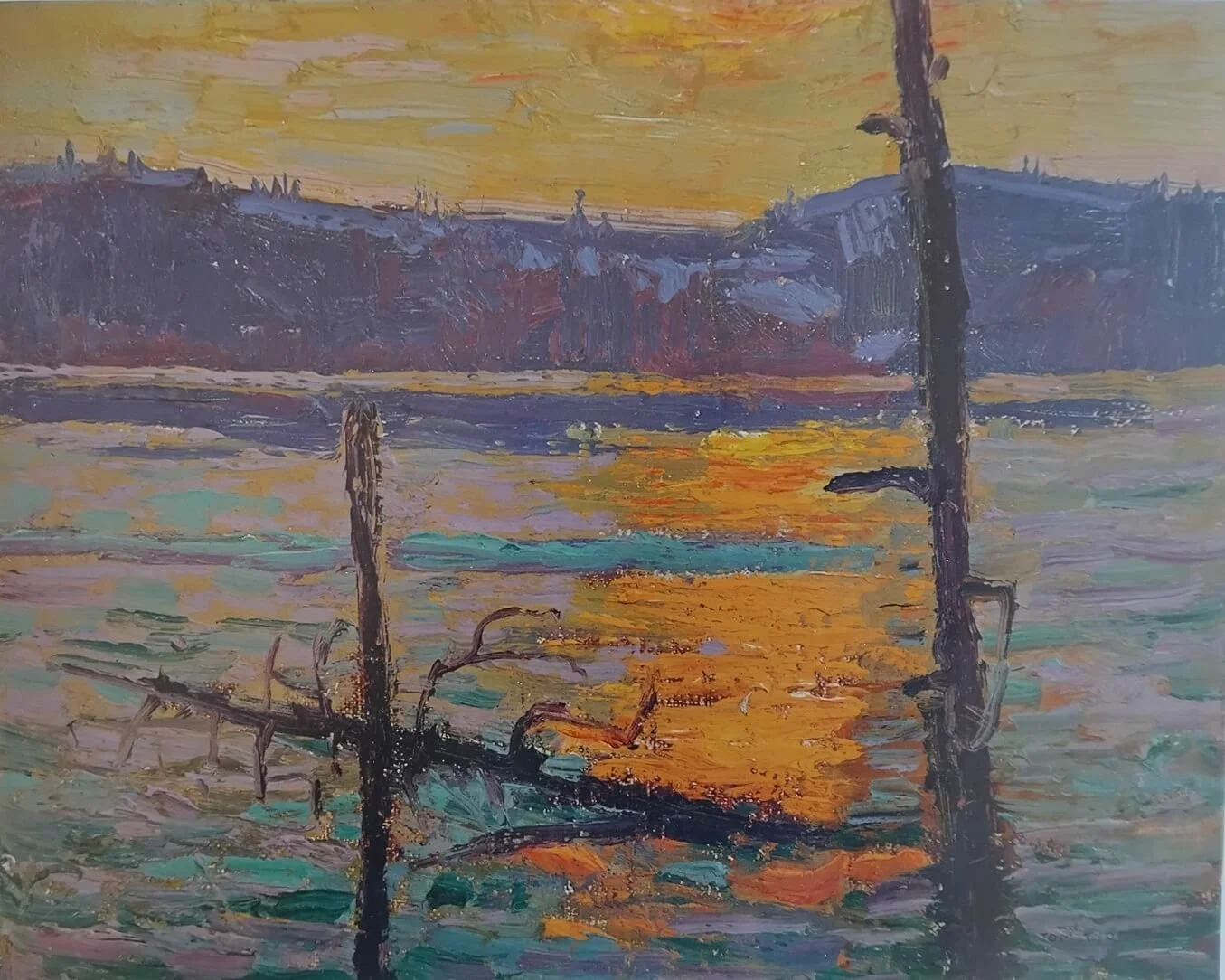
“Sunset, Canoe Lake, 1916” by Tom Thomson depicts vivid reflections of an orange and yellow sunset across still waters, with silhouetted dead trees and distant purple hills, highlighting Thomson’s mastery of atmosphere and mood.

Sunset, Canoe Lake, 1916

“Sunset, 1916” by Tom Thomson features bold red and yellow brushstrokes lighting up the sky above a dark forest and reflected lake. A vivid, abstract portrayal of a Canadian landscape at dusk.

Sunset, 1916

“Spring, Canoe Lake, 1916” by Tom Thomson features cool pastels, melting ice, and trees along a distant  shoreline, portraying the quiet thaw and transition into spring using expressive brushstrokes and vibrant blues.

Spring, Canoe Iake, 1916

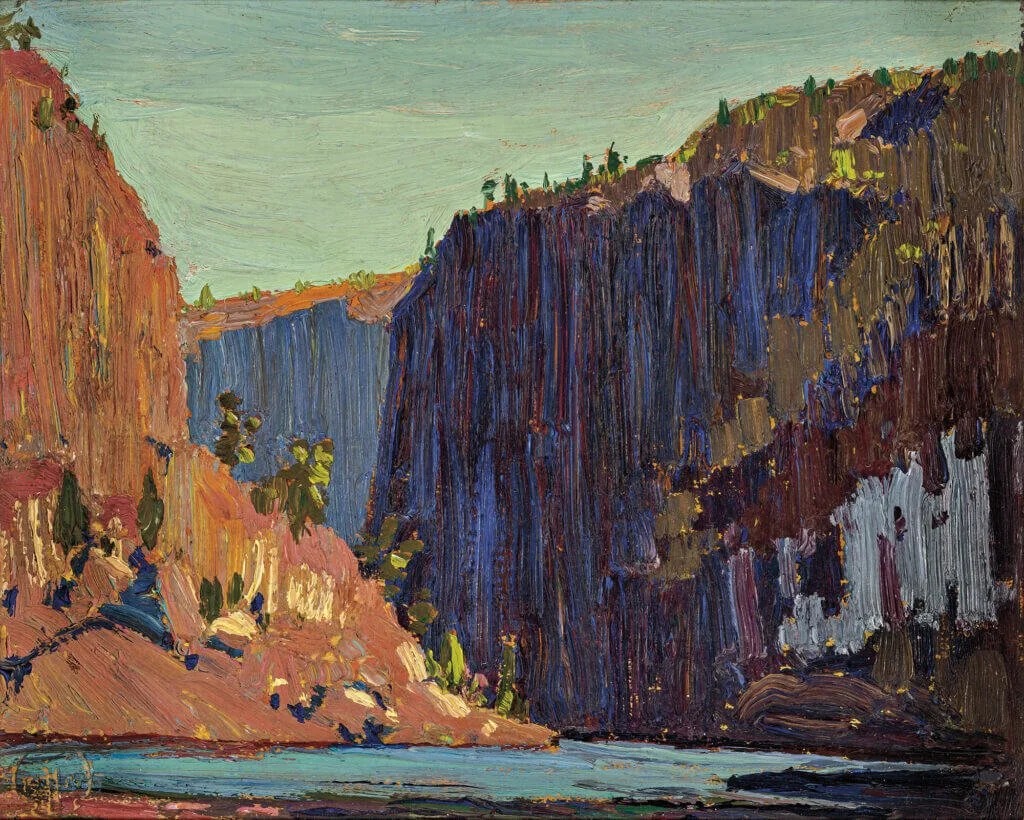
Tom Thomson’s “Petawawa Gorges, 1916” shows towering cliffs of red and blue rising over a winding river, painted with thick impasto strokes to capture the rugged wilderness and bold contrasts of Ontario’s canyon scenery.

Petawawa Gorges, 1916

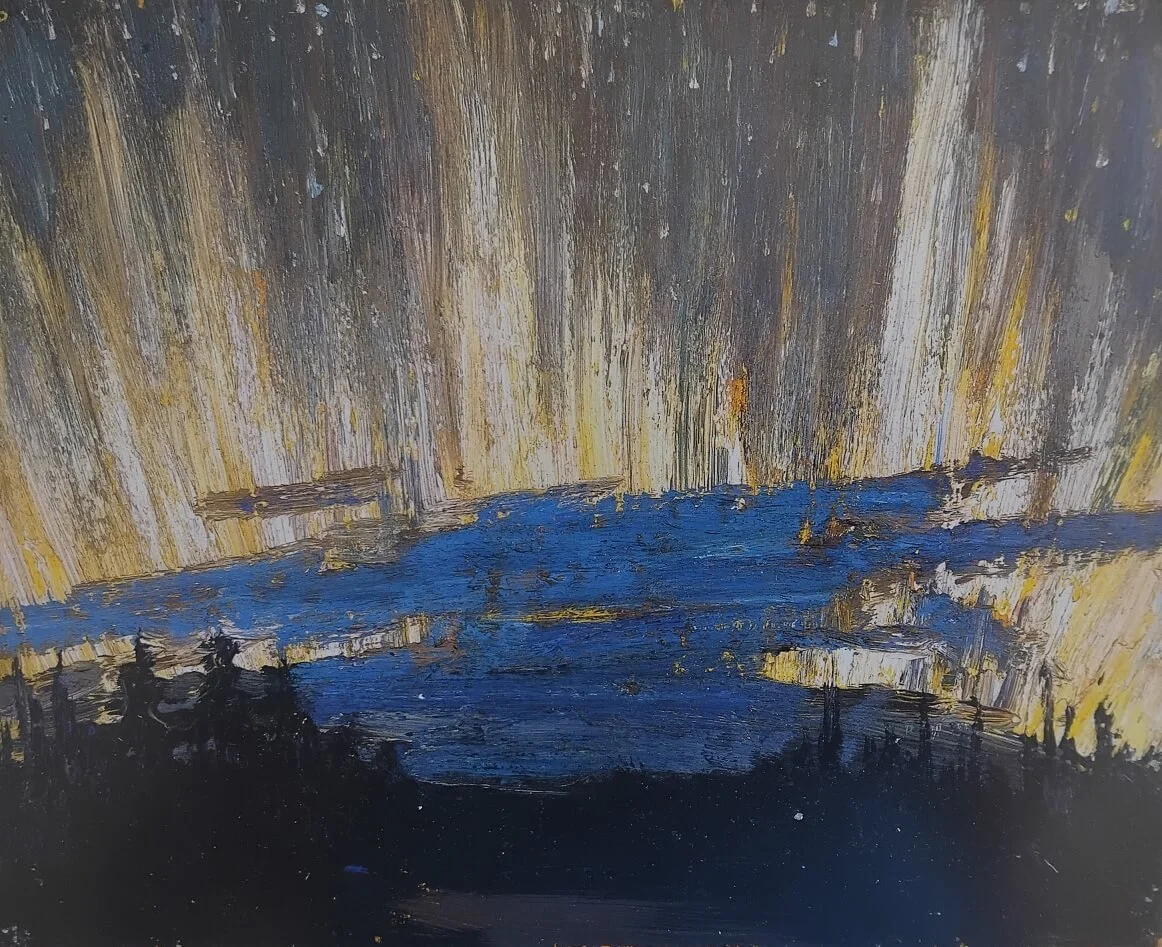
“Northern Lights, 1916” by Tom Thomson shows radiant blue and yellow light beams stretching upward across a dark sky, painted with expressive vertical strokes above a black treeline and deep blue foreground.

Northern Lights, 1916

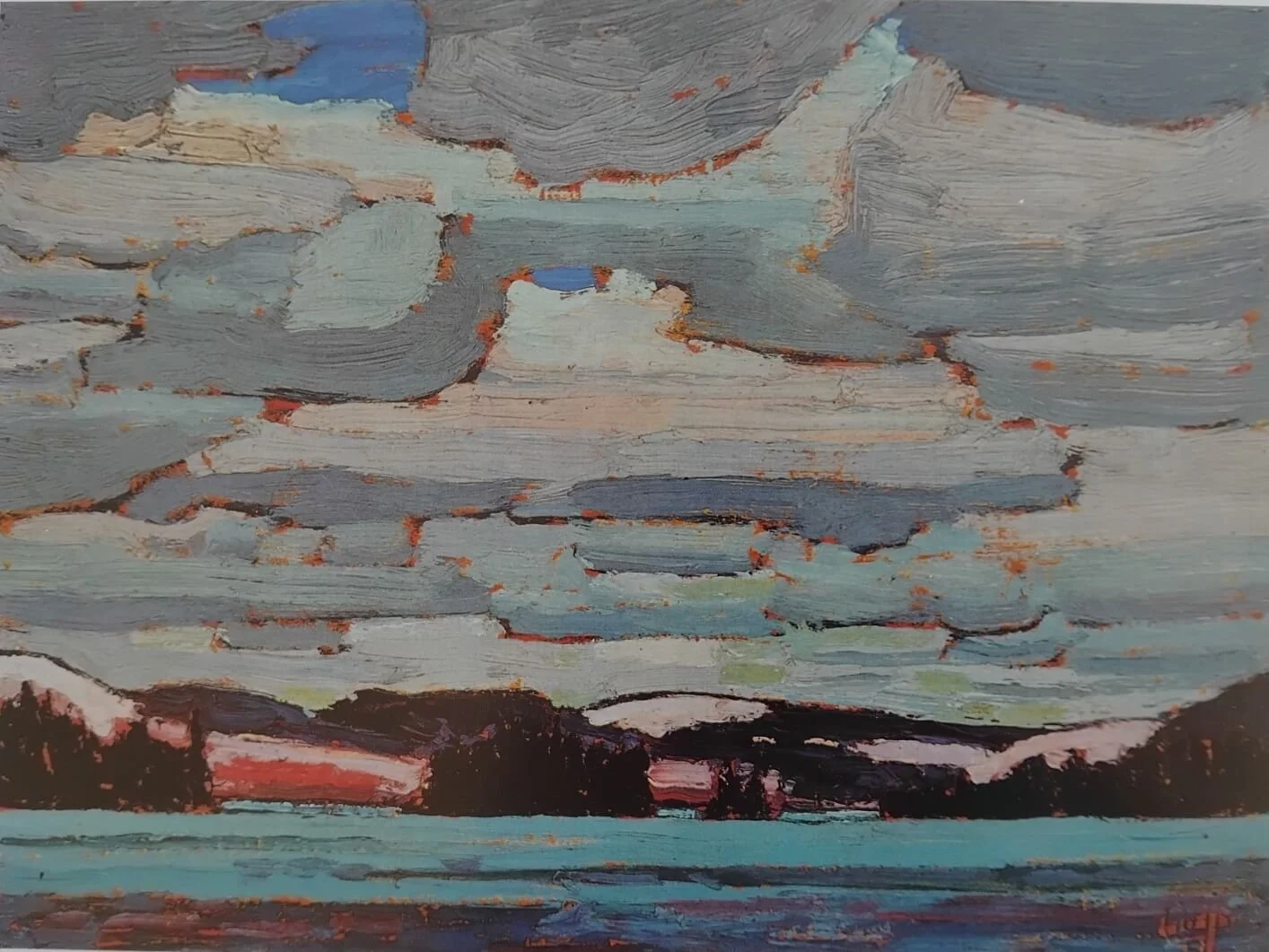
Summer Clouds, 1916 by Tom Thomson. A wide sky filled with thick, layered clouds in shades of grey, cream, and pale blue. The brushstrokes are textured and directional, hovering over a dark forested horizon and turquoise water below.
Summer Clouds, 1916

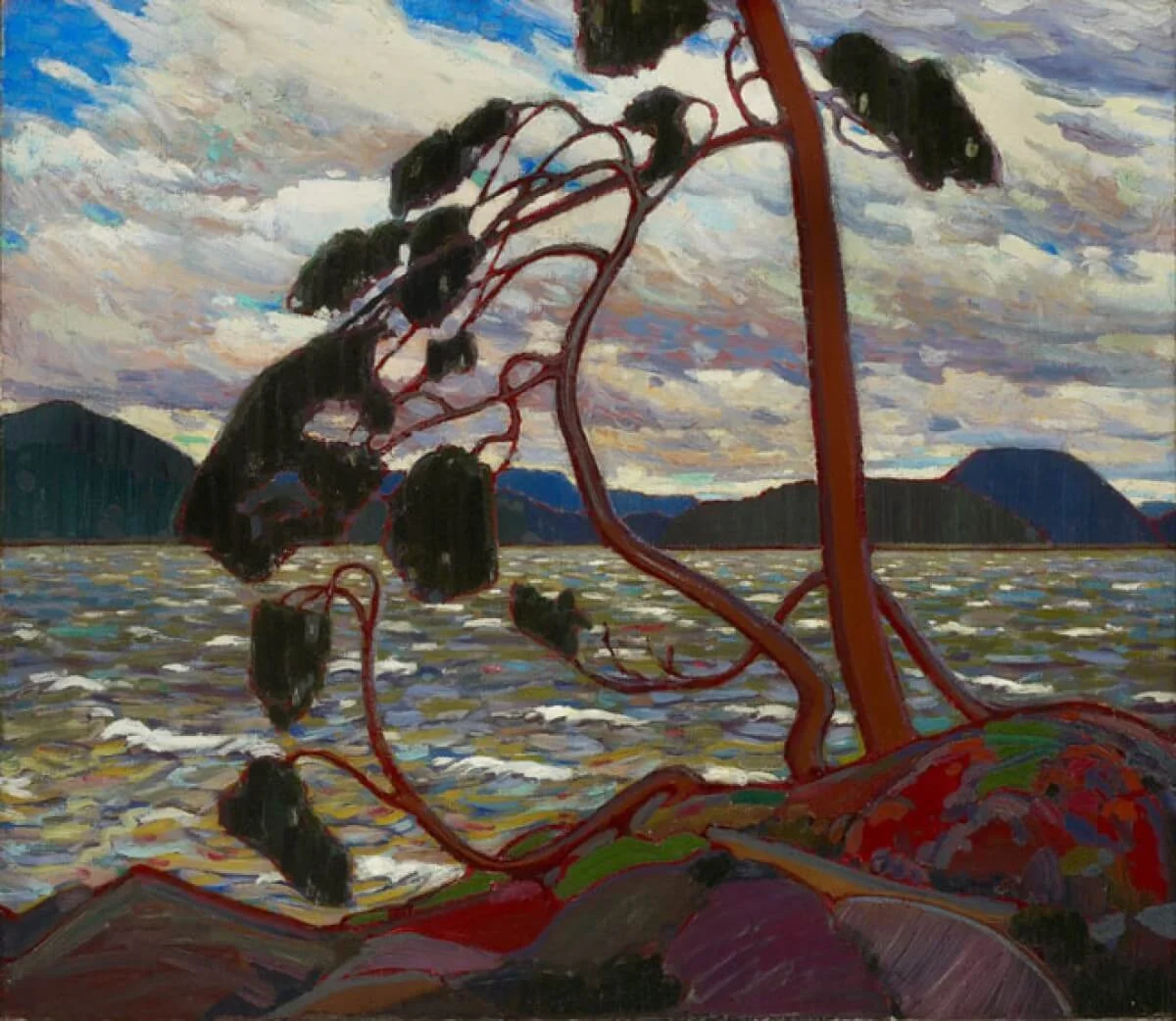
The West Wind, 1916–17 by Tom Thomson. A wind-blown pine tree bends at the lakeside, its dark green foliage set against choppy water. The sky is streaked with moving clouds in soft greys and blues, with rolling hills visible in the distance.

The West Wind, 1916-17

 
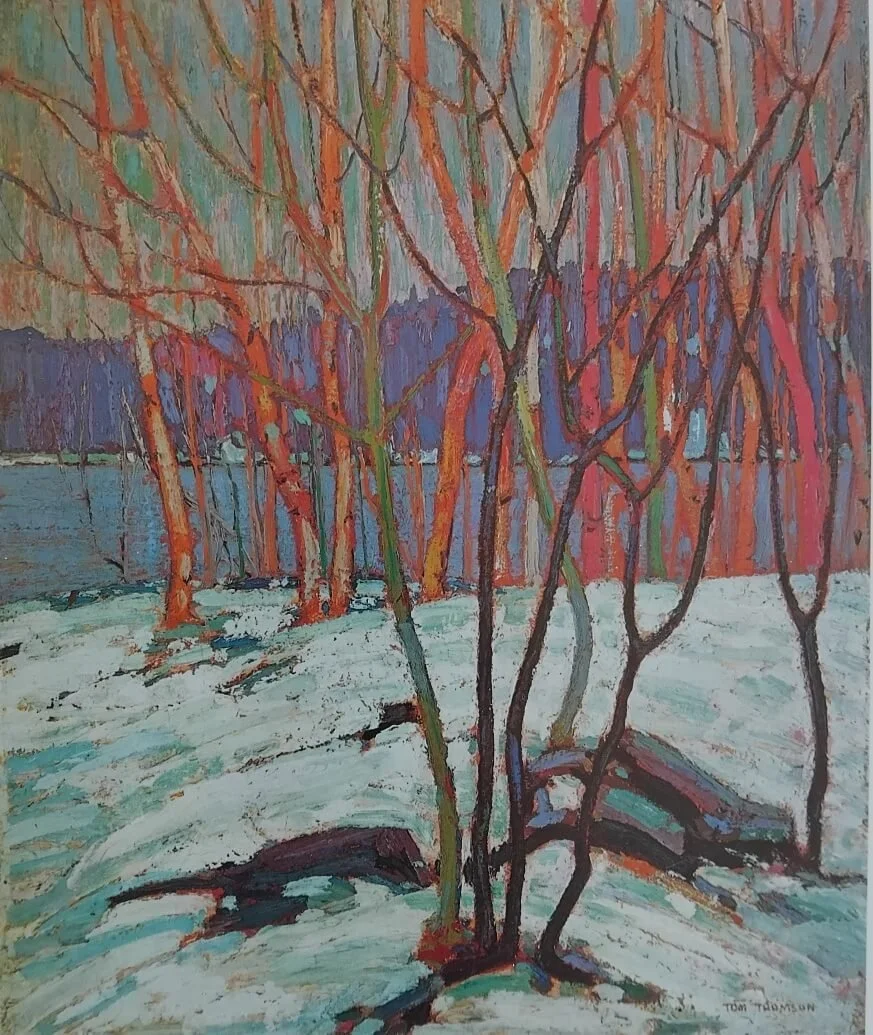
White Birch Grove, 1916–17 by Tom Thomson. A snow-covered forest floor is crisscrossed by the trunks and branches of birch trees. The vivid reds and oranges of the trees contrast with the pale snow and a deep blue lake in the background.

White Birch Grove, 1916-17

 
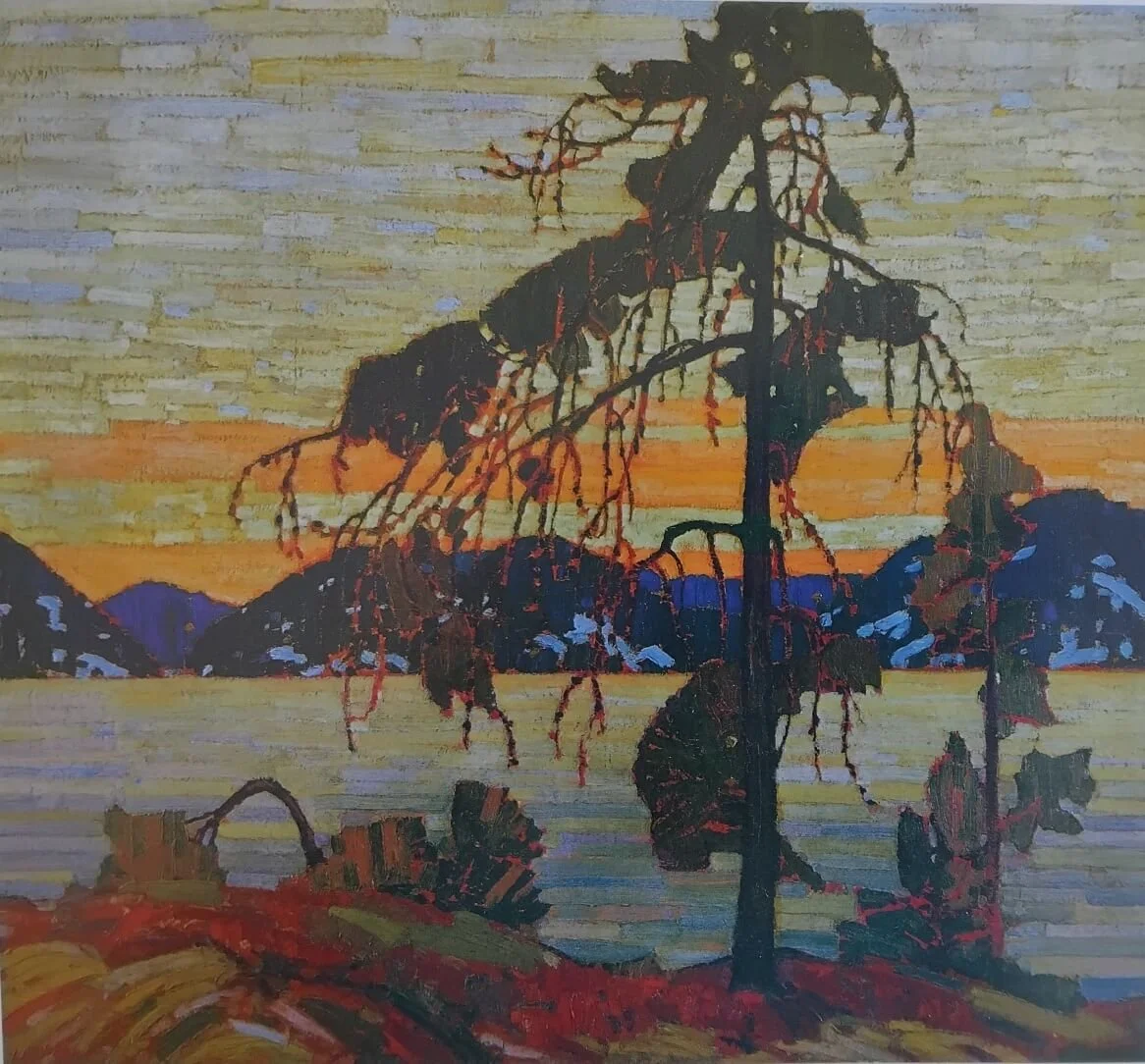
The Jack Pine, 1916–17 by Tom Thomson. A single pine tree curves across the foreground, its red-brown trunk and dark green foliage reaching over a bright lake. Behind it, rounded hills rise under a sky filled with layered, shifting clouds.

The Jack Pine, 1916-1917

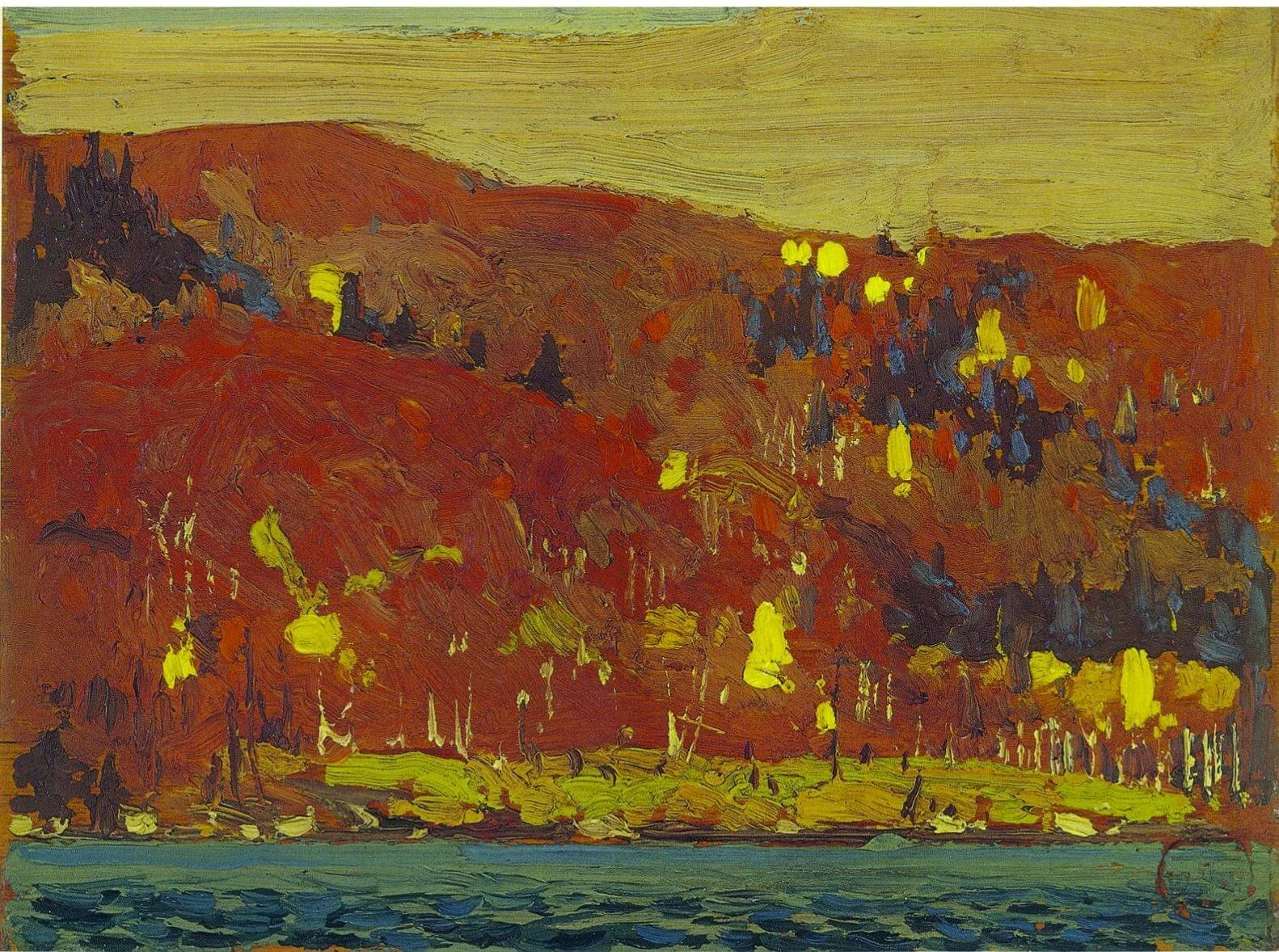
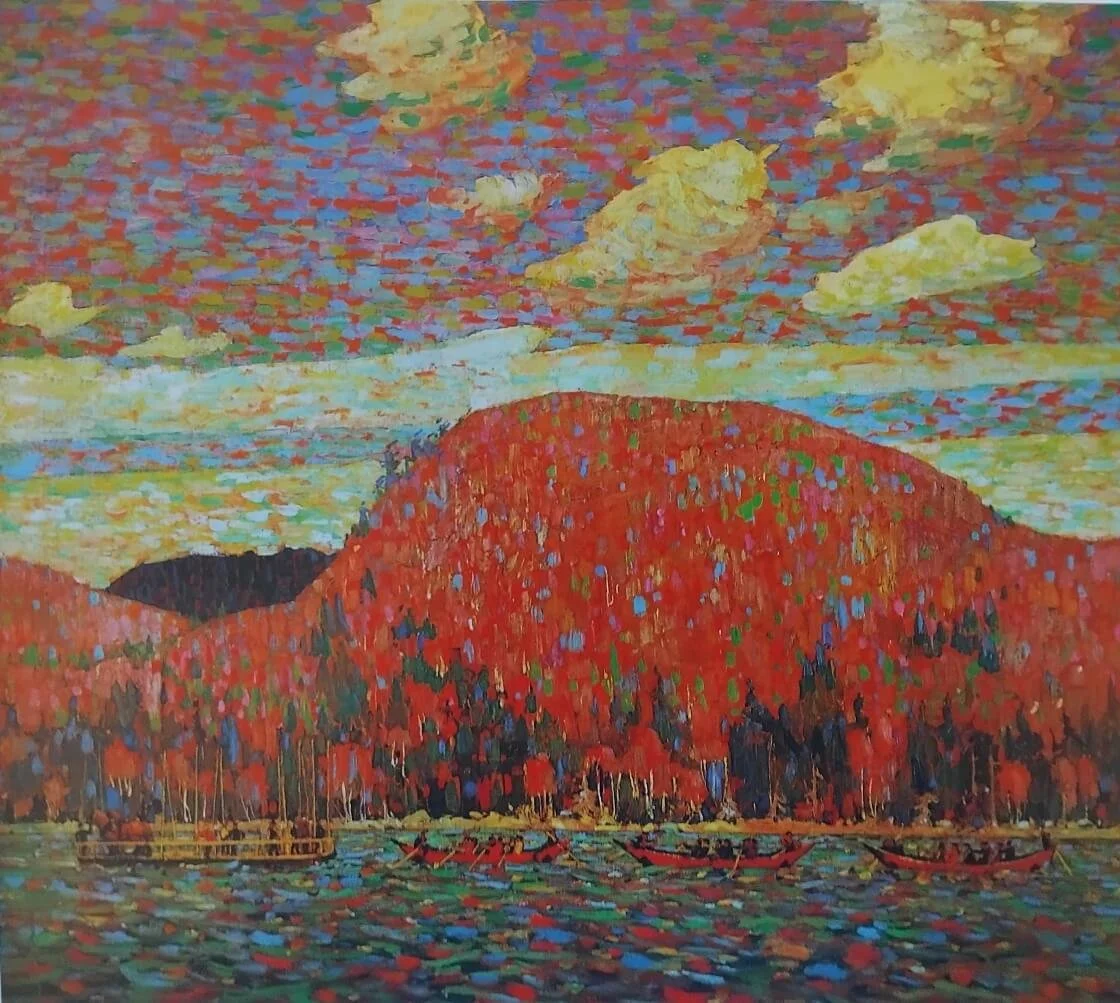
The Pointers, 1916–17 by Tom Thomson. A forested red hill fills the centre, with small boats and dark trees lining the water’s edge. The sky above is densely patterned in red, blue, and yellow, creating a mosaic effect across the canvas.

The Pointers, 1916-17

The Fisherman, 1916–17 by Tom Thomson. A figure in red clothing casts a fishing line beside a rocky stream. The orange cliffs and swirling water dominate the foreground, while dark trees rise sharply in the shaded background.

The Fisherman, 1916-17

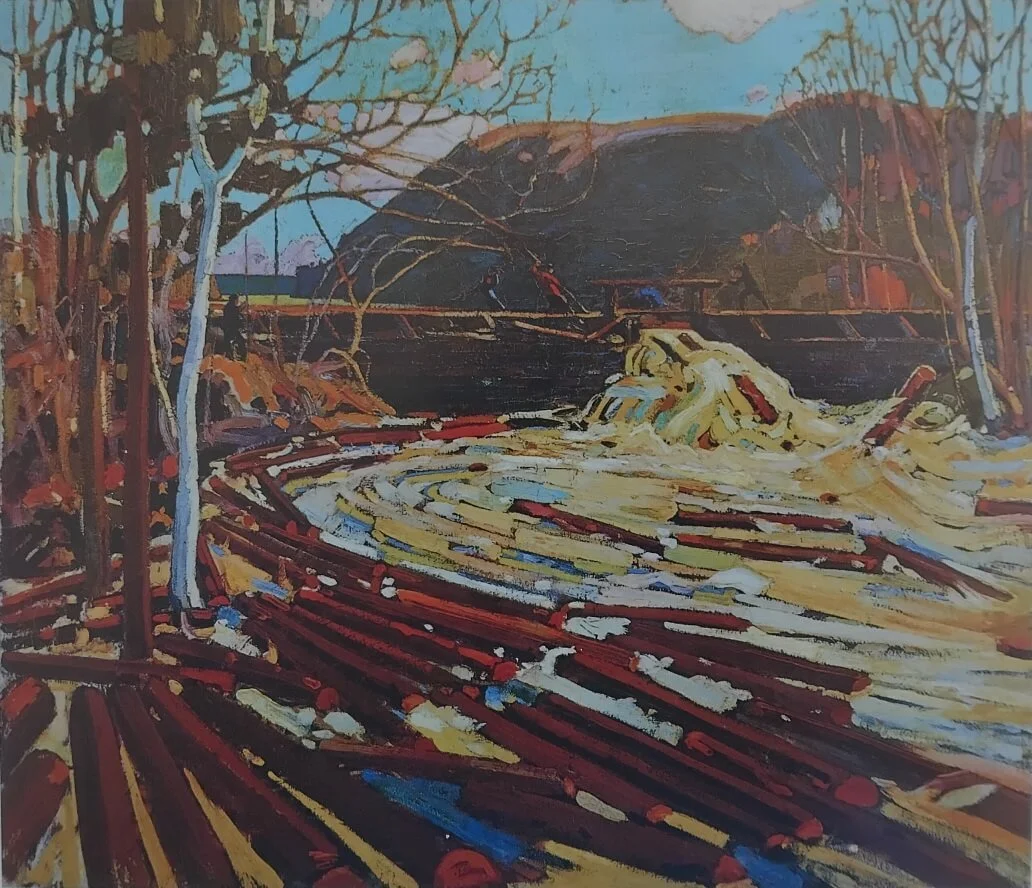
Tom Thomson's 1916–17 painting 'The Drive' shows red pine logs swirling in spring meltwater near the riverbank, with leafless trees, a distant hill, and soft blue sky above.

The Drive, 1916-17

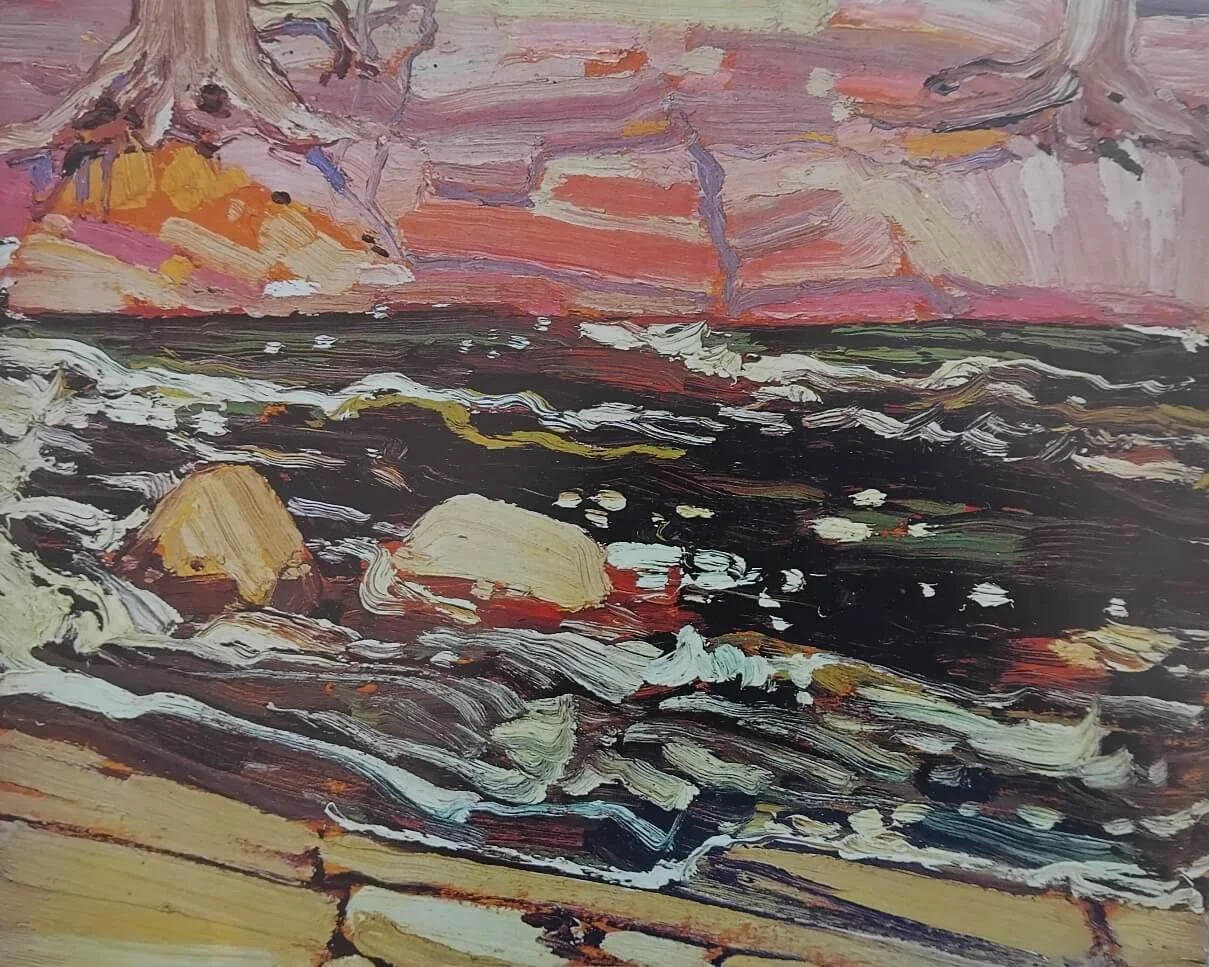
'Dark Waters' (1917) by Tom Thomson features a rushing stream with foamy whitecaps and bold brushstrokes beneath a dramatic pink and orange sky.

Dark Waters, 1917

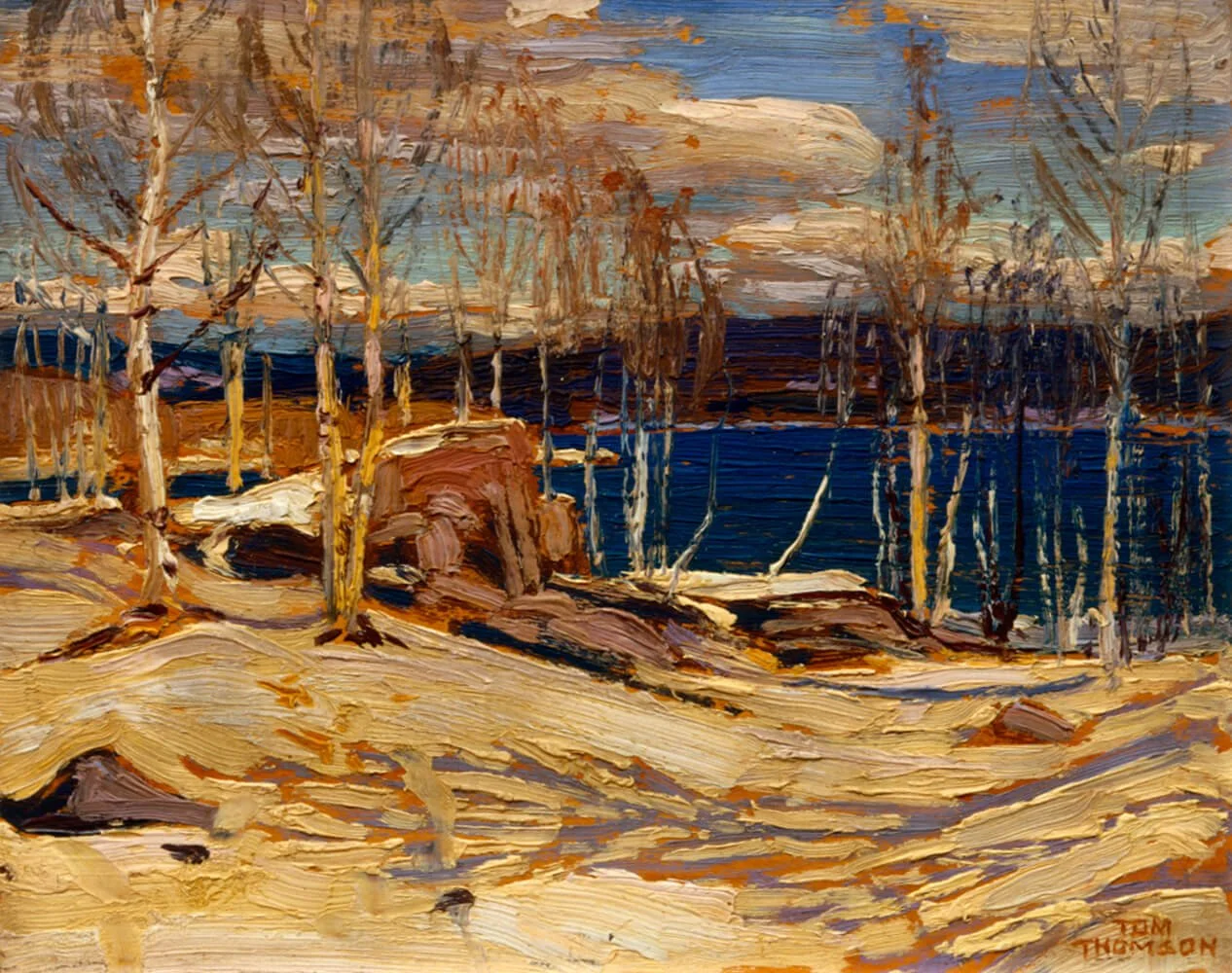
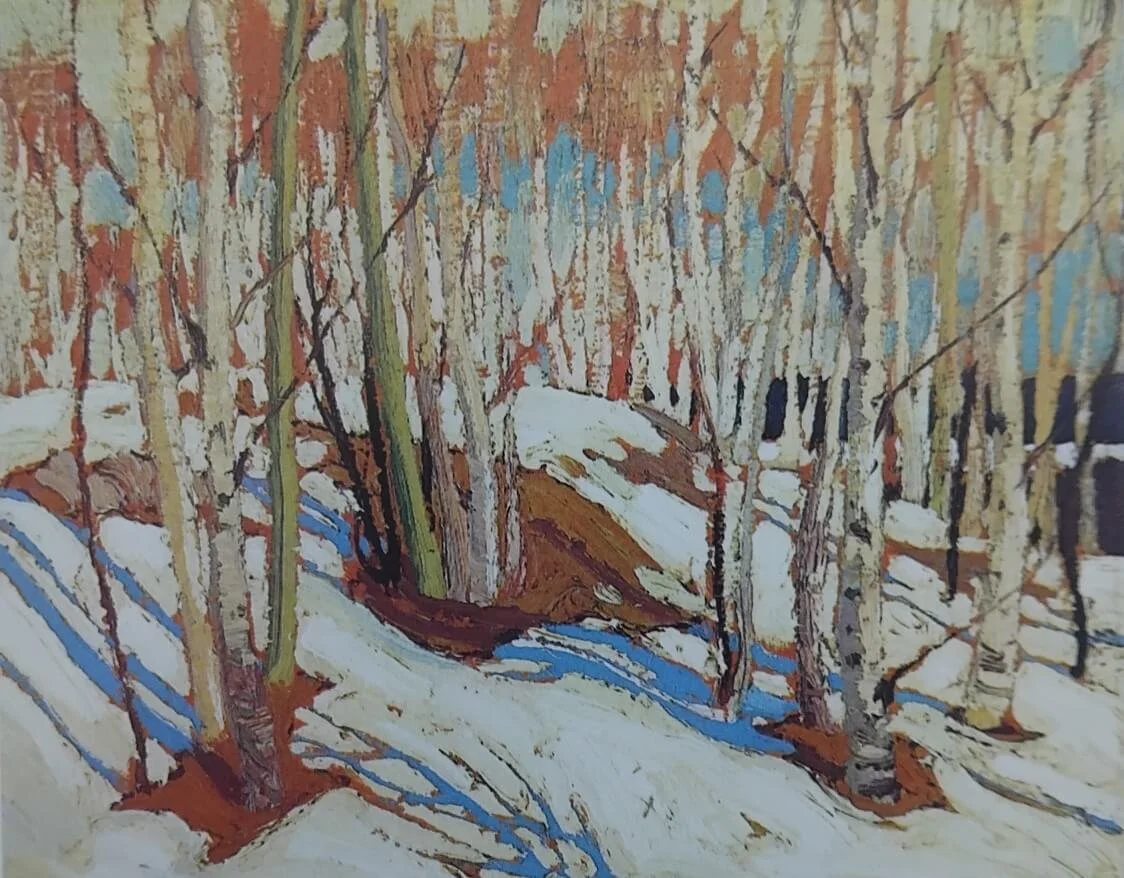
In 'Early Spring' (1917), Tom Thomson paints melting snow on a wooded forest floor, with warm blue shadows and golden underbrush emerging between birch trees.

Early Spring, 1917

 
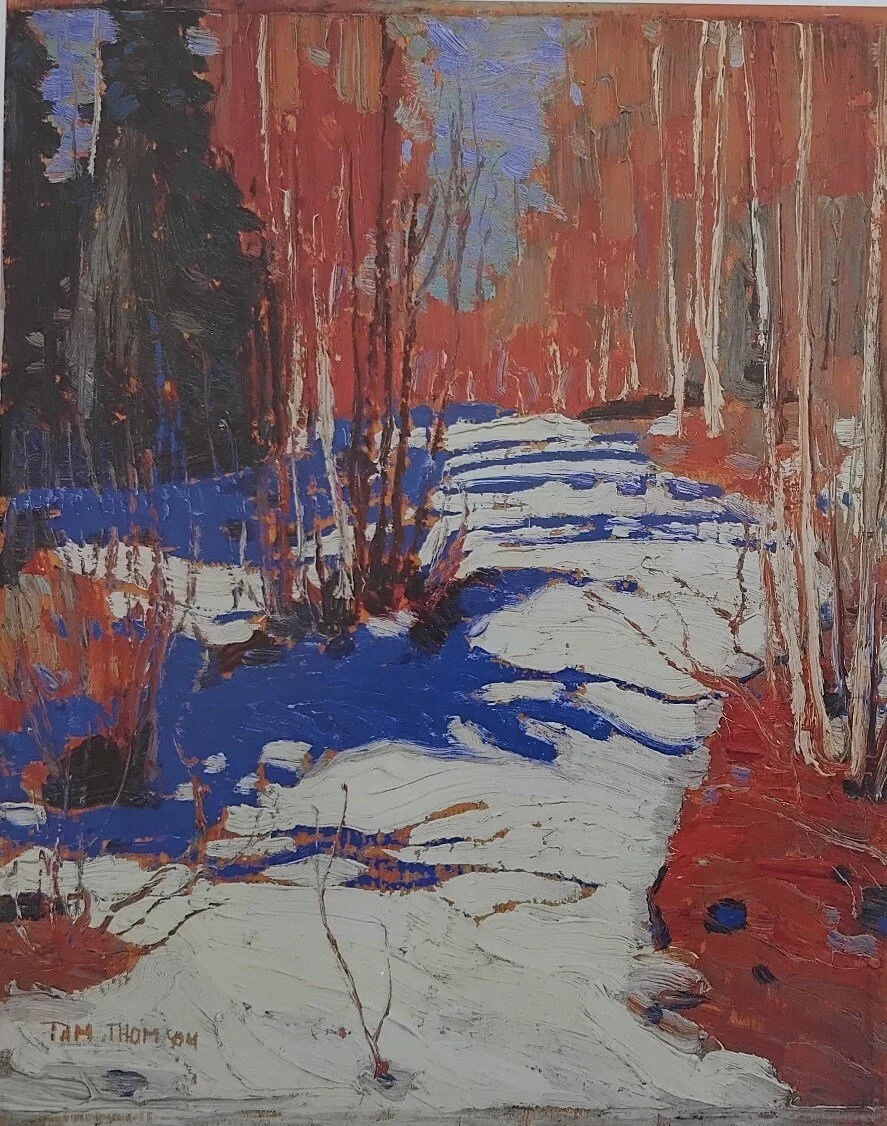
Tom Thomson's 1917 work 'Path Behind Mowat Lodge' shows a snowy path with blue shadows winding through red-leafed trees and forest undergrowth.

Path Behind Mowat Lodge, 1917

 
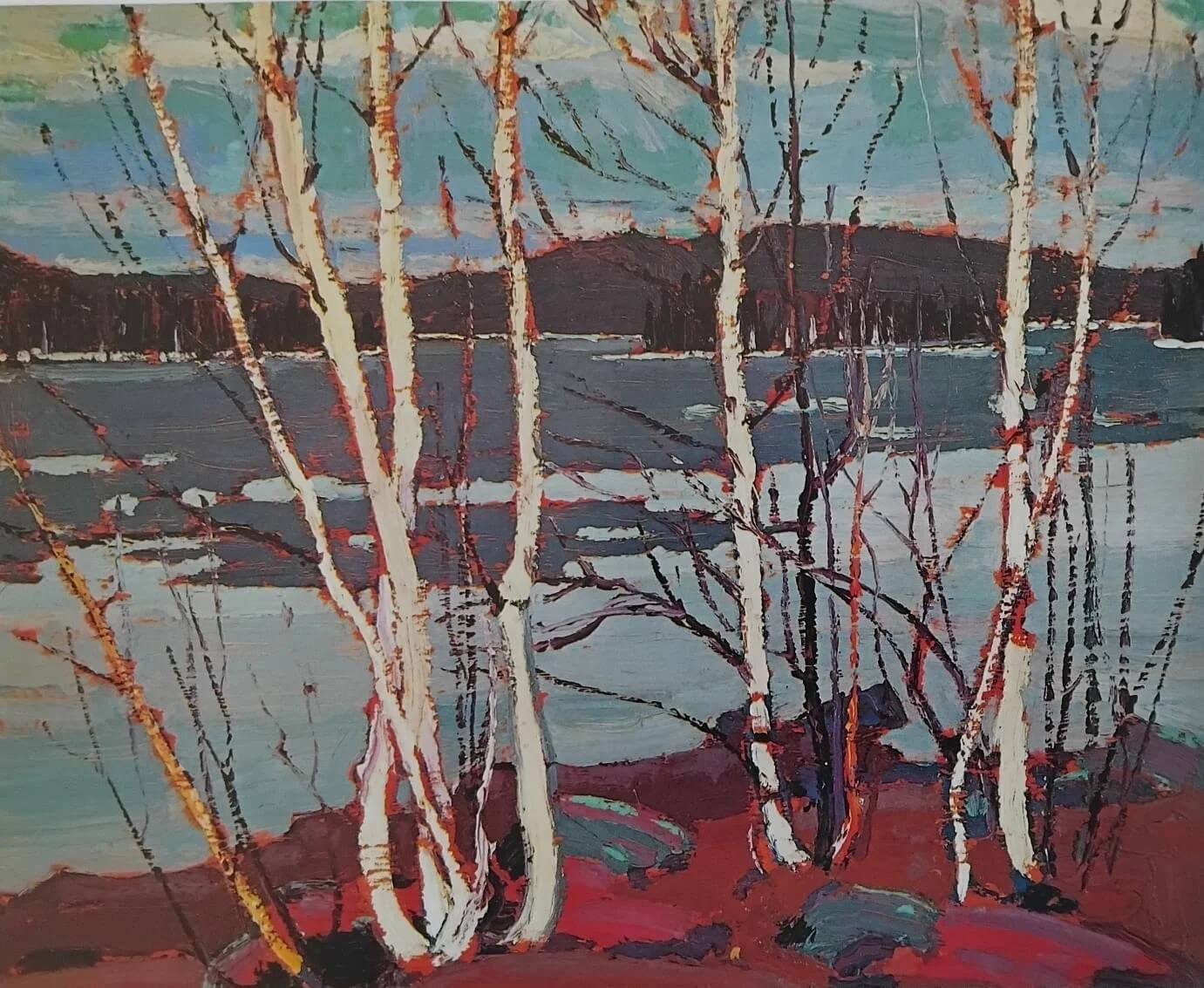
'Spring in Algonquin Park' (1917) by Tom Thomson captures white birch trees in the foreground with a thawing lake and dark wooded hills in the background.

Spring in Algonquin Park, 1917

Tom Thomson's 1917 painting 'Sunset, Canoe Lake' shows vivid orange and magenta clouds streaking across a twilight sky, with silhouetted trees and reflective water below.

Sunset, Canoe Iake, 1917

'The Rapids' (1917) by Tom Thomson depicts churning water rushing over dark rocks beneath a snow-covered hillside, with scattered evergreens and a pale blue sky overhead.

The Rapids, 1917

Previous
Previous

One Life and Two Dreams

Next
Next

The Life & Art of Canadian Painter Emily Carr